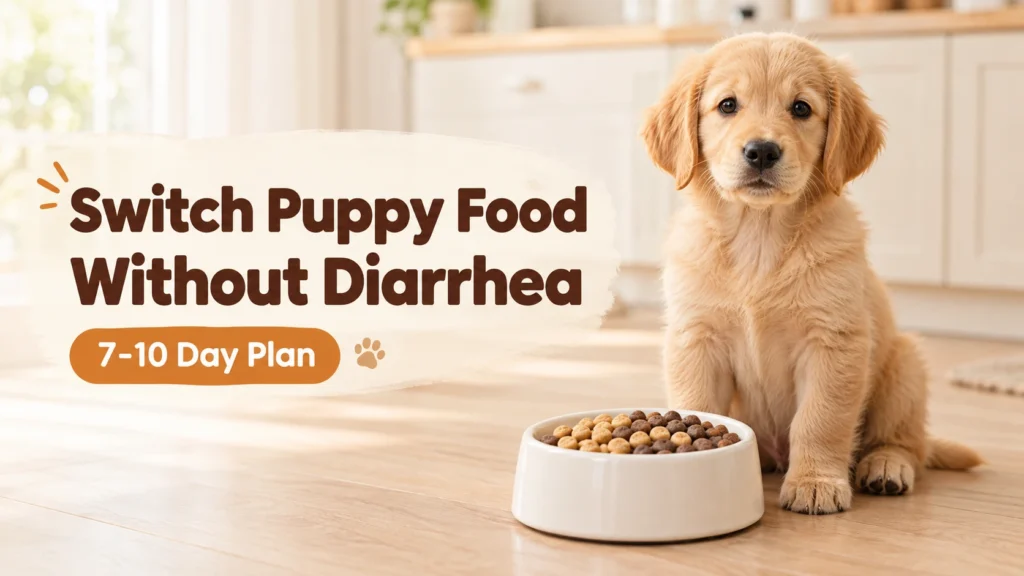
You bought a new bag of puppy food, and your puppy’s stool is suddenly soft or runny. Or maybe you’re about to change foods and don’t want to find out the hard way.
Puppies have sensitive digestive systems, and a fast food change is one of the most common causes of loose stool. The fix is simple: change the food slowly and watch your puppy’s poop along the way. This guide walks you through the exact schedule, what normal looks like, and when diarrhea means it’s time to call your vet. Still deciding what to switch to? Start with our guide to the best food for puppies.
How to Switch Puppy Food Without Diarrhea? Quick Answer
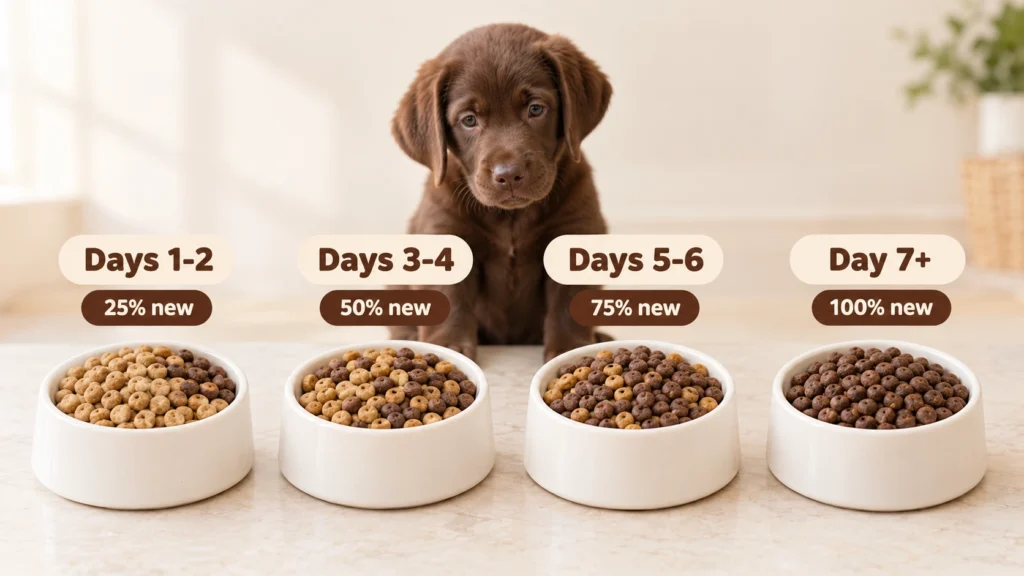
To switch puppy food without diarrhea, mix the new food into the old food gradually over 7 to 10 days. Start with about 25% new and 75% old, then move to 50/50, then 75/25, then 100% new. Keep the total amount the same, watch stool quality daily, and slow down if it softens.
Why Switching Puppy Food Can Cause Diarrhea
A puppy’s gut is home to billions of bacteria that help digest food. Those bacteria adapt to what your puppy usually eats. When you suddenly change the protein source, fat level, fiber, or ingredients, the gut bacteria don’t have time to adjust, and digestion gets disrupted.
The result is often soft stool, gas, or diarrhea. Puppies are more prone to this than adult dogs because their digestive systems are still maturing, and they often have other stressors going on at the same time.
Common triggers during a food change include:
- Switching cold turkey instead of gradually
- A big jump in fat or protein between the two foods
- Changing to a very different food type (for example, wet vs dry puppy food, or kibble to fresh or raw)
- Adding new treats or table scraps and other foods puppies should avoid
- Overfeeding the new food, because you’re not sure how much a puppy should eat
When You Should Switch Puppy Food
There are good reasons to change foods. There are also times when you should wait.
Good reasons to switch:
- Your puppy is outgrowing their current food. Check the puppy feeding schedule by age to see where your puppy is.
- You’re moving from the breeder’s or shelter’s food to a food you prefer.
- You’re switching from a small-breed formula to a large-breed puppy formula, or the reverse, based on your vet’s advice.
- Your vet recommends a different diet for a health reason.
- The current food isn’t agreeing with your puppy, and your vet has ruled out other causes.
Times to wait:
- The first week after bringing your puppy home. Moving to a new home is stressful on its own. Keep feeding exactly what the breeder or shelter was feeding, and ask what brand and how much.
- During a stomach upset. Don’t change foods while your puppy already has diarrhea or vomiting.
- Right around vaccinations or other stressful events like boarding or travel, if you can avoid it.
How to Choose a New Puppy Food
Before you switch, make sure the new food is appropriate for growth. Our best food for puppies list is a good shortlist.” Skip this one if you already used that link in the intro. One link to that page per article is enough.Look for a statement on the bag saying the food is complete and balanced for growth or for all life stages, based on AAFCO nutritional standards. This is the label you want to see for a puppy.
A few more things to check:
- Breed size matters. Large-breed puppies grow fast and have specific calcium and calorie needs, so they usually do best on a food made for large-breed puppies. Ask your vet if you’re unsure.
- Protein and fat levels. A new food that is much richer than the old one is more likely to upset your puppy’s stomach.
- A company that employs qualified nutrition experts. The World Small Animal Veterinary Association (WSAVA) publishes guidelines on what to look for when choosing a pet food.
Your veterinarian is the best person to confirm the right food for your puppy’s breed, age, and health.
The Step-by-Step Puppy Food Transition Schedule
This is the standard approach most veterinarians recommend: increase the new food a little at a time. Use a measuring cup or kitchen scale so the total amount stays consistent.
| Day | Old Food | New Food |
|---|---|---|
| Days 1-2 | 75% | 25% |
| Days 3-4 | 50% | 50% |
| Days 5-6 | 25% | 75% |
| Day 7+ | 0% | 100% |
Example: Feeding 1 Cup Per Meal
If your puppy normally eats 1 cup of food per meal, here’s how that looks on day 1: ¾ cup of the old food plus ¼ cup of the new food, mixed well. On days 3 and 4, it’s ½ cup of each. The total stays at 1 cup.
How to Do It Step by Step
- Check the feeding guide. Use the new food’s label as a starting point, then compare it with our puppy feeding chart by weight and age.
- Measure both foods. Don’t eyeball it. A small difference in portion can matter for a small puppy.
- Mix thoroughly. If your puppy picks out the new pieces, mix it more evenly or crush a few pieces.
- Keep the meal schedule the same. Most young puppies eat three or four small meals a day (see the puppy feeding schedule by age).
- Check stool every day. This is the most important step. Make a note on your phone.
- Move to the next stage only if stool looks normal. If it doesn’t, stay at the current ratio.
Go Slower If Your Puppy Has a Sensitive Stomach
Some puppies, especially small breeds or those with a history of upset stomachs, need more time. Stretch the schedule to 10 to 14 days and move forward in smaller steps, such as 10% at a time. There’s no prize for finishing quickly.
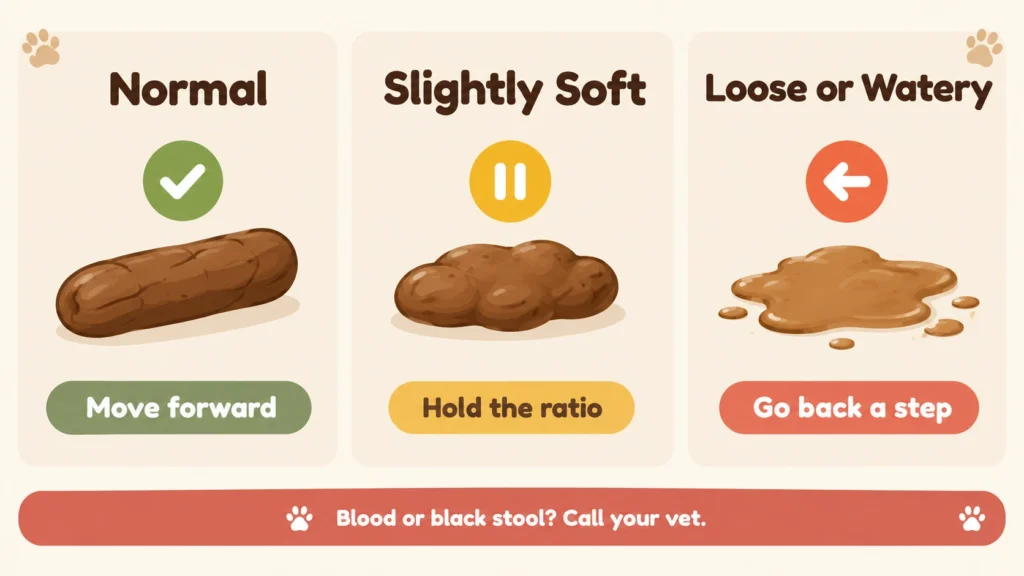
What Normal Puppy Poop Looks Like During the Switch
Some stool change is normal during a transition. Here’s what to look for:
- Normal: Firm, moist, easy to pick up, and chocolate brown
- Slightly soft: A little softer than usual, but still formed. This can be okay for a day, but don’t increase the new food yet.
- Loose or watery: Pudding-like, runny, or with no shape. Go back one step and consult your vet if it continues.
- Bloody, black, or very foul-smelling: Call your vet right away.
Your vet may use a stool scoring chart to describe stool consistency. It’s worth asking for one so you can describe what you see clearly.
What to Do If Your Puppy Gets Diarrhea During the Switch
Mild soft stool is common. Here’s how to handle it:
- Go back to the last ratio that worked. If 50/50 caused loose stool, return to 75/25 old food for two to three days, then try again with smaller steps.
- Don’t add anything new. No new treats, chews, or table scraps while the gut settles.
- Keep fresh water available. Diarrhea can dehydrate a puppy quickly.
- Don’t withhold food from a young puppy. Puppies, especially small ones, can have blood sugar problems if they go without eating. Ask your vet before changing how much your puppy eats.
- Call your vet if it doesn’t improve quickly.
Some vets recommend a short bland diet or a veterinary probiotic for mild stomach upset. Don’t try these on your own with a young puppy. Ask your vet what’s safe for your puppy’s age and size, and what amount to use.
When Diarrhea Is Not About the Food: Call Your Vet
A food change isn’t always the cause. Puppy diarrhea can also come from parasites, infections, stress, or eating something they shouldn’t have. Because puppies can get sick quickly, don’t wait it out if you see warning signs.
Contact your veterinarian right away if your puppy has:
- Diarrhea that lasts more than 24 hours (sooner for very young, small, or unvaccinated puppies)
- Blood in the stool, or black, tar-like stool
- Repeated vomiting
- Lethargy, weakness, or hiding
- Refusal to eat or drink
- Pale or dry gums, sunken eyes, or other signs of dehydration
- A swollen or painful belly
- Fever
- Incomplete vaccinations along with diarrhea, since serious infections like parvovirus are a risk
Parvovirus is especially serious in unvaccinated or partly vaccinated puppies. Bloody, foul-smelling diarrhea with vomiting and lethargy is an emergency.
If you’re not sure, call your vet. It’s always better to ask.
Mistakes That Cause Diarrhea During a Food Change
Switching All at Once
What people do: Run out of the old food and start the new one the next morning.
Why it causes problems: The gut has no time to adapt.
What to do instead: Buy the new food before the old runs out, so you can transition gradually.
Moving Too Fast Because Stool Looked Fine on Day 1
What people do: Skip ahead when day 1 goes well.
Why it causes problems: Digestive upset can show up a day or two later.
What to do instead: Stick to the schedule, even if things look good.
Changing Too Many Things at Once
What people do: Switch food, introduce new treats, and start a new chew all in the same week.
Why it causes problems: If your puppy gets diarrhea, you can’t tell which change caused it.
What to do instead: Change one thing at a time. Even healthy extras like carrots or bananas count as new foods, so wait until the switch is finished.
Guessing Portions
What people do: Pour food by eye.
Why it causes problems: Overfeeding itself can cause loose stool and unwanted weight gain.
What to do instead: Measure each meal and check how much to feed a puppy for your puppy’s size.
Ignoring Treats
What people do: Forget that training treats count as food.
Why it causes problems: Rich or new treats can upset the stomach, especially during a switch.
What to do instead: Use small pieces of the new food as treats during training, and keep to a sensible daily treat limit.
Waiting Too Long to Call the Vet
What people do: Hope the diarrhea goes away on its own.
Why it causes problems: Puppies can dehydrate fast.
What to do instead: Follow the warning signs above.
Expert Tips for a Smooth Switch
- Keep the breeder’s food on hand. Ask what the puppy was eating and buy a small bag. It gives you a reliable fallback.
- Feed at consistent times. A steady routine supports healthy digestion and makes potty training easier.
- Keep stress low. Avoid starting a transition right before a trip, a boarding stay, or a big change at home.
- Add warm water if your puppy is reluctant. A little water can make new food more appealing. Add it to the whole meal, not just the new food.
- Keep a simple log. Write down the date, the food ratio, and the stool quality. If you need to call your vet, this information is very helpful.
- Transition between different food types too. Going from dry kibble to wet food, or to fresh or freeze-dried food, also calls for a gradual change.
- Ask your vet about probiotics. Some puppies benefit from a vet-recommended probiotic, but the right product and amount depend on your puppy.
Frequently Asked Questions
How long does it take to switch puppy food?
Most puppies need 7 to 10 days. Puppies with sensitive stomachs may need up to two weeks or longer.
Can I switch puppy food cold turkey?
It’s best not to. A sudden change is a common cause of diarrhea. The exception is when your vet advises a quick change for a medical reason, such as a food allergy or a recalled product.
Is some soft stool normal when changing puppy food?
Slightly softer stool for a day or so can happen. If stool becomes loose or watery, go back to the previous ratio and call your vet if it doesn’t improve.
What should I do if my puppy gets diarrhea after switching food?
Return to the last ratio that worked, keep water available, and avoid new treats. Call your vet if diarrhea lasts more than a day or if your puppy seems unwell.
Can I mix wet and dry puppy food?
Yes, as long as both are complete and balanced for growth. Introduce the new type gradually, and adjust portions so you don’t overfeed.
When should I move my puppy from puppy food to adult food?
It depends on breed size. Small breeds often switch earlier than large and giant breeds, which stay on puppy food longer. Ask your vet for the right timing for your puppy.
Should I switch my puppy’s food if they have diarrhea?
Not without talking to your vet first. Diarrhea has many possible causes, and a new food won’t fix an infection or parasite.
Can I give my puppy chicken and rice for diarrhea?
Some vets suggest it for short periods, but young puppies can get into trouble quickly with an unbalanced diet or reduced eating. Call your vet before trying it.
Conclusion
Switching puppy food without diarrhea comes down to patience. Mix the new food in gradually over 7 to 10 days, measure portions, change only one thing at a time, and check your puppy’s stool every day. If things get loose, slow down. If you see blood, vomiting, lethargy, or diarrhea that lasts more than a day, call your vet.
Your next step: Check how much of your current puppy food is left, and buy the new food before you run out. Then start the 25% mix tomorrow morning.
This article is for general education and does not replace advice from a licensed veterinarian.

Muzammil Khan is a certified canine behaviorist and the founder of Puppywhisper. With 8+ years of experience in positive reinforcement training, Muzammil has helped over 1,000 puppies transition smoothly into their new homes. All health advice is reviewed in collaboration with licensed veterinarians.