Medical disclaimer: This article is for general education and is not veterinary advice. Every puppy’s needs differ by breed, age, size, and health. Talk to your licensed veterinarian before changing your puppy’s diet, especially if your puppy has a medical condition.
Introduction
You are on day three of puppy training. Your puppy just sat on cue, and you reach for the treat bag. Then you wonder: is this the tenth treat today, or the thirtieth? Is it too many?
It is a fair worry. Puppies are small, they learn fast, and training works best with frequent rewards. But treats add calories, and extra calories can crowd out the balanced food your puppy needs to grow.
The good news is that you do not need to give up training rewards. You just need a simple budget. This guide shows you how to work out how many treats your puppy can have each day, what counts as a treat, and how to reward more without overfeeding.
How Many Treats Can a Puppy Have a Day: Quick Answer
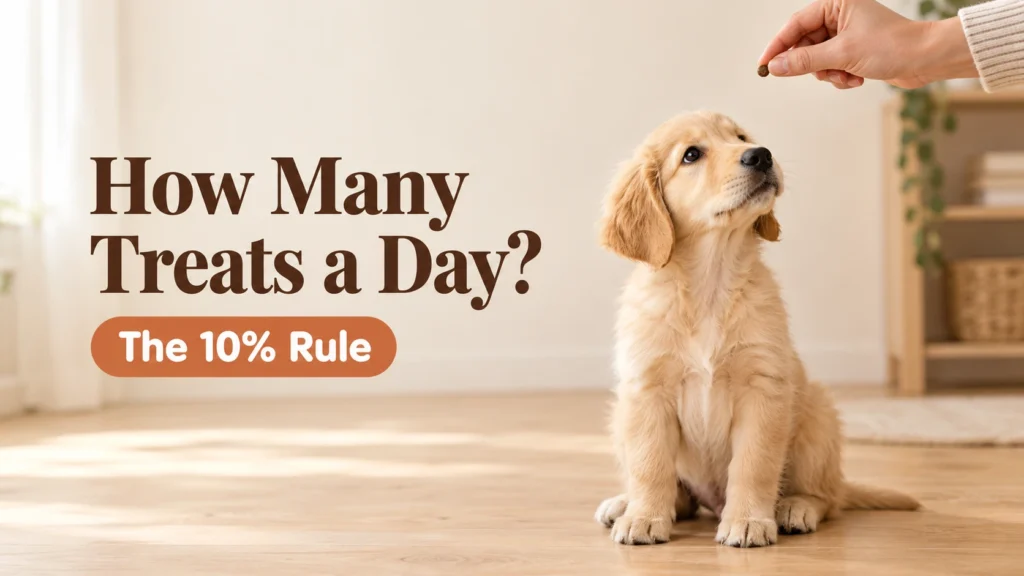
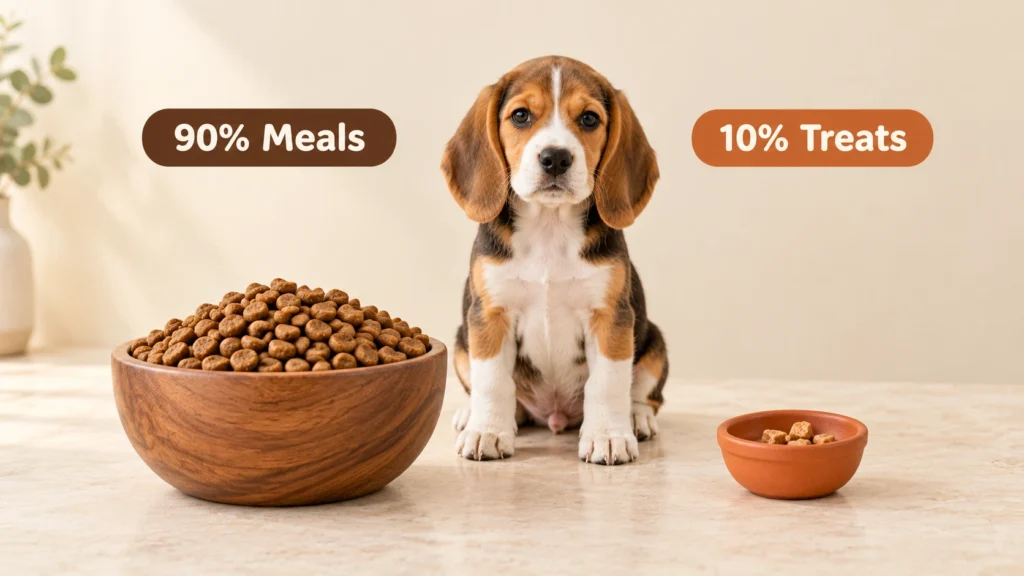
Most puppies can have treats up to 10% of their daily calories, with the other 90% coming from a complete and balanced puppy food. For a puppy eating 300 calories a day, that is about 30 calories of treats, or roughly 10 small training treats. Count every extra, including chews and food used in training. Ask your vet if your puppy has health issues.
The 10% Rule for Puppy Treats
The 10% rule is the guideline most veterinary and dog-care sources point to: treats, chews, and other extras should make up no more than about 10% of your dog’s daily calories. Groups such as the AKC and AAHA support this general approach, and you will see it on many vet clinic handouts.
The reason is nutrition, not strictness. Quality puppy food is formulated to give a growing body the right balance of protein, fat, vitamins, and minerals. Treats usually are not. If treats make up too much of the day, your puppy may fill up on snacks and eat less of the food that actually supports growth.
Why puppies need extra care with treats
Puppies are building bones, muscles, and immune systems. That makes the quality of their main diet more important than it is for an adult dog. A few other puppy-specific reasons to keep treats in check:
- Small stomachs. A handful of treats is a big meal for a 5-pound puppy.
- Sensitive digestion. New or rich treats can cause loose stools or vomiting.
- Habit building. Puppies who get constant free snacks may become pickier at mealtime.
- Healthy weight from the start. Extra weight puts stress on growing joints, which matters most for large breeds.
What counts as a treat?
This is where many owners lose track. Count all of these toward the 10%:
- Store-bought training treats and biscuits
- Dental chews and bully sticks
- Chew toys that are edible
- Table scraps and “just one bite” of your dinner (see our list of foods puppies should avoid)
- Peanut butter in a lick mat or stuffed toy
- Kibble used as a reward is not an extra if you take it out of the meal portion (more on that below)
How to Calculate Your Puppy’s Daily Treat Limit
You only need a few numbers. Here is the simple process.
- Find your puppy’s daily calories. Check the feeding guide on your puppy food bag, compare it with our puppy feeding chart by weight and age, or ask your vet. The bag will list calories per cup (often written as kcal/cup).
- Multiply by 10%. Move the decimal one place left. If your puppy eats 300 calories a day, the treat budget is 30 calories.
- Check the treat label. Most treat packages list calories per treat. If not, look on the manufacturer’s website or ask them.
- Divide the budget by calories per treat. That is your daily treat count.
Here is an example only. Your puppy’s real calorie needs depend on breed, age, activity, and body condition, so always use your own food’s feeding guide and your vet’s advice.
| Puppy’s daily calories (example) | Daily treat budget (10%) | Treats at 3 cal each | Treats at 5 cal each |
|---|---|---|---|
| 200 | 20 | About 6 | About 4 |
| 300 | 30 | About 10 | About 6 |
| 400 | 40 | About 13 | About 8 |
| 500 | 50 | About 16 | About 10 |
| 700 | 70 | About 23 | About 14 |
Many soft training treats run in the low single digits per piece, but brands vary a lot, so always read your label.
Quick check: is the treat size right?
For training, treats should be tiny. Think pea-sized for small breeds and about the size of a fingernail for larger puppies. A smaller treat means more repetitions for the same calories, and your puppy still gets the reward feeling.
How Many Treats Per Day by Type
Different treats have very different calorie loads. Use this as a rough guide for planning.
| Treat type | Typical use | Practical tip |
|---|---|---|
| Soft training treats (tiny) | Teaching sit, down, recall | Break into smaller pieces if needed |
| Crunchy biscuits | Calm-down or crate reward | One small biscuit can equal many training treats |
| Dental chews | Chewing and breath | Often calorie-dense, count them in the budget |
| Bully sticks and long chews | Long chew sessions | Supervise and limit session length |
| Fresh veggies (carrot, cucumber) | Low-calorie reward | Cut into small pieces to prevent choking |
| Lick mat with peanut butter | Calming and enrichment | Use a small smear, check for xylitol |
If your treat has a higher calorie count, give fewer. If your treat is tiny and low-calorie, you can give more. The budget stays the same.
How to Give More Rewards Without Overfeeding
Training puppies often need many rewards in one session. That is normal. Here is how to keep it healthy.
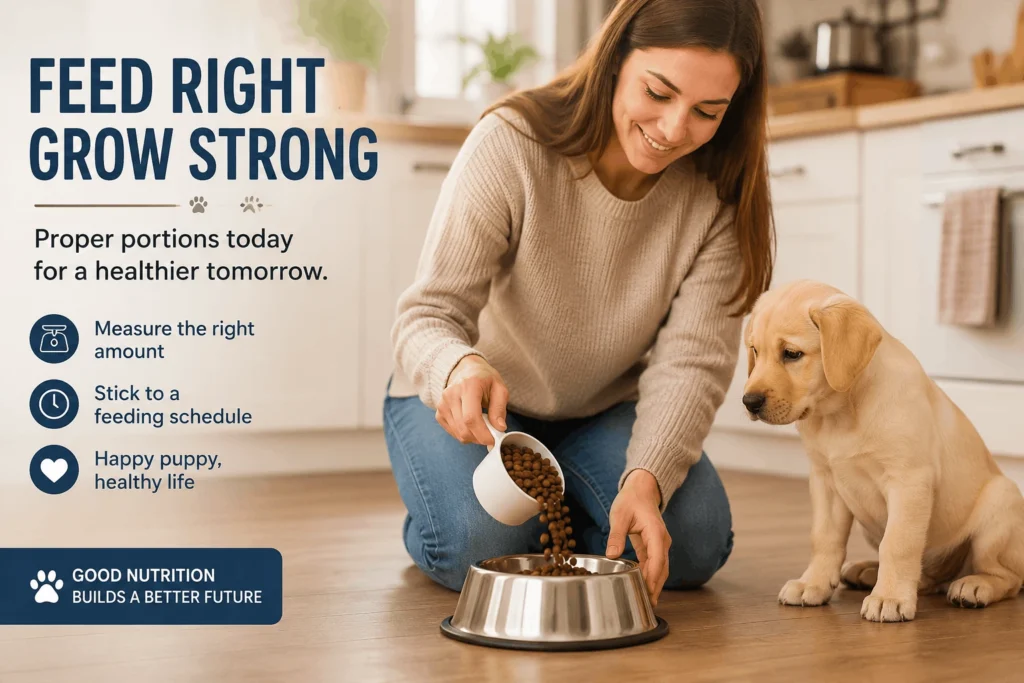
Use part of their meal as the reward. Measure out the day’s kibble based on your puppy feeding schedule by age, then put a handful in a treat pouch.Reward with kibble during the day, and put the rest in the bowl at mealtime. This costs you nothing extra in calories.
Mix low-value and high-value rewards. Use kibble for easy skills at home. Save the special treats, like small bits of plain cooked chicken, for harder tasks like recall outside.
Break treats into tiny pieces. One soft treat can often become four or five rewards.
Reward with life, not just food. Praise, a short game of tug, a sniff walk, or opening the door to the yard are all real rewards for puppies.
Use treats to teach, then fade them out. Once a puppy knows a skill well, reward every second or third time instead of every time.
Healthy Treat Ideas for Puppies
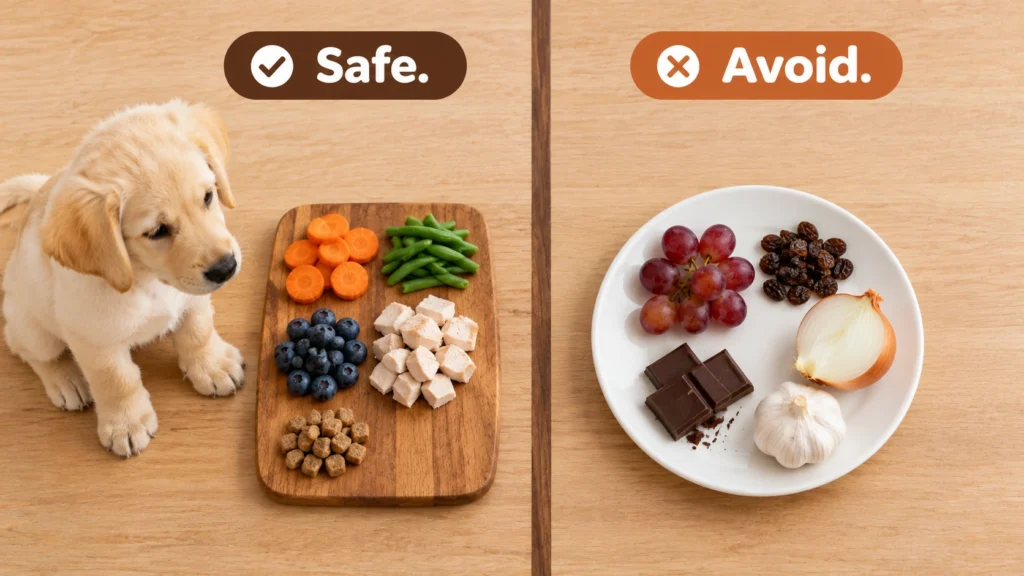
Look for treats that are made for puppies, are easy to break up, and have a short ingredient list. Check that the label says the treat is for dogs and shows the calories. Some safe options many vets and groups like the AKC mention include:
- Small pieces of plain cooked chicken (no seasoning, no bones)
- Carrot pieces or green beans
- Blueberries
- Small bits of apple (no seeds or core)
- Plain, cooked, unsalted sweet potato
- Xylitol-free peanut butter in small amounts
Introduce one new food at a time, in a tiny amount. If your puppy gets loose stools or vomits, stop and call your vet if it continues.
Treats and Foods to Avoid
Some foods are unsafe for dogs, no matter how small the portion. Do not use these as treats:
- Xylitol (a sweetener in some peanut butters, gum, and baked goods) is very dangerous to dogs
- Chocolate and anything with caffeine
- Grapes and raisins
- Onions, garlic, and chives
- Macadamia nuts
- Cooked bones, which can splinter
- Heavily salted, fried, or fatty human foods
Some chews also carry risks. Rawhide, hard bones, and large chunks can be choking or blockage hazards for puppies. Ask your vet which chews are safe for your puppy’s size and chewing style, and always supervise.
If your puppy eats something toxic, call your vet or an emergency animal hospital right away. You can also contact the ASPCA Animal Poison Control Center or the Pet Poison Helpline.
Signs Your Puppy Is Getting Too Many Treats
Watch for these signals:
- Eating less of their regular food
- Loose stools or frequent upset stomach
- Weight gain, or a body shape that looks rounder than before
- Begging that is getting worse
- Ignoring training unless treats are shown
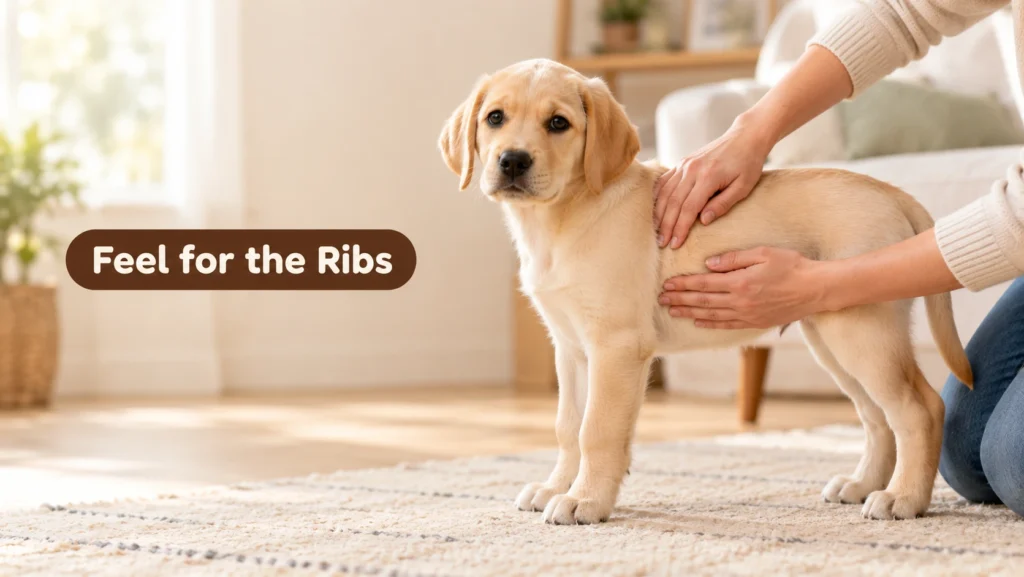
To check body condition at home, you should be able to feel your puppy’s ribs under a thin layer of fat, and see a slight waist from above. Your vet can show you how to score your puppy’s body condition at the next visit.
If you see ongoing digestive trouble, rapid weight changes, or a drop in appetite, book a vet visit. Do not just guess.
Treat Guidelines by Puppy Age
There is no single official treat count by age, but these practical stages can help.
8 to 12 weeks. Focus on settling into food and routine. Use a small portion of their kibble as rewards for name recognition, sit, and potty success. Keep treats tiny and simple.
3 to 6 months. Training ramps up and teething begins. This is when treat budgets matter most. Use small treats for recall, leash manners, and crate training. Offer safe chew items for teething and count them in the day.
6 to 12 months. Many puppies are adolescents and testing limits. Keep treats varied and reduce the number as skills strengthen. Watch weight closely, as growth may be slowing.
Large and giant breeds need extra caution with diet and growth. Ask your vet for feeding guidance specific to your puppy’s breed, and avoid adding calcium or other supplements on your own.
Expert Tips
- Weigh your puppy regularly. Your vet can tell you if your puppy is growing at a healthy pace and adjust their food and treat plan.
- Prep the treat budget each morning. Put the day’s treats in a small container. When it is empty, treats are done, and everyone in the house stays consistent.
- Tell everyone in the family the rules. Visitors and kids often add a lot of unplanned snacks.
- Check calories on dental chews. They can be surprisingly high for a small puppy.
- Use treats right after the behavior. Within a second or two works best, so your puppy connects the reward with the action.
- Adjust meals on heavy training days. If you used a lot of treats, trim the next meal slightly. Ask your vet how much.
- Match treats to the task. Use better rewards for harder jobs, and simple rewards for easy ones.
Common Mistakes Puppy Owners Make with Treats
Not counting chews and licks. Dental chews, bully sticks, and peanut butter all have calories. Add them to your daily total.
Giving treats for free. Treats given for nothing teach puppies to expect snacks. Reward behavior you want to see more of.
Using large treats for training. Big pieces slow down training and add up fast. Break them into tiny bits.
Relying only on treats. If your puppy only listens when food is visible, switch to a reward schedule that mixes in praise, play, and occasional treats.
Sharing human food. Table scraps are often too fatty or salty, and some are toxic. Keep a bowl of safe veggie bits nearby instead.
Changing treats suddenly. A new treat or a big jump in the amount can upset a puppy’s stomach. Introduce changes slowly.
Ignoring the main diet. Treats are extras. If your puppy refuses meals, that is a signal to check the treat count and talk to your vet.
Frequently Asked Questions
How many treats can a puppy have in one day?
The common rule is to keep treats to about 10% of your puppy’s daily calories. The exact number depends on your puppy’s food and the calories in each treat, so check the labels and use the calculation above.
Can I use my puppy’s kibble as training treats?
Yes. Measure the daily food, then use part of it as rewards. This is a great way to train a lot without adding calories.
How many treats can an 8-week-old puppy have?
Keep it small and simple. Use tiny pieces or a few kibbles for rewards, and focus on their main puppy food. Ask your vet about the right amount for your puppy’s size and breed.
Are dental chews okay for puppies every day?
Some are, but not all. Many dental chews are made for adult dogs and can be high in calories. Choose one made for puppies, match it to your puppy’s size, count it in the 10%, and ask your vet which ones they suggest.
Can too many treats make a puppy sick?
Yes. Too many treats can cause upset stomach, loose stools, and weight gain, and may reduce appetite for regular meals. If symptoms continue, see your vet.
What are the best low-calorie treats for puppies?
Small pieces of carrot, green beans, cucumber, or blueberries are popular, low-calorie choices. Introduce them slowly and cut them small to prevent choking.
Should I stop giving treats if my puppy is overweight?
Not necessarily, but you should cut back and adjust meals. Ask your vet for a safe feeding and treat plan. Low-calorie rewards, kibble from the daily meal, and praise or play can keep training going.
Conclusion
Treats are a helpful tool for training and bonding, and your puppy does not need to go without. The key is to keep them to about 10% of daily calories, make them small, and count everything, including chews and peanut butter.
Check the calories on your puppy’s food and treats, work out a simple daily budget, and use meal kibble for extra rewards. Watch for changes in weight, stools, and appetite.
Your next step: tonight, read the calories on your puppy’s food bag and treat package, and write today’s treat budget on a sticky note for the treat jar.

Muzammil Khan is a certified canine behaviorist and the founder of Puppywhisper. With 8+ years of experience in positive reinforcement training, Muzammil has helped over 1,000 puppies transition smoothly into their new homes. All health advice is reviewed in collaboration with licensed veterinarians.