You open a bag of puppy food, read the chart on the back, and still can’t tell if your puppy is eating too much or too little. The bag gives a range, your breeder gave different advice, and your friend’s puppy eats twice as much. Feeding a growing puppy is confusing because weight, age, breed size, and food calories all change the answer.
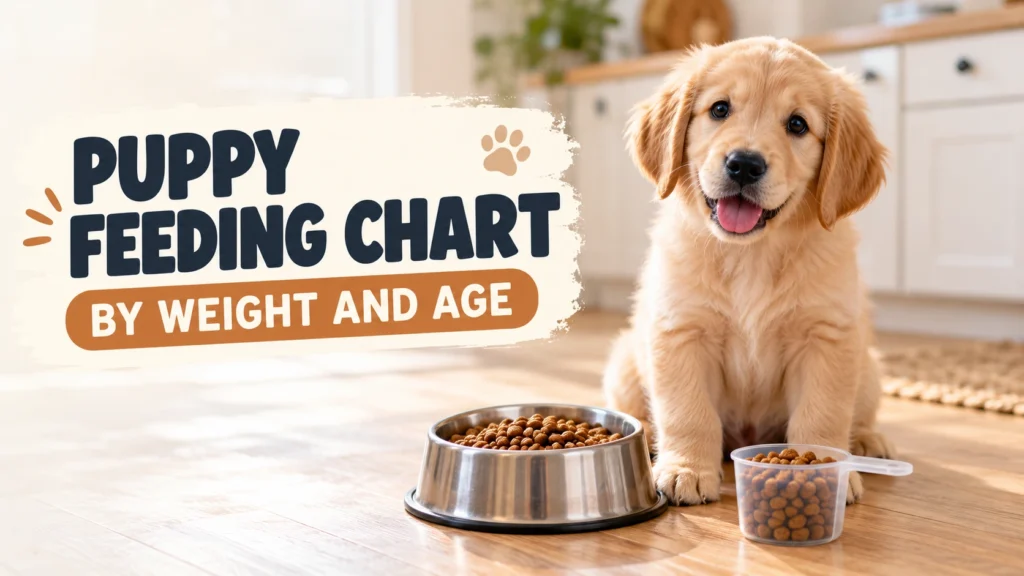
This puppy feeding chart by weight and age gives you a safe starting point. You’ll learn how many meals to offer, how to estimate daily calories, and how to convert that into cups. If you’re still choosing a formula, start with our picks for the best food for puppies.
Puppy Feeding Chart by Weight and Age: Quick Answer
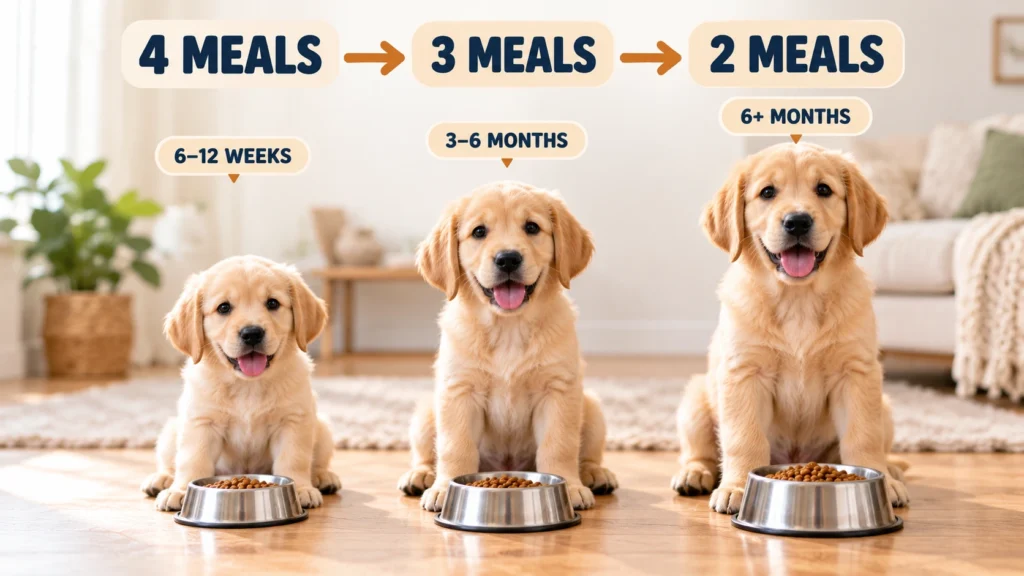
Most puppies eat four meals a day until about 12 weeks, three meals until about 6 months, and two meals after that. The daily amount depends on current weight, expected adult size, and the calories in your food. Start with the feeding guide on the bag, check your puppy’s body condition every two weeks, and adjust with your veterinarian.
How Puppy Feeding Works: The Three Things That Matter
A puppy’s food needs come down to three variables.
- Age: Younger puppies need more frequent, smaller meals because their stomachs are small and their energy needs are high.
- Current weight: Calorie needs are based on how much your puppy weighs now, not what they will weigh as an adult.
- Expected adult size: Large and giant breeds need a different diet and a slower growth rate than toy and small breeds.
Individual puppies also vary. Activity level, spay/neuter status, and metabolism all shift the number. That is why every chart, including this one, is a starting point and not a rule.
Puppy Feeding Schedule by Age
Here is how often to feed most puppies as they grow.
| Puppy Age | Meals Per Day | Notes |
|---|---|---|
| 6 to 12 weeks | 4 | Small, evenly spaced meals. Toy breeds may need this schedule longer. |
| 3 to 6 months | 3 | Most puppies transition naturally from four meals to three. |
| 6 to 12 months | 2 | Morning and evening meals. Keep this schedule into adulthood. |
| 12 months and older | 2 | Large and giant breeds may still be growing. Ask your vet when to switch to adult food. |
Need more detail for a specific week? See our full puppy feeding schedule by age. A simple routine helps with potty training too. Puppies usually need to go out within 5 to 30 minutes after eating, so predictable meal times make accidents easier to prevent.
Example schedule for a 10-week-old puppy:
- 7:00 a.m. – Breakfast
- 11:00 a.m. – Lunch
- 3:00 p.m. – Afternoon meal
- 7:00 p.m. – Dinner (pick up the bowl after 15 to 20 minutes)
Pick up any uneaten food after about 15 to 20 minutes. This builds a routine and lets you see how much your puppy actually eats.
Puppy Feeding Chart by Weight: Daily Calories
Cups can be misleading because foods vary a lot in calorie density, and wet vs dry puppy food differ the most. One cup of one brand can have far more calories than a cup of another. Starting from calories is more accurate.
Veterinary nutrition guidance uses a formula called resting energy requirement (RER), which is 70 × (body weight in kg)^0.75. Puppies then need a multiple of that number to fuel growth. A commonly used starting point is about 3 times RER for puppies under 4 months and about 2 times RER from 4 months to adulthood.
The table below shows approximate daily calories by current weight.
| Puppy’s Current Weight | Under 4 Months (about 3x RER) | 4 Months to Adult (about 2x RER) |
|---|---|---|
| 5 lb (2.3 kg) | ~390 kcal | ~260 kcal |
| 10 lb (4.5 kg) | ~650 kcal | ~440 kcal |
| 20 lb (9 kg) | ~1,100 kcal | ~730 kcal |
| 30 lb (13.6 kg) | ~1,490 kcal | ~990 kcal |
| 40 lb (18 kg) | ~1,850 kcal | ~1,230 kcal |
| 50 lb (22.7 kg) | ~2,180 kcal | ~1,450 kcal |
These numbers are rounded estimates for healthy puppies, not exact prescriptions. Treat them as a ballpark to compare against your food’s feeding guide. If the two are far apart, ask your vet which to follow.
Important adjustments:
- Large and giant breeds are usually fed toward the lower end, because growing too fast can stress developing joints.
- Toy breeds may need to eat more often, even if the total is small.
- Very active puppies may need a bit more. Less active or already chubby puppies may need less.
How to Turn Calories Into Cups
Look at the calorie content on your puppy food label. It is usually listed as “kcal/cup” or “kcal/kg” in the guaranteed analysis section.
The math:
Daily calories ÷ calories per cup = cups per day
Example: A 10-pound puppy who is 5 months old needs about 440 kcal a day. If the food has 400 kcal per cup:
440 ÷ 400 = about 1.1 cups per day, split across 3 meals (a little over 1/3 cup per meal).
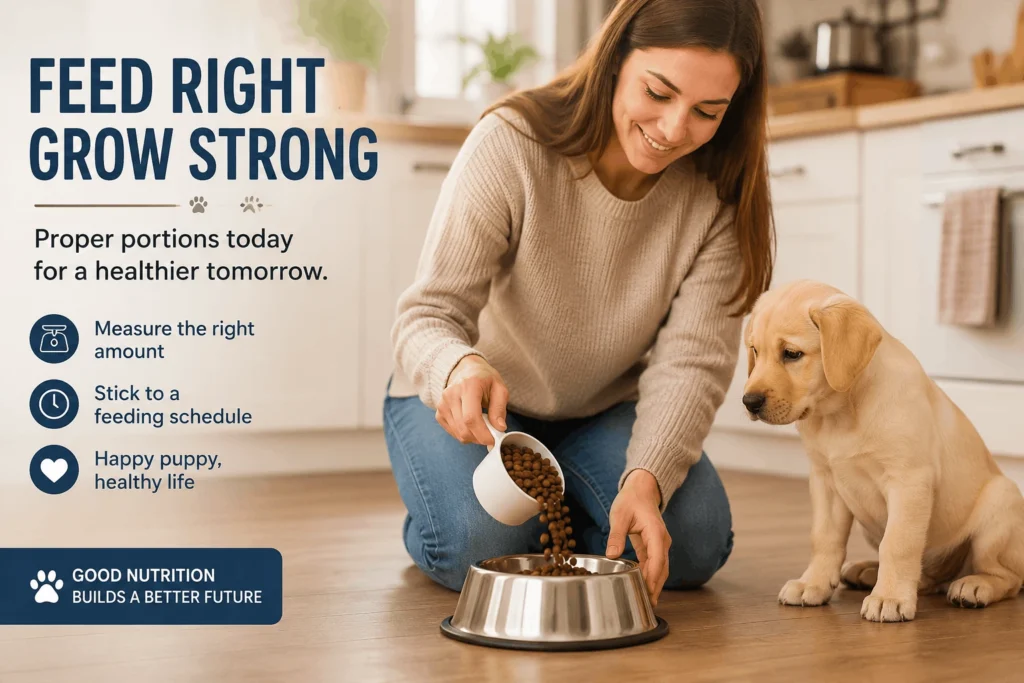
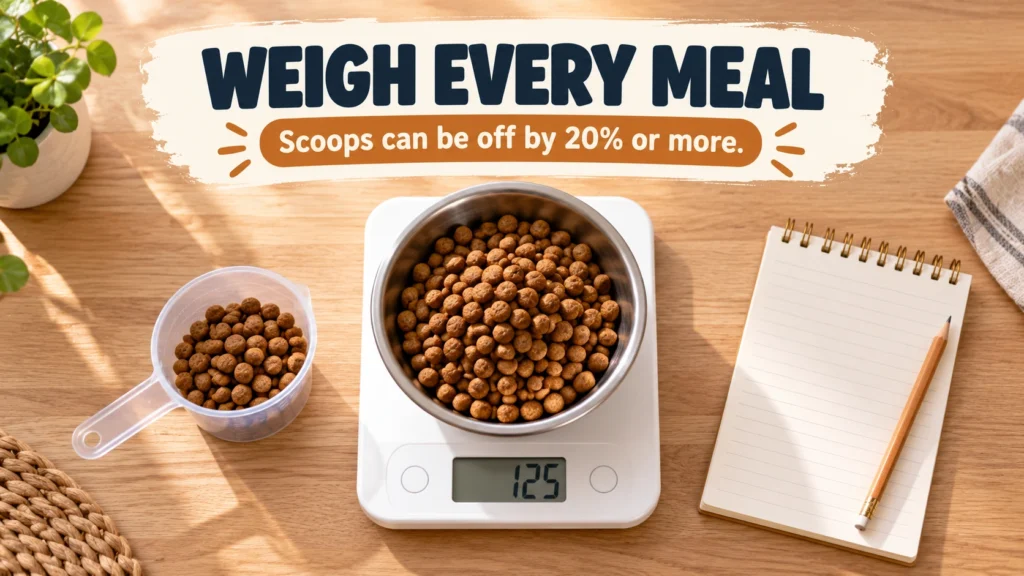
Use a measuring cup, or better, a kitchen scale. Scooping straight from the bag with a mug is one of the easiest ways to overfeed without noticing.
Feeding Guidelines by Breed Size
Breed size changes both the type of food and the pace of growth.
Toy and Small Breeds (Under 20 lb as Adults)
Small puppies grow quickly and have tiny stomachs. They often do best with 3 to 4 small meals a day. Skipping meals can be risky for very small puppies because of the chance of low blood sugar (hypoglycemia). Signs include weakness, trembling, and unusual sleepiness. That is an emergency, so contact a vet right away.
Small breeds usually switch to adult food around 9 to 12 months.
Medium Breeds (20 to 50 lb as Adults)
Medium breeds are the easiest to feed by the standard schedule. Most follow the age table above and move to adult food around 12 months.
Large and Giant Breeds (50+ lb as Adults)
Large puppies need food made for large-breed puppies. These diets have controlled calcium and calories to support steady, slower growth. Overfeeding or adding calcium supplements can raise the risk of developmental bone and joint problems.
Large breeds may stay on puppy food until 12 to 18 months, and giant breeds sometimes longer. Your vet can tell you when your specific puppy is ready.
How to Choose the Right Puppy Food
Good puppy food label reading takes about a minute.
- Find the nutritional adequacy statement. Look for wording that the food is complete and balanced for growth or for all life stages, based on AAFCO nutrient profiles.
- Check the large-breed note. If your puppy will be 70 lb or more as an adult, the statement should specifically mention growth of large-size dogs.
- Look at the manufacturer. The WSAVA recommends asking whether the company employs a qualified nutritionist, runs quality control, and can answer detailed questions about its foods.
- Choose one food and stay with it. Constantly rotating foods can upset a puppy’s stomach.
Wet, dry, and fresh foods can all work if they are complete and balanced. Dry kibble is often the easiest to measure and store. Ask your vet if you want to mix foods.
How to Switch Puppy Foods Safely
Changing food suddenly can cause diarrhea and vomiting. Transition over about 7 to 10 days.
| Days | Old Food | New Food |
|---|---|---|
| 1 to 3 | 75% | 25% |
| 4 to 6 | 50% | 50% |
| 7 to 9 | 25% | 75% |
| 10 | 0% | 100% |
If your puppy gets loose stools, slow down and stay on the current step for a couple of extra days.
How to Tell if Your Puppy Is Eating the Right Amount
The chart gives you a starting point. Your puppy’s body tells you if it is working.
Check these every two weeks:
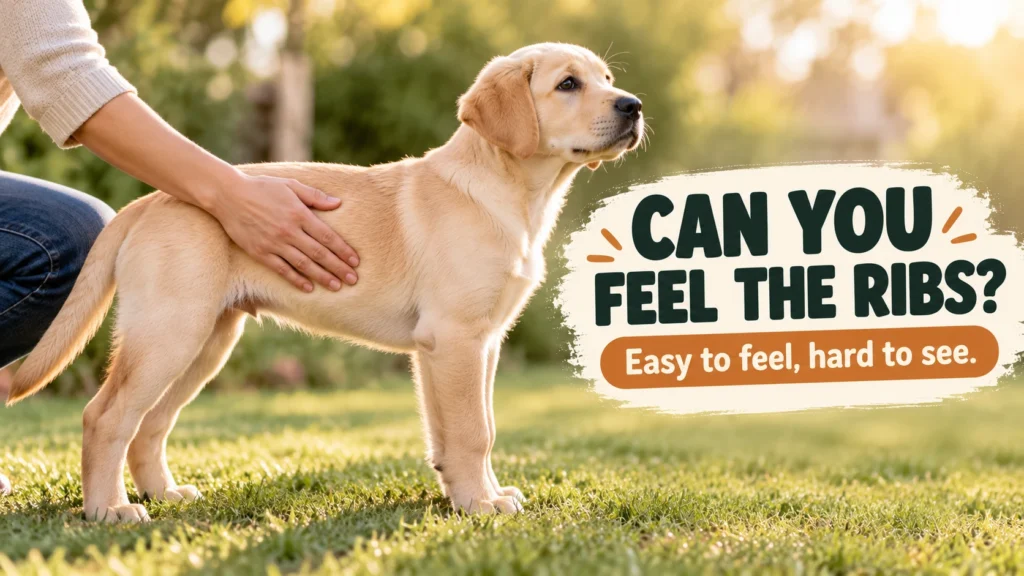
- Ribs: You should feel them easily under a thin layer of fat, but not see them clearly.
- Waist: Looking from above, you should see a slight narrowing behind the ribs.
- Belly: Looking from the side, the belly should tuck up slightly behind the rib cage.
- Energy and stool: Steady energy and firm stools are good signs.
If you can’t feel the ribs, reduce food slightly. If ribs, spine, or hip bones are very visible, talk to your vet before increasing food, because poor weight gain can have medical causes such as parasites.
Ask your vet to show you the body condition score at your next visit, and weigh your puppy regularly so you can adjust portions as they grow. Puppies outgrow their portion fast, so recheck the numbers every few weeks.
Treats, Training Food, and Table Scraps
Training treats count as food. As a general rule, keep treats and extras to no more than about 10% of daily calories. If you train a lot, use part of your puppy’s regular kibble as rewards so the total stays balanced. Plain, dog-safe options like carrots or bananas work well as small training rewards.
Foods that are dangerous for dogs include:
- Chocolate
- Grapes and raisins
- Xylitol (a sweetener found in some peanut butters, gum, and baked goods)
- Onions and garlic
- Macadamia nuts
If your puppy eats any of these, call your vet or an animal poison control service right away.
Water, Free Feeding, and Meal Habits
Fresh water should be available throughout the day. Some owners pick up water in the evening to help with overnight potty breaks, but ask your vet before restricting water.
Most puppies do better on scheduled meals than on free feeding. Scheduled meals make it easier to track appetite, measure portions, and prevent overeating. A sudden loss of appetite is also easier to spot.
Common Puppy Feeding Mistakes
1. Relying only on the bag’s chart.
Feeding guides are written for an average puppy. Your puppy may need more or less. Use the bag as a starting point, then adjust using body condition and your vet’s advice.
2. Feeding by “eyeballing.”
A “scoop” can vary by 20% or more. Measure every meal with a cup or a scale.
3. Forgetting treats.
Training treats, chews, and dental sticks add up. Subtract them from the daily food amount when needed.
4. Giving adult food too early (or too late).
Puppy food supports growth. Switching a large-breed puppy to adult food too early, or keeping a small-breed puppy on puppy food too long, can both cause problems. Check with your vet.
5. Adding supplements without advice.
Complete puppy foods already contain the nutrients puppies need. Extra calcium in particular can harm large-breed puppies.
6. Changing food suddenly.
Always transition gradually over about a week.
7. Skipping meals for toy breeds.
Very small puppies can drop their blood sugar quickly if they go too long without eating.
Expert Tips for Feeding a Growing Puppy
- Weigh your puppy every 1 to 2 weeks during rapid growth and adjust the portion as weight changes.
- Keep a feeding log for the first few weeks: meal times, amounts, and stool quality. It helps your vet if something goes wrong.
- Use a slow feeder or snuffle mat for puppies who gulp their food.
- Feed in a quiet spot. Stress and competition can affect appetite.
- Wait before exercise. Avoid vigorous play right after meals, especially for deep-chested breeds.
- Ask about growth. Your vet can estimate your puppy’s adult size and recommend the right transition timing.
When to Call Your Veterinarian
Contact your vet if your puppy:
- Refuses food for more than a day (sooner for very small or young puppies)
- Has repeated vomiting or ongoing diarrhea
- Is lethargic, weak, or shaking
- Has a swollen or painful belly
- Gains or loses weight unusually fast
- Eats something toxic or non-food items
Young puppies can become dehydrated and weak quickly, so do not wait and see when symptoms are serious.
Frequently Asked Questions
How much should a puppy eat per day?
It depends on weight, age, and the food’s calories. A typical starting point is about three times resting energy needs under 4 months and two times after that. Use the bag’s guide as a base and adjust with your vet.
How many times a day should I feed my puppy?
Four meals a day from 6 to 12 weeks, three meals from 3 to 6 months, and two meals from 6 months onward is a common pattern. Toy breeds may need more frequent meals.
When should I switch from puppy food to adult food?
Small breeds usually switch around 9 to 12 months, medium breeds around 12 months, and large or giant breeds at 12 to 18 months or later. Your vet can confirm the right time.
Is it okay to free-feed my puppy?
Most puppies do better on scheduled meals. Free feeding makes it hard to measure intake and can lead to overeating and weight gain.
Should I feed my puppy wet or dry food?
Either works as long as it is complete and balanced for growth. Dry food is easier to measure and store, and wet food can help picky eaters. Some owners mix both.
How do I know if I am overfeeding my puppy?
If you can’t feel the ribs easily, the waist has disappeared, or your puppy is gaining weight faster than expected, you are probably overfeeding. Reduce portions slightly and ask your vet.
What if my puppy is hungry all the time?
Many healthy puppies act hungry. Check that you are feeding the right amount, avoid giving in to begging, and use slow feeders or food puzzles. If hunger is extreme or paired with weight loss, see your vet to rule out parasites or other issues.
Can I give my puppy human food?
A few plain, dog-safe foods are fine in small amounts, but many human foods are toxic or too rich for puppies. When in doubt, skip it or ask your vet.
Conclusion
A good puppy feeding plan comes down to a few habits: feed on a schedule, measure portions, check body condition regularly, and adjust as your puppy grows. The chart above gives you a reliable starting point, but your puppy’s body and your vet’s advice should have the final say.
Your next step: Check your puppy’s current weight, find the calories per cup on your food label, and use the formula above to work out a daily amount. Write it down and weigh your puppy again in two weeks.

Muzammil Khan is a certified canine behaviorist and the founder of Puppywhisper. With 8+ years of experience in positive reinforcement training, Muzammil has helped over 1,000 puppies transition smoothly into their new homes. All health advice is reviewed in collaboration with licensed veterinarians.