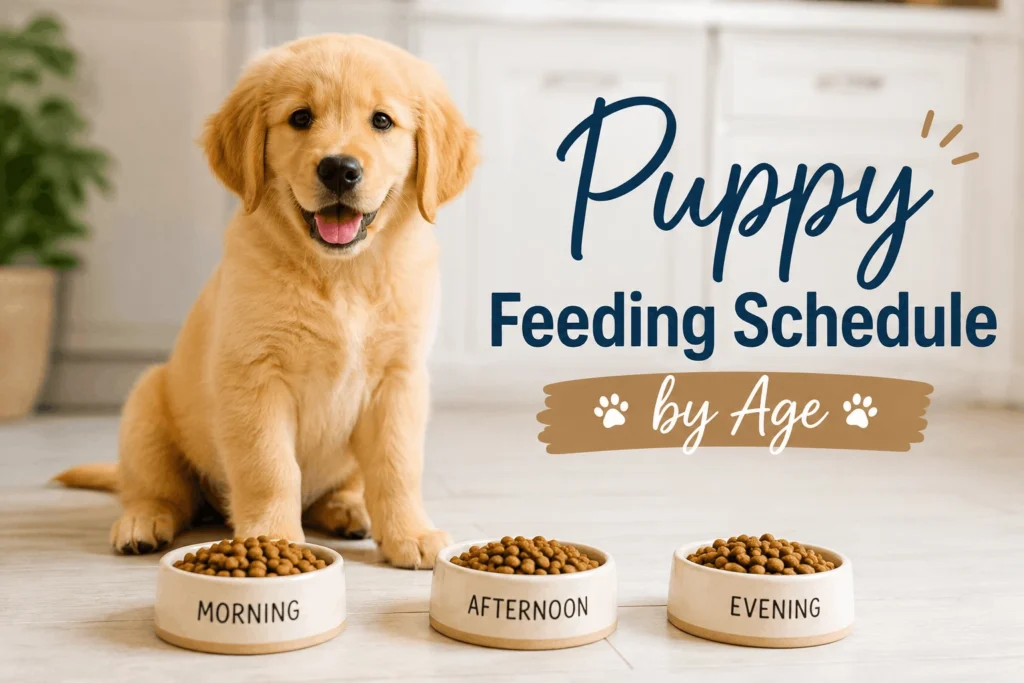
You pour food into the bowl and your puppy demolishes it in under a minute then stares up at you like they haven’t eaten in weeks. So you wonder: was that enough? Too little? Too much? Am I doing this right? Before locking in portions, start with choosing the best food for your puppy, then pair this chart with a full feeding schedule by age so timing and portion size work together.
Puppy feeding is one of the most common sources of anxiety for new dog owners, and for good reason. Feed too little and your puppy won’t grow properly. Not sure How Much Should a Puppy Eat? Feed too much and you risk digestive problems, rapid weight gain, and long-term joint issues especially in large breeds. Getting it right isn’t complicated once you understand the key variables involved.
Quick Answer: How Much Should a Puppy Eat?
How much a puppy should eat depends on their age, weight, breed size, and the specific food you’re using. Most puppies need three to four small meals per day until around six months old, then two meals daily. A general starting point is roughly one cup of food per ten pounds of body weight per day, divided into meals but always follow your specific puppy food label and adjust based on your puppy’s body condition.
Why Feeding the Right Amount Matters More Than Most Owners Realize
A puppy’s body is doing an enormous amount of work in the first year of life. Bones, muscles, organs, and the immune system are all developing simultaneously. The fuel driving that development is food specifically the right amount of the right food at the right times.
Underfeeding slows growth, weakens the immune system, and leaves puppies with low energy. Overfeeding causes loose stool, excessive weight gain, and in large and giant breeds, can accelerate bone growth faster than joints can handle leading to painful conditions like hip dysplasia later in life.
There’s also a direct connection between feeding schedule and potty training. Puppies typically need to eliminate within 15 to 30 minutes of eating. Consistent meal times make potty training significantly easier and faster.
Puppy Feeding Chart by Age and Weight
Use this as a starting reference. Always check your specific puppy food label, as calorie density varies significantly between brands and formulas.
| Puppy Age | Meals Per Day | General Daily Amount |
|---|---|---|
| 6 to 12 weeks | 4 meals | Per label guidelines for current weight |
| 3 to 6 months | 3 meals | Per label guidelines for current weight |
| 6 to 12 months | 2 meals | Per label guidelines for current weight |
| 12 months and up | 2 meals | Transition to adult food guidelines |
Approximate daily dry food amounts by weight (adjust per brand):
| Puppy Weight | Daily Dry Food Amount |
|---|---|
| 2 to 5 lbs | ¼ to ½ cup |
| 5 to 10 lbs | ½ to 1 cup |
| 10 to 20 lbs | 1 to 1¾ cups |
| 20 to 30 lbs | 1¾ to 2½ cups |
| 30 to 50 lbs | 2½ to 3½ cups |
| 50 to 75 lbs | 3½ to 5 cups |
| 75 lbs and above | 5 cups and above |
These are general guidelines. Your puppy food bag will have a more precise feeding chart based on expected adult weight, which is a better guide than current weight alone for large breeds still growing rapidly.
How Many Meals Per Day Does a Puppy Need?
Meal frequency matters just as much as portion size. Puppies have small stomachs and fast metabolisms. Spreading their daily food across multiple meals prevents blood sugar dips, reduces the risk of digestive upset, and keeps energy levels steady throughout the day.
Age-based meal frequency guide:
- 6 to 12 weeks old: Four meals per day. Puppies this young need frequent, small amounts. Their digestive systems are still developing and large meals cause nausea, vomiting, and loose stool.
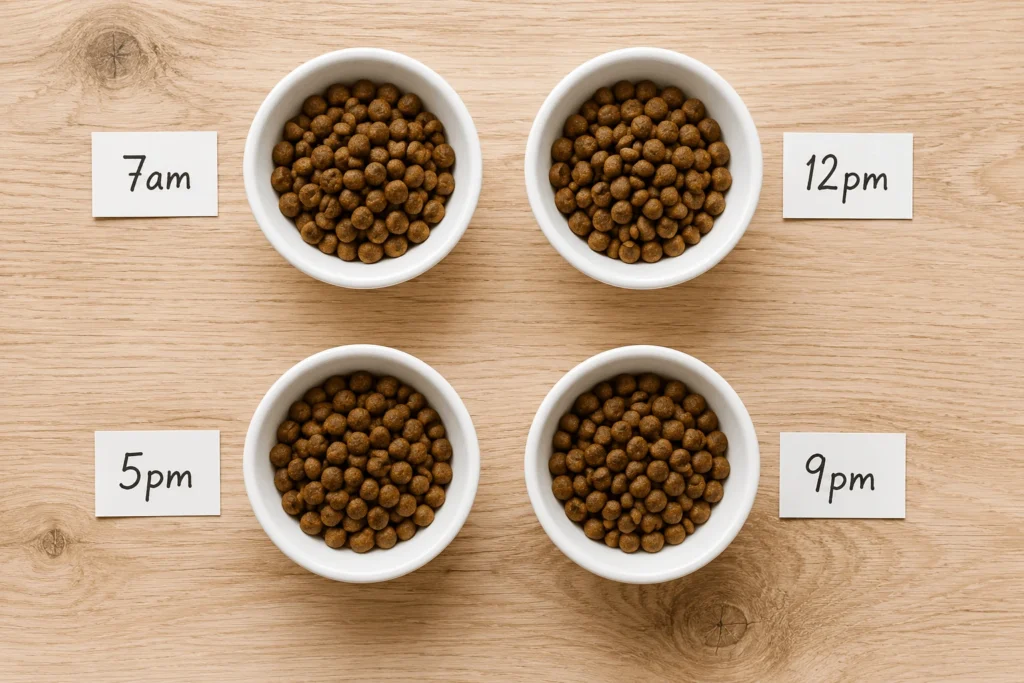
- 3 to 6 months old: Three meals per day. Morning, midday, and evening works well for most households. Spacing meals roughly five hours apart is a solid baseline.
- 6 to 12 months old: Two meals per day. Morning and evening, ideally 10 to 12 hours apart. Most puppies do well on this schedule and it fits most owner routines.
- 12 months and older: Two meals per day continues to work well for most dogs throughout adulthood.
One important rule: keep meal times consistent. Feeding at the same times every day regulates digestion, makes potty training more predictable, and reduces anxiety in food-motivated dogs.
How to Read Your Puppy Food Label for Portion Guidance
The feeding guidelines printed on your puppy food bag are your most reliable starting point but they require some interpretation.
Most labels show daily feeding amounts based on your puppy’s expected adult weight, not their current weight. This matters because a Labrador puppy currently weighing 15 pounds will eventually reach 65 pounds. Feeding based on current weight alone will consistently underfeed a large breed puppy.
Steps to read the label correctly:
- Find the feeding guidelines table on the back or side of the bag
- Identify your puppy’s expected adult weight (ask the breeder or vet if unsure)
- Cross-reference with your puppy’s current age column
- Note whether the amount shown is daily total or per meal
- Divide the daily total by the number of meals you’re feeding
Also check the calorie content (listed as kcal/cup or kcal/kg). Higher calorie density foods require smaller volumes. A premium food with 450 kcal per cup needs less volume than a standard food with 320 kcal per cup to deliver the same energy.
Large Breed vs Small Breed Puppy Feeding Differences
Breed size is one of the most important feeding variables that new owners overlook. A Great Dane puppy and a Chihuahua puppy have completely different nutritional requirements not just in quantity but in nutrient balance.
Large Breed Puppies
Large and giant breed puppies (expected adult weight above 50 pounds) grow for longer and have very specific calcium-to-phosphorus ratio requirements. Overfeeding calcium in large breed puppies accelerates skeletal growth beyond what developing joints can support.
Use a food specifically labeled for large breed puppies. These formulas control calcium and phosphorus levels, and manage calorie density to support steady, controlled growth rather than rapid weight gain.
Never add calcium supplements to a large breed puppy’s diet without direct veterinary guidance. Their food already contains the correct balance.
Small and Toy Breed Puppies
Small breed puppies (expected adult weight under 20 pounds) have faster metabolisms and higher energy needs per pound of body weight. They are also more prone to hypoglycemia (low blood sugar) if they go too long between meals.
Small breed puppies need calorie-dense food in smaller volumes, with more frequent meals especially in the first few months. Never skip or delay meals with toy breed puppies under 12 weeks old hypoglycemia in very small puppies can become serious quickly.
Wet Food vs Dry Food: Does It Change the Amount?
Yes, significantly. Wet food contains around 75 to 85 percent moisture. Dry kibble contains roughly 10 percent moisture. This means wet food looks like a much larger volume for the same caloric content.
| Food Type | Approx. Calories per Cup/Can |
|---|---|
| Dry kibble (standard) | 300 to 450 kcal per cup |
| Wet food (standard can) | 150 to 250 kcal per can |
If you’re feeding wet food only, your puppy will need a much larger volume to meet calorie needs. If you’re mixing wet and dry, calculate combined calories to avoid overfeeding.
A good working formula for mixed feeding: reduce dry food by 25 percent for each quarter of the diet replaced by wet food, then adjust based on your puppy’s body condition over two weeks.
How to Tell If Your Puppy Is Eating the Right Amount
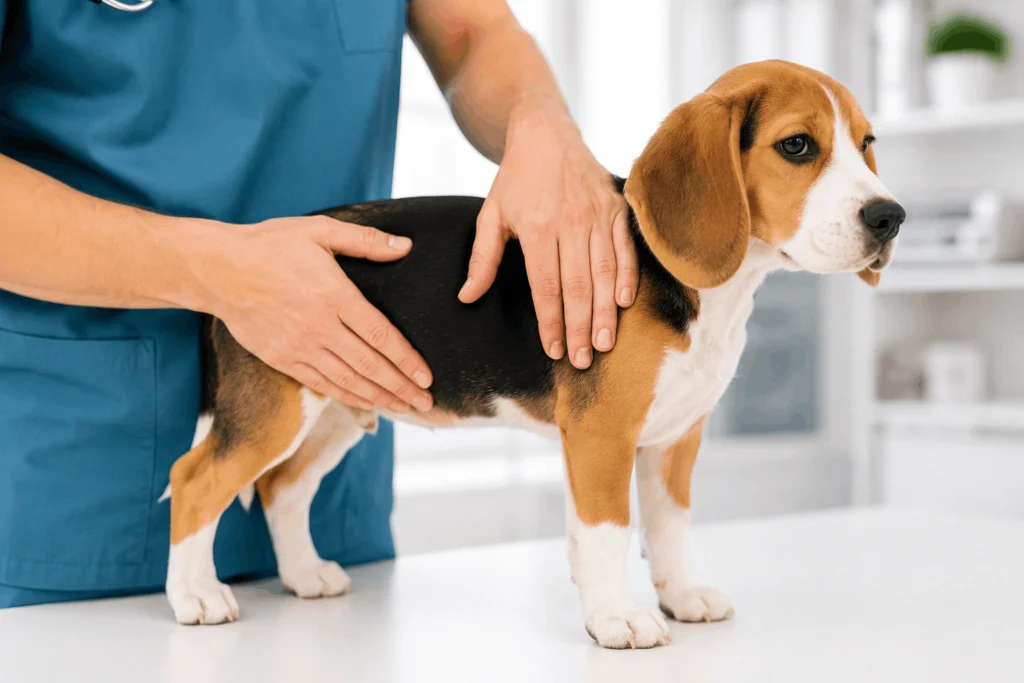
Numbers and charts only get you so far. Your puppy’s body tells you the real answer. Learn to assess your puppy’s body condition score (BCS) a simple hands-on check vets use to evaluate whether a dog is underweight, ideal, or overweight.
How to check:
Run your hands along your puppy’s ribcage with gentle pressure. You should be able to feel individual ribs without pressing hard, but they shouldn’t be visibly protruding. Look at your puppy from above there should be a visible waist tuck. From the side, the belly should tuck up slightly from the chest.
Signs of Underfeeding
- Ribs, spine, or hip bones visibly prominent
- Lack of energy or lethargy during play
- Slow weight gain compared to breed growth charts
- Constantly searching for food, eating grass, or scavenging
- Dull or thin coat
Signs of Overfeeding
- No visible waist when viewed from above
- Ribs difficult to feel under fat padding
- Loose stool or frequent digestive upset
- Rapid, excessive weight gain
- Reluctance to move or exercise
Weigh your puppy every two weeks and track the trend. Steady, gradual gain is healthy. Sudden jumps or plateaus both warrant a closer look at feeding amounts.
Step-by-Step: How to Set Up a Puppy Feeding Schedule
Step 1 — Determine daily amount. Check your puppy food label using expected adult weight, not current weight. Note the daily total.
Step 2 — Divide into meals. Split the daily total by the number of meals appropriate for your puppy’s age (four meals for under 12 weeks, three for 3 to 6 months, two for over 6 months).
Step 3 — Set fixed meal times. Choose times you can consistently maintain every day. For three meals: 7am, 12pm, 6pm works well. For two meals: 7am and 6pm.
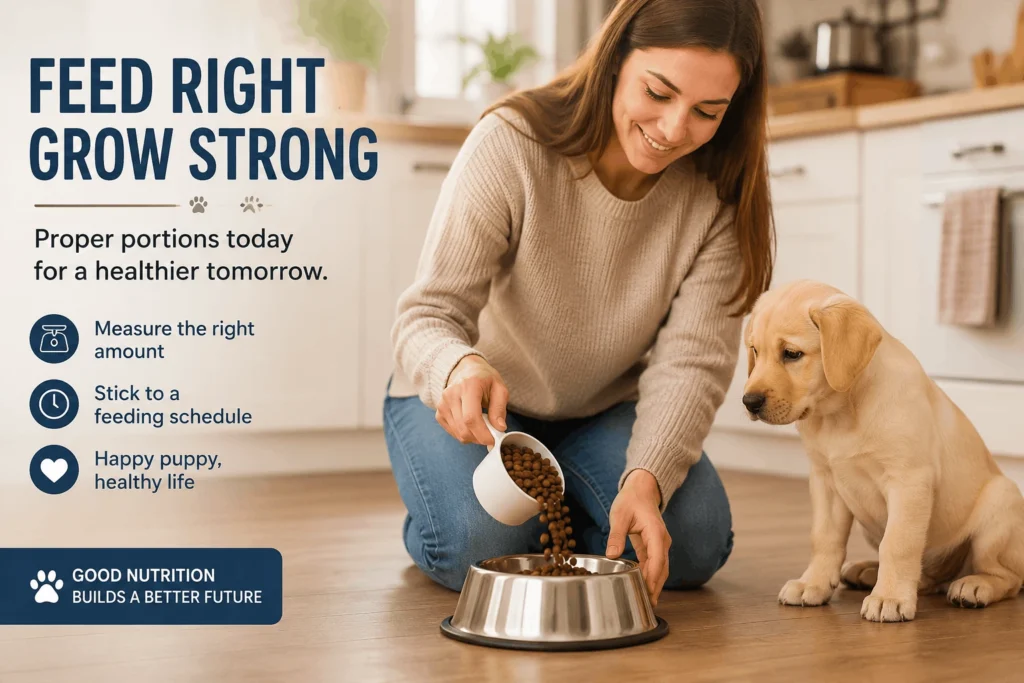
Step 4 — Measure every meal. Use a proper measuring cup, not a coffee mug or rough scoop. Small measurement errors add up over weeks.
Step 5 — Pick up the bowl after 15 to 20 minutes. Do not leave food down all day. Timed meals teach your puppy that food comes at predictable times, regulate their digestive rhythm, and make potty training far more manageable.
Step 6 — Reassess every two weeks. Weigh your puppy and assess body condition. Adjust portions in small increments (10 to 15 percent) if needed. Never make sudden large changes.
Step 7 — Adjust for treats. Training treats count toward daily calories. If your puppy is in active training and receiving many treats throughout the day, reduce their meal portions slightly to compensate.
Expert Feeding Tips From Canine Nutrition Specialists
Use your puppy’s expected adult weight, not current weight, for label guidance. This single adjustment prevents systematic underfeeding in growing large breed puppies.
Weigh food for the first few weeks. Volume measurements vary depending on how tightly kibble is packed in the cup. A kitchen scale removes guesswork entirely.
Transition new foods over 7 to 10 days. Sudden food changes cause diarrhea in most puppies. Start with 75 percent old food and 25 percent new, shifting the ratio gradually every two to three days.
Water is not optional. Fresh water must be available at all times, separate from meal times. Puppies on dry food especially need consistent hydration.
Never punish slow eating or fast eating. Fast eaters benefit from a slow feeder bowl. Slow eaters may need a quieter, lower-distraction feeding spot. Both behaviors are normal variations, not disobedience.
Do not top-dress food with extras daily. Adding chicken, eggs, or broth to every meal teaches food preference and makes it harder to feed a balanced diet long-term. Occasional additions are fine; daily ones create picky eaters.
Common Feeding Mistakes New Owners Make
- Free feeding all day. Leaving food out continuously removes your ability to monitor intake, makes potty training unpredictable, and often leads to overeating. Scheduled meals are always better for puppies.
- Feeding based on current weight only. A 4-month-old Labrador currently weighing 20 pounds will double or triple in size. Feeding for current weight systematically underfeeds growing large breed puppies.
- Switching foods impulsively. When a puppy has one bout of loose stool, many owners immediately change food brands. Frequent switching prevents the gut from stabilizing and makes it harder to identify the actual cause of digestive issues.
- Ignoring treat calories. High-value training treats are calorie-dense. Ten small training treats per day can add up to 20 to 30 percent of a small puppy’s daily calorie allowance. Track them as part of daily intake.
- Adding human food regularly. Onions, garlic, grapes, raisins, macadamia nuts, and xylitol are all toxic to dogs. Beyond toxicity, human food upsets nutritional balance and teaches begging behaviors that are very difficult to undo.
- Not adjusting as the puppy grows. Feeding amounts need regular review. A portion appropriate for a 3-month-old puppy is rarely correct for a 6-month-old. Review and adjust every two to four weeks.
Frequently Asked Questions
How many times a day should a puppy eat?
Puppies under 12 weeks need four meals per day. From 3 to 6 months, three meals per day. From 6 months onward, two meals per day is appropriate for most breeds. Consistent timing matters as much as frequency.
Can you overfeed a puppy?
Yes, and it causes real harm. Overfeeding leads to digestive upset, excessive weight gain, and in large breeds, skeletal development problems. Always measure portions and monitor body condition rather than feeding on demand.
How do I know if my puppy is eating enough?
Check body condition regularly. You should be able to feel ribs with gentle pressure but not see them protruding. Your puppy should have energy for play, maintain steady weight gain, and show normal stool consistency.
When should I switch from 3 meals to 2 meals a day?
Most puppies transition from three meals to two meals around 6 months of age. Large breeds may benefit from staying on three meals slightly longer. Ask your vet if you’re unsure for your specific breed.
How much should an 8-week-old puppy eat?
At 8 weeks, puppies need four small meals per day. The exact amount depends on breed size and food brand. Check your puppy food label using expected adult weight as the reference, divide the daily amount by four, and adjust based on how your puppy looks and feels after two weeks.
Should I leave water out all the time?
Yes. Fresh water should be available at all times throughout the day. Some owners pick up the water bowl an hour before bed to help with overnight potty training, but this should only be considered for very young puppies and should be discussed with your vet first.
What if my puppy doesn’t finish their meal?
Pick up the bowl after 15 to 20 minutes regardless. A puppy that occasionally leaves a little food is usually fine. If your puppy consistently refuses meals, loses weight, or seems lethargic, consult your vet as appetite loss can signal illness.
Conclusion
Feeding a puppy correctly comes down to four things: the right amount for their size and age, the right number of meals per day, consistent timing, and regular reassessment as they grow.
Start with your puppy food label, use expected adult weight as your guide, divide daily amounts into age-appropriate meals, and measure every portion. Check body condition every two weeks and adjust by small increments when needed.
No chart replaces your own observation of your puppy’s energy, weight trend, and overall health. Use the numbers as your starting point, then trust what you see.
Your vet is your best resource for breed-specific guidance, especially for large and giant breeds where feeding precision has the greatest long-term impact. When in doubt, book a quick call a feeding question takes five minutes to answer and can make a significant difference in your puppy’s development.

Muzammil Khan is a certified canine behaviorist and the founder of Puppywhisper. With 8+ years of experience in positive reinforcement training, Muzammil has helped over 1,000 puppies transition smoothly into their new homes. All health advice is reviewed in collaboration with licensed veterinarians.