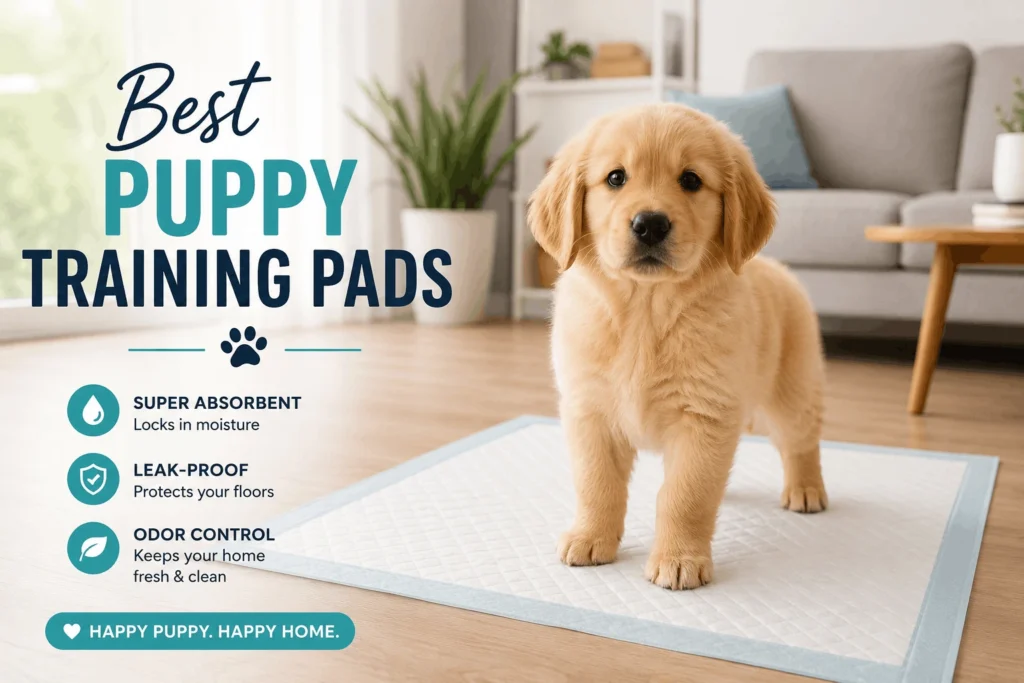
Your puppy has had three accidents today. All in different spots, all on your floor. You know puppy pads are the answer for right now but standing in front of a wall of options online with names you don’t recognize and marketing claims you can’t verify is its own kind of frustrating.
Not all puppy training pads are created equal. Some leak through the bottom within minutes. Others bunch up, slide across the floor, or smell worse than the accident itself. A few genuinely work well. This guide separates them.
Quick Answer: How Best Puppy Training Pads Make Effect?
The best puppy training pads combine a fast-absorbing top layer, a leak-proof plastic backing, odor neutralizing technology, and an attractant scent that encourages puppies to use them consistently. For most new puppy owners, a mid-size disposable pad with an attractant works best during early training. Reusable washable pads make more sense for long-term indoor use or apartment living. Size, breed, and your training timeline should drive the decision.
Why Choosing the Right Puppy Pad Actually Matters
A poor-quality pad doesn’t just mean a messy floor. It means your puppy learns that the pad is unreliable they step in wet residue, the pad shifts under their paws, or the smell of a previous accident bleeds through and confuses them about where to go next.
Consistent, successful pad use builds the habit you’re trying to establish. Every clean, successful trip to the pad reinforces the behavior. Every leak, every missed edge, every pad that bunches up mid-squat sets that training back.
The right pad also protects your floors, reduces cleaning time, and makes apartment or high-rise puppy ownership genuinely manageable during those first months before outdoor training is fully established.
What to Look for in a Good Puppy Training Pad
Before comparing specific products, understanding what separates a quality pad from a cheap one makes the decision much easier.
Absorbency and Leak Protection
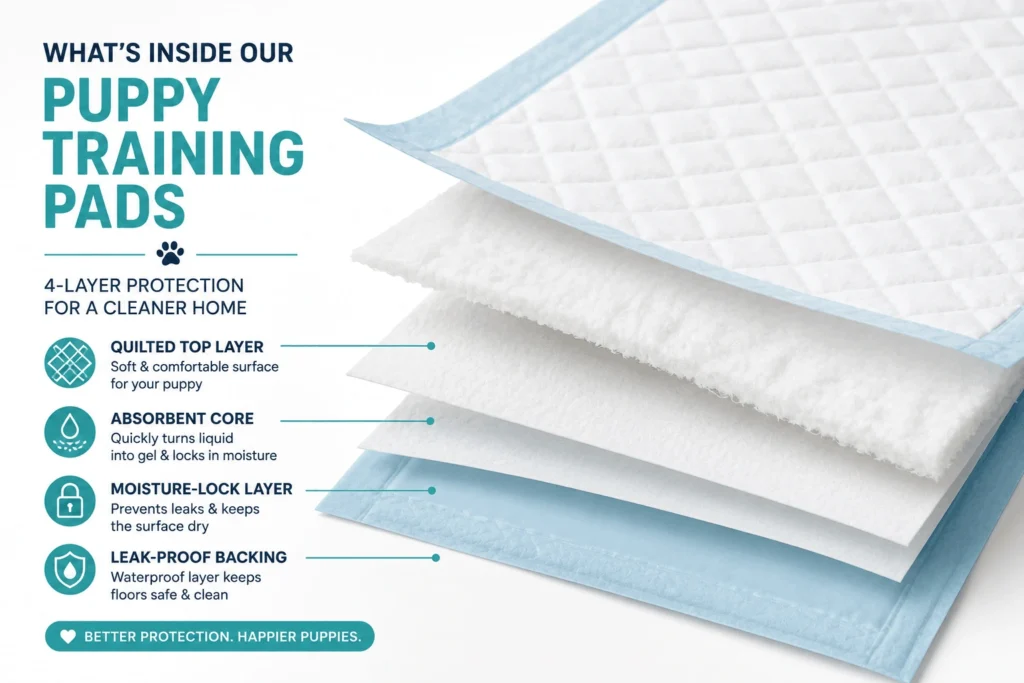
The top surface should pull moisture away from your puppy’s paws immediately and lock it into an absorbent core. The bottom layer must be fully sealed plastic not just a thin film to prevent seepage onto floors.
Look for pads that mention multiple absorbent layers, a quilted or fluff-pulp core, and a leak-proof sealed backing. Pads with only two or three layers typically fail on higher-volume accidents or for larger breed puppies.
Size Options
Pad size should match your puppy’s size and the space you’re working with.
| Pad Size | Best For |
|---|---|
| Standard (22 x 22 inches) | Small breeds, young puppies under 15 lbs |
| Large (24 x 35 inches) | Medium breeds, growing puppies |
| Extra Large (28 x 34 inches and above) | Large breeds, older puppies, multi-dog homes |
| Giant (36 x 36 inches and above) | Giant breeds, whelping boxes, extended coverage areas |
A pad that’s too small for your puppy is a pad that creates more accidents than it prevents.
Attractant Technology
Many quality pads include a pheromone-based or herbal attractant scent built into the top layer. This scent signals to puppies that this is the correct elimination spot.
Attractants genuinely help especially in early training when your puppy hasn’t yet established a strong pad habit. If your puppy is consistently missing the pad or ignoring it entirely, switching to an attractant pad often resolves the issue within a few days.
Disposable vs Reusable
Disposable pads are convenient, hygienic, and ideal for early training when accident frequency is high. Reusable washable pads are more economical long-term, generate less waste, and tend to stay in place better due to their heavier weight.
The right choice depends on your lifestyle, your puppy’s age, and how long you plan to use pads. More on this comparison below.
7 Best Puppy Training Pads Comparisons
| Product | Size Options | Layers | Attractant | Leak-Proof | Type | Best For |
|---|---|---|---|---|---|---|
| Amazon Basics Puppy Pads | Standard, Large, XL | 5 layers | No | Yes | Disposable | Budget-friendly daily use |
| Frisco Training Pads | Standard, Large, XL | 6 layers | Yes | Yes | Disposable | First-time pad trainers |
| All-Absorb Training Pads | Standard, Large | 5 layers | Yes | Yes | Disposable | Small to medium breeds |
| OUT! Disposable Dog Pads | Standard, XL | 6 layers | Yes | Yes | Disposable | Attractant-focused training |
| Simple Solution Puppy Pads | Standard, Large | 6 layers | Yes | Yes | Disposable | Odor control priority |
| Bulldogology Premium Pads | Standard, XL | 6 layers | Yes | Yes | Disposable | Heavy absorption, large breeds |
| Paw Legend Reusable Pads | Small, Medium, Large, XL | Washable layers | No | Yes | Reusable | Long-term indoor use, eco-conscious owners |
Affiliate note: Links to all products above are available on PuppyWhisper.com. We may earn a commission at no extra cost to you.
Amazon Basics Puppy Pads
The most widely used training pad on the market for good reason. Five absorbent layers, a leak-proof sealed bottom, and a clean fresh scent keep these functional and consistent. No attractant is included, which is worth noting for puppies that need extra guidance to use pads reliably.
Best for owners who need a large volume supply at a reasonable price point. Available in bulk packs that significantly reduce cost per pad.
Pros: Affordable, widely available, consistent quality, good for high-use situations
Cons: No attractant, standard absorbency may not suit very large breeds or heavy users
Frisco Training Pads (Chewy)
Frisco pads stand out for including a built-in attractant alongside six absorbent layers and a quilted top surface that keeps puppy paws dry after use. The sealed leak-proof backing holds up well even on larger accidents.
Particularly useful for puppies in early training who are still learning where to go. The attractant gives uncertain puppies the signal they need.
Pros: Attractant included, six layers, quilted surface, consistently good reviews
Cons: Slightly higher cost per pad than budget options
OUT! Disposable Dog Pads
OUT! pads use a pheromone-based attractant specifically formulated to draw puppies to the pad. Six absorbent layers and a leak-proof base make these one of the more reliable options for early potty training phases.
The attractant in OUT! pads is one of the stronger formulations available in standard retail pads, making these a smart choice when a puppy is consistently missing or ignoring other pads.
Pros: Strong attractant formula, reliable leak protection, widely available
Cons: Less economical for very high daily usage
Simple Solution Puppy Pads
Simple Solution pads prioritize odor neutralization alongside absorbency. Their ammonia-neutralizing technology reduces the smell of dried accidents significantly, which matters in smaller living spaces like apartments.
Six layers, attractant included, and available in large sizes make these a well-rounded choice for owners where odor management is a priority alongside pad performance.
Pros: Strong odor control, attractant included, good for apartments and smaller spaces
Cons: Slightly thicker profile means fewer pads per pack at the same price point
Bulldogology Premium Puppy Pads
Bulldogology positions themselves at the premium end of disposable pads with a six-layer design, carbon odor control, attractant, and a wider-than-standard surface area. The adhesive sticky tabs on the corners prevent the pad from shifting a common frustration with cheaper options.
The corner tabs alone make these worth considering for puppies who paw at pads before using them or for smooth floor surfaces where sliding is an issue.
Pros: Corner adhesive tabs prevent sliding, carbon odor layer, generous size, attractant included
Cons: Higher price per pad than budget alternatives
Paw Legend Reusable Washable Pads
For owners committed to long-term indoor pad use, reusable washable pads reduce ongoing cost and plastic waste significantly. Paw Legend pads use a quilted polyester top layer that wicks moisture into an absorbent middle section, with a waterproof base that protects floors.
These wash well in a standard washing machine, maintain their structure after repeated washing, and stay in place better than disposable pads due to their weight.
Pros: Long-term cost savings, eco-friendly, stays in place, machine washable
Cons: Higher upfront cost, requires washing routine, no attractant, less hygienic during illness or heavy use periods
Disposable vs Reusable Puppy Pads: Which Is Right for You?
| Factor | Disposable | Reusable |
|---|---|---|
| Upfront cost | Low | Higher |
| Long-term cost | Higher (ongoing supply) | Lower (one-time purchase) |
| Hygiene | High (single use) | Requires washing after each use |
| Attractant available | Yes (many options) | Rarely |
| Stays in place | Variable (lighter) | Better (heavier material) |
| Best phase | Early training, high accident frequency | Established indoor routine, long-term use |
| Environmental impact | Higher waste | Lower waste |
The practical recommendation: Use disposable pads with attractant during early training (first 8 to 16 weeks). Transition to reusable pads once your puppy reliably uses the pad location consistently.
How to Use Puppy Training Pads Correctly
Getting the most from any training pad comes down to consistent use and smart placement.
Step 1 — Start with one designated pad location. Place the pad in a quiet, low-traffic area your puppy can access at all times. Consistency in location matters more than anything else in early training.
Step 2 — Take your puppy to the pad on a schedule. After every meal, every nap, every play session, and first thing in the morning — guide your puppy to the pad directly. Don’t wait for them to wander there alone in the first two weeks.
Step 3 — Reward successful use immediately. The moment your puppy finishes on the pad, mark the behavior with a calm “yes” and give a small treat. Timing matters reward within three seconds of completion.
Step 4 — Clean accidents off the pad area with enzymatic cleaner. If your puppy misses the pad, clean the floor with an enzymatic cleaner that fully breaks down urine proteins. Standard cleaners leave scent traces that attract your puppy back to the same off-pad spot. A mild puppy shampoo is also worth keeping nearby, in case paws or fur pick up residue during a miss.
Step 5 — Change pads regularly. Most puppies will refuse to use a heavily soiled pad. Change disposable pads after two to three uses or when visibly saturated. Leave a lightly used pad with one previous scent mark the familiar smell helps reinforce the location.
Where to Place Puppy Pads for Best Results
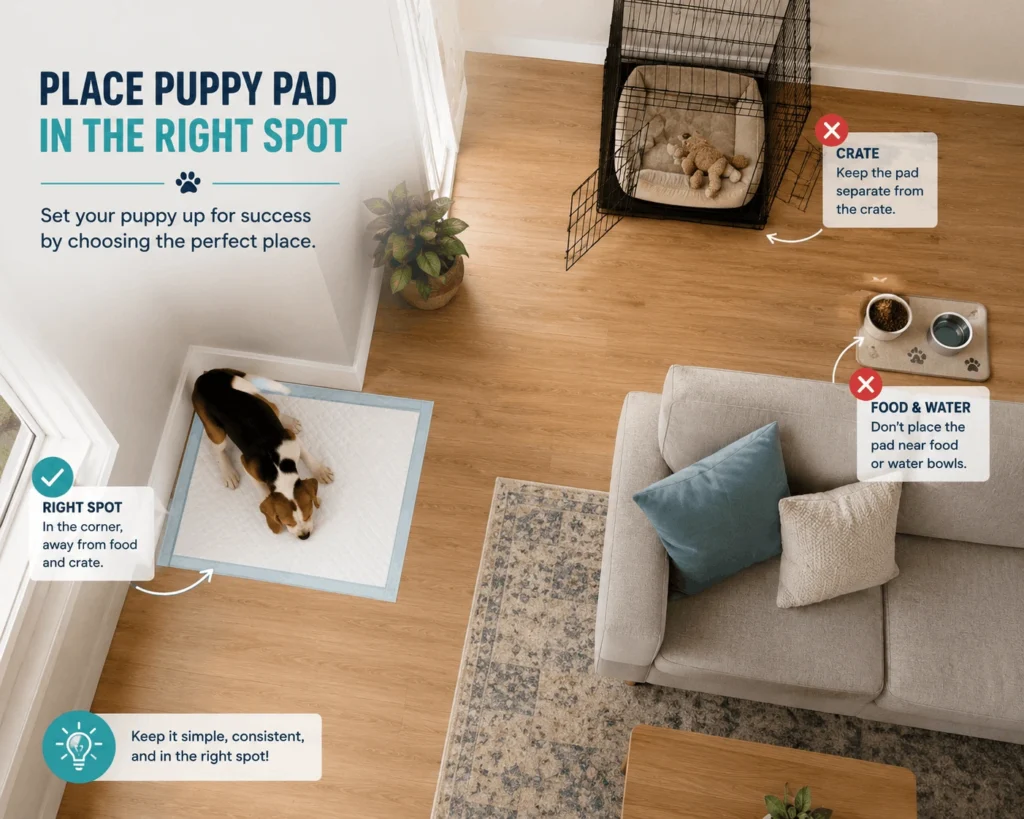
Placement is one of the most overlooked factors in pad training success.
Do place pads:
- Near the area where your puppy spends most supervised time
- Away from their sleeping and eating areas puppies instinctively avoid eliminating near food and rest spots
- In a corner or against a wall puppies feel more secure with barriers on two sides
- On easy-clean flooring rather than carpet where possible
Avoid placing pads:
- In high-traffic areas where household movement startles the puppy mid-use
- Too far from where your puppy spends their time young puppies can’t hold long enough to travel far
- Near the crate associates the crate area with elimination, which undermines crate training simultaneously
Expert Tips for Faster Pad Training
- Use a pad holder tray. A plastic tray that holds the pad flat prevents bunching, sliding, and edge lifting all common reasons puppies miss the pad. Particularly useful on hard floors.
- Introduce the pad with attractant spray if your puppy ignores it. Standalone attractant sprays like Simple Solution Puppy Attract can be applied to any pad to boost its signal strength for reluctant learners.
- Start with a larger pad than you think you need. Most owners buy standard size and find their growing puppy misses the edges consistently. Size up early and save the cleanup time.
- Never punish misses. Punishment for accidents creates anxiety around elimination puppies begin hiding to eliminate rather than returning to the pad. Calmly clean up, assess whether supervision or pad placement needs adjustment, and move on. Between pad sessions, an interactive puzzle toy gives your puppy a positive outlet instead of pacing near the pad.
- Plan the transition to outdoor training early. Pads are a bridge, not a permanent solution for most owners. Begin moving the pad closer to the door in small increments once outdoor training begins, so your puppy gradually associates elimination with the door and eventually the outdoors. A well-fitted puppy harness makes those first outdoor potty trips safer once you get there.
Common Puppy Pad Mistakes to Avoid
- Buying the cheapest pads available. Thin, low-layer pads leak, bunch, and fail consistently. Puppies that repeatedly step in wet residue become reluctant pad users. A few extra cents per pad is always worth it.
- Placing pads in multiple rooms at once. Multiple pad locations spread across the home teach your puppy that the whole floor is acceptable. One consistent location builds a much stronger habit faster.
- Leaving heavily soiled pads down too long. A saturated pad stops absorbing. Puppies avoid it and find another spot. Change pads frequently, especially with young puppies who eliminate six to eight times per day.
- Stopping pad use too abruptly. Transitioning from pads to outdoor-only too quickly confuses puppies who haven’t fully established the outdoor habit. The transition should be gradual, moving the pad toward the door over two to three weeks.
- Using pads as a substitute for scheduled outdoor trips. Pads should supplement outdoor training, not replace it. Puppies that rely exclusively on pads for months take significantly longer to become fully housetrained to go outside.
Frequently Asked Questions
What are the best puppy training pads that don’t leak?
Bulldogology Premium, Frisco, and Simple Solution pads consistently perform best for leak prevention due to their multi-layer construction and fully sealed plastic backing. Look for six or more layers and a sealed not just laminated bottom layer.
Do puppy training pads with attractant actually work?
Yes, for most puppies. Attractant pads use pheromone or herbal scents that signal to puppies that the pad is the correct elimination spot. They are especially effective during early training when the pad habit isn’t yet established. OUT! and Frisco pads both use reliable attractant formulations.
Are reusable puppy pads better than disposable?
It depends on your situation. Reusable pads are better for long-term indoor use and reduce ongoing cost and waste. Disposable pads are more hygienic during early high-frequency training and are more likely to include attractant. Most owners benefit from starting with disposable and transitioning to reusable once the habit is solid.
What size puppy pad do I need?
Match pad size to your puppy’s current size with room to grow. Small breeds do fine on standard 22 x 22 inch pads. Medium and large breed puppies need large or extra-large pads. When in doubt, size up a pad that’s too large causes no problems, a pad that’s too small causes many.
When should I stop using puppy pads?
Most owners phase out puppy pads between 4 and 6 months of age as outdoor training becomes reliable. Apartment owners or those without yard access may use pads long-term, which is a completely valid approach. The transition should be gradual rather than sudden.
How many puppy pads do I need per day?
Young puppies (8 to 12 weeks) eliminate six to eight times per day. Change pads after two to three uses or when saturated. A realistic starting estimate is two to four pads per day for a young puppy, reducing as the puppy matures and frequency decreases.
Can puppy pads slow down outdoor potty training?
They can if used exclusively for too long without any outdoor training running in parallel. The key is using pads as a safety net while actively building the outdoor habit not as the only toilet solution indefinitely.
Conclusion
The right puppy training pad removes one major stressor from the early months of puppy ownership. The wrong one adds to the mess, the confusion, and the cleanup.
For most new puppy owners, a six-layer disposable pad with attractant Frisco, OUT!, or Simple Solution delivers the best combination of reliability, scent guidance, and leak protection during early training. Budget buyers get solid performance from Amazon Basics with the understanding that there’s no attractant included. Long-term indoor users are best served by investing in a quality reusable set like Paw Legend alongside a small supply of disposables for high-use periods.
Get the size right, place the pad consistently, reward every success, and plan your transition to outdoor training in parallel. Puppy pads work well when used as part of a structured approach not as a standalone solution.
Disclosure: PuppyWhisper.com participates in the Amazon Associates program and the Chewy affiliate program. We earn a small commission at no extra cost to you when you purchase through our links. All product assessments are based on genuine research, product specifications, and verified owner feedback.
This article is for informational purposes only. For health concerns related to your puppy, always consult a licensed veterinarian.

Muzammil Khan is a certified canine behaviorist and the founder of Puppywhisper. With 8+ years of experience in positive reinforcement training, Muzammil has helped over 1,000 puppies transition smoothly into their new homes. All health advice is reviewed in collaboration with licensed veterinarians.