Your puppy just came home, and you already love everything about them except maybe the fur on your couch and the tiny nails scratching your arms. Grooming a puppy feels intimidating when you don’t know where to start or which tools actually work.
The wrong tools make grooming stressful for both of you. The right ones turn it into a calm, bonding routine that keeps your pup healthy and clean without a weekly trip to the groomer.
Here are the 10 best puppy grooming tools chosen for safety, effectiveness, and ease of use at home. For step-by-step technique once you have the right brush in hand, see our full guide on how to brush a puppy.
Quick Answer About Best Puppy Grooming Tools
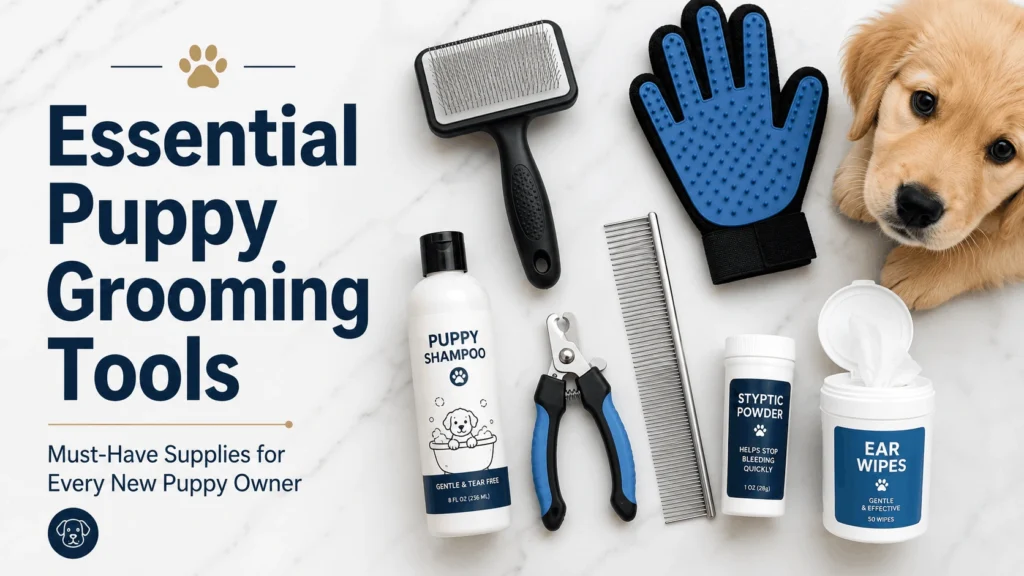
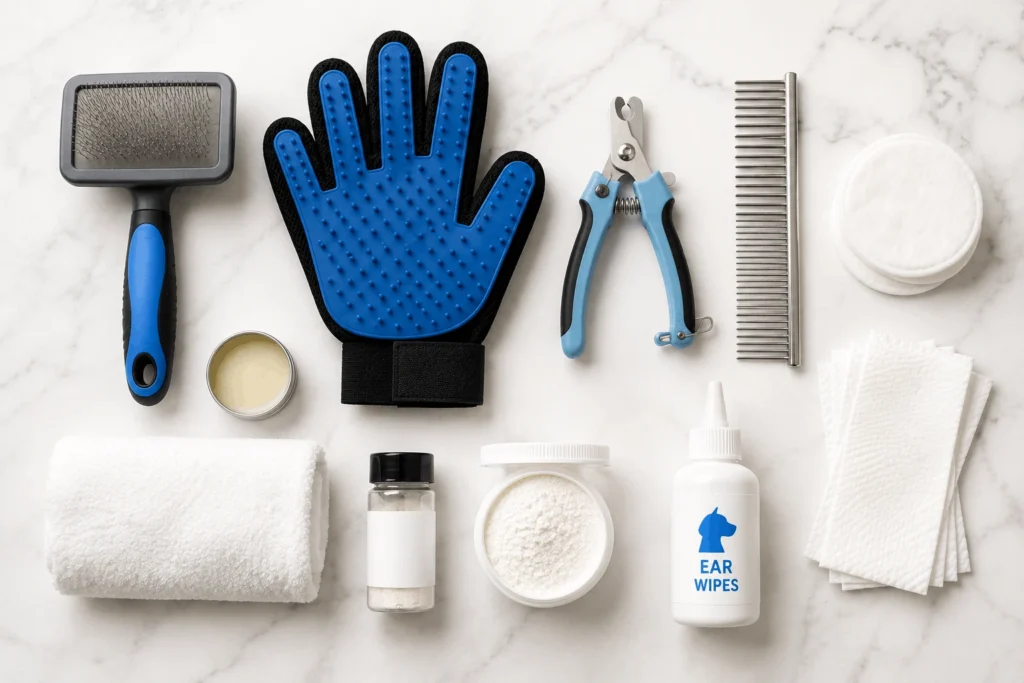
The essential puppy grooming tools every new owner needs are: a slicker brush, rubber grooming glove, deshedding tool, metal comb, nail clippers, styptic powder, bath scrubber brush, ear cleaning wipes, rounded-tip scissors, and a non-slip grooming mat. These seven cover coat care, nail trimming, ear hygiene, and safe bathing for puppies of all breeds.
Why Grooming Your Puppy Matters
Grooming is not just about looks. Regular brushing removes dead hair, prevents painful matting, and lets you check for fleas, ticks, skin irritation, or early health issues hiding under the coat.
Nail trimming prevents posture problems and joint pain as your puppy grows. Ear cleaning reduces infection risk, especially in floppy-eared breeds like Cocker Spaniels and Beagles.
Starting early also builds positive associations puppies who get comfortable with grooming tools young become far easier to handle as adults. The AKC’s grooming basics overview is a helpful second reference for tools and techniques by coat type.
The 10 Best Puppy Grooming Tools
1. Slicker Brush
A slicker brush is the most versatile grooming tool you can own. It has fine, short wire pins set in a flexible base that gently removes loose fur, light tangles, and debris from the coat.
It works on most coat types short, medium, and long. Use it 2–3 times per week for short coats and daily for longer ones.
Look for: Soft or medium pin stiffness for puppies. Avoid stiff metal pins on young, sensitive skin.
Recommended: Hertzko Self-Cleaning Slicker Brush
2. Rubber Grooming Glove
This is the gentlest grooming tool available and most puppies love it. You slip it on like a glove and stroke your pup normally. The rubber nubs collect loose fur while mimicking the feeling of being petted.
It’s ideal for short-coated breeds like Beagles, Boxers, and Labs, and excellent for bath time too.
Best use: First grooming sessions with nervous puppies.
3. Deshedding Tool
If your puppy is a heavy shedder think Golden Retrievers, Huskies, or German Shepherds a deshedding tool reaches through the topcoat to remove loose undercoat fur before it ends up everywhere.
Use once a week during normal seasons, more frequently during heavy shedding periods.
Important: Never use a deshedding tool on wet fur or on breeds with curly, wavy, or very short single layer coats.
Recommended: FURminator Undercoat Deshedding Tool
4. Fine-Tooth Metal Comb
A metal comb is non-negotiable for medium and long-haired breeds. After brushing, run the comb through the coat to catch any remaining tangles, particularly behind the ears, under the legs, and around the collar area.
It also helps check that your slicker brush did its job and no hidden mats remain.
Look for: Rotating teeth, which reduce pulling and discomfort.
5. Puppy Nail Clippers
Long nails change how your puppy walks, putting pressure on their joints. Trimming every 2–3 weeks is standard.
There are two main types:
| Type | Best For |
|---|---|
| Scissor-style clippers | Small to medium breeds |
| Guillotine clippers | Medium to large breeds |
| Nail grinder (electric) | Nervous puppies or thick nails |
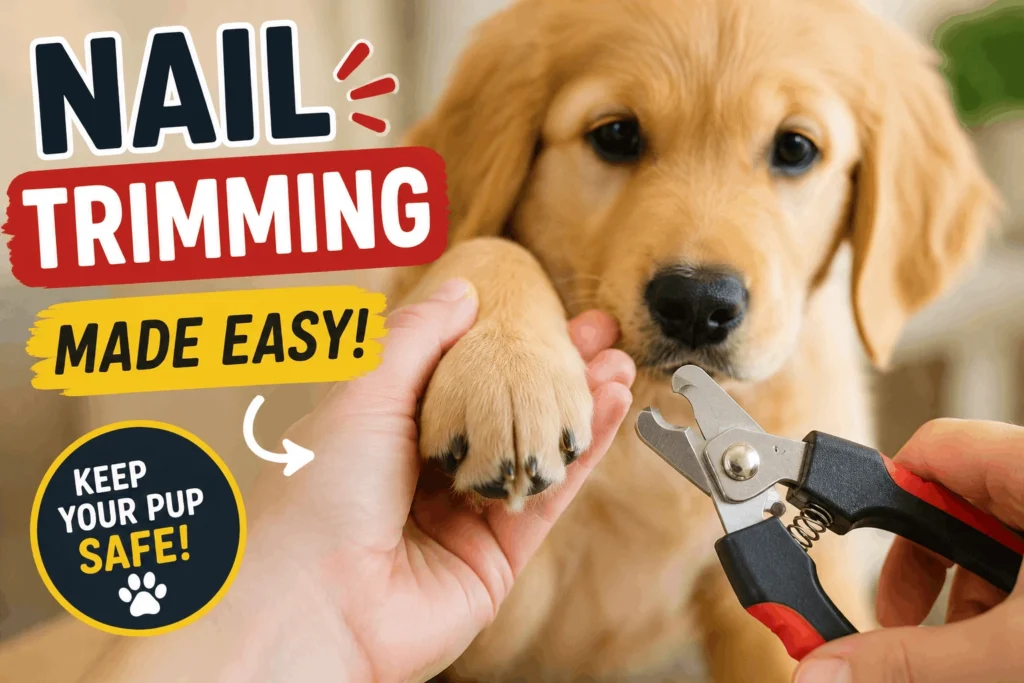
Start slow. Trim just the tip of the nail. Avoid the quick the pink blood vessel visible in light-colored nails. For a complete walkthrough of the process, our puppy nail trimming tips guide covers technique, frequency, and what to do if you nick the quick.
Recommended: Safari Professional Nail Trimmer or Dremel Pet Nail Grinder
6. Styptic Powder
Always keep styptic powder nearby when trimming nails. If you accidentally cut the quick, it stops bleeding within seconds.
Cornstarch works as a basic alternative in an emergency, but styptic powder is faster and more reliable.
Recommended: Miracle Care Kwik-Stop Styptic Powder
7. Puppy Shampoo Brush / Bath Scrubber
A silicone bath brush helps work puppy shampoo deep into the coat while massaging the skin. It removes dirt more effectively than hands alone and helps your puppy enjoy bath time rather than tolerate it.
Many also work as a de-shedding tool during baths.
8. Ear Cleaning Wipes or Solution
Floppy-eared breeds are highly prone to ear infections because moisture gets trapped inside. Even prick-eared breeds benefit from monthly ear checks.
Use a vet-recommended ear cleaning solution on a cotton ball, or pre-moistened ear wipes designed for dogs.
Never insert cotton swabs into the ear canal.
Check with your vet if you notice redness, odor, or your puppy scratching their ears frequently these can indicate infection.
For the full safe cleaning method, our puppy ear cleaning tips guide breaks down each step in detail.
9. Rounded-Tip Grooming Scissors
These are used for trimming fur around sensitive areas paws, face, ears, and sanitary areas where clippers are too aggressive.
The rounded tip is a safety feature that protects skin if your puppy moves suddenly.
Look for: Stainless steel blades with micro-serrated edges that grip the fur cleanly.
10. Non-Slip Grooming Mat
A grooming mat placed on a table, countertop, or in the bathtub gives your puppy secure footing during grooming sessions. When puppies feel unstable, they panic and move constantly.
A mat reduces stress, keeps sessions shorter, and prevents falls.
Grooming Tools by Coat Type
| Coat Type | Essential Tools |
|---|---|
| Short coat (Lab, Beagle) | Rubber glove, bristle brush, nail clippers |
| Medium coat (Golden, Spaniel) | Slicker brush, metal comb, deshedding tool |
| Long coat (Maltese, Yorkie) | Slicker brush, detangling comb, scissors |
| Curly coat (Poodle, Doodle) | Metal comb, curved scissors, bath brush |
| Double coat (Husky, GSD) | Deshedding tool, slicker brush, undercoat rake |
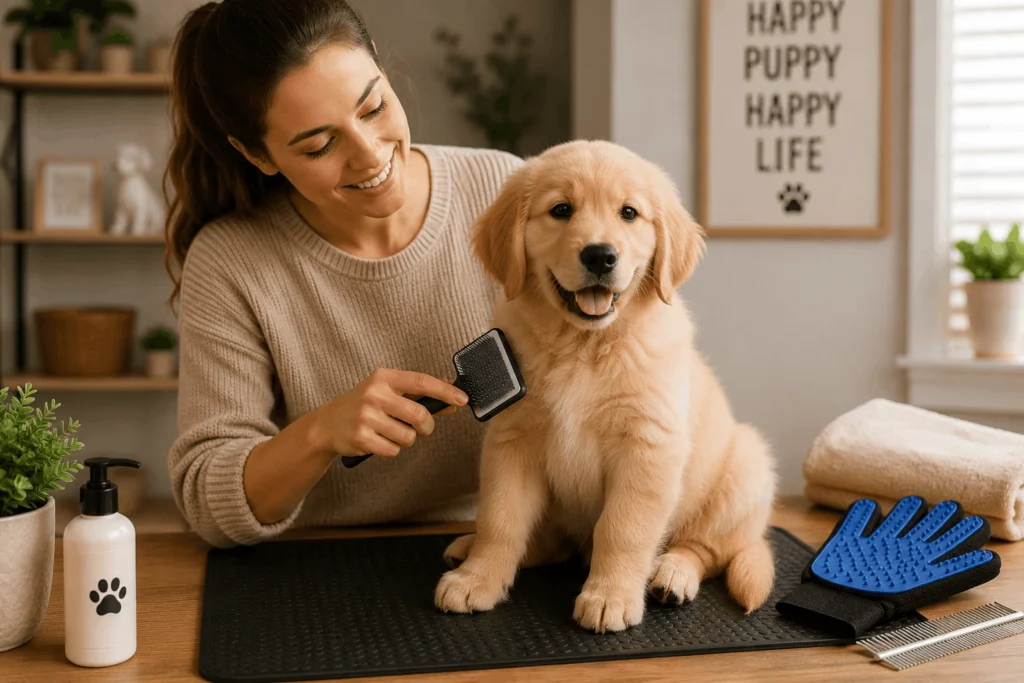
How to Build a Puppy Grooming Routine
Daily (5 minutes):
- Quick brush or rubber glove stroke
- Check eyes and ears for discharge
Weekly:
- Full brushing session
- Check nail length
- Wipe down ears with a cleaning wipe
Monthly:
- Full bath with puppy shampoo
- Nail trim (or every 2–3 weeks if nails grow fast)
- Trim fur around paws and face if needed
Keeping sessions short and rewarding at first using treats and praise makes your puppy look forward to grooming rather than run from it.
Common Grooming Mistakes to Avoid
1. Using adult dog tools on puppies
Adult grooming tools are often too stiff or heavy for young puppies. Start with softer, smaller tools designed for puppies or small breeds.
2. Skipping brushing between baths
Bathing a matted coat makes mats tighter and harder to remove. Always brush before bathing.
3. Cutting nails too short too fast
Trim small amounts consistently rather than one aggressive cut. Hitting the quick is painful and makes future nail sessions a battle.
4. Ignoring the ears
Ear infections develop quietly. Monthly cleaning prevents buildup and catches early signs of infection.
5. Forcing grooming when your puppy is stressed
If your puppy is overwhelmed, stop. Keep the first few sessions very short even just letting them sniff the brush before progressing.
Expert Tips About Best Puppy Grooming Tools
- Introduce tools gradually. Let your puppy sniff each tool before using it. Reward calm behavior.
- Groom after exercise. A tired puppy sits still more easily.
- Use treats strategically. A lick mat with peanut butter on the wall of the tub keeps puppies distracted during baths.
- Check paw pads during every grooming session. Look for cracks, debris between toes, or overgrown fur.
- Keep grooming sessions positive. End every session even short ones with praise and a treat.
Frequently Asked Questions
What grooming tools do I need for a new puppy?
Start with a slicker brush, rubber grooming glove, puppy nail clippers, styptic powder, ear cleaning wipes, and a non-slip mat. These cover the basics for any breed.
What is the best brush for a puppy?
A soft slicker brush works for most coat types. For very short-coated breeds, a rubber grooming glove is gentler and equally effective.
How often should I brush my puppy?
Short-coated breeds need brushing 2–3 times per week. Medium and long-coated breeds benefit from daily brushing to prevent tangles and mats.
When should I start grooming my puppy?
Start as early as 8 weeks old with very gentle sessions. Early exposure makes grooming a normal, stress-free part of your puppy’s life.
Are slicker brushes safe for puppies?
Yes, when used correctly. Choose a soft or medium pin slicker brush not stiff adult pins and use light pressure. Never press down hard enough to scratch the skin.
How do I cut my puppy’s nails safely at home?
Trim just the tip using sharp nail clippers. For light-colored nails, avoid the visible pink quick. For dark nails, trim in small increments and stop when you see a grey or white circle at the center of the cut nail. Keep styptic powder nearby.
Do I need a grooming table for my puppy?
A grooming table helps but is not essential. A non-slip mat on a stable surface works well for most home grooming routines.
Conclusion
Getting the right grooming tools from the start saves you money, reduces your puppy’s stress, and builds a lifelong routine that keeps them healthy. You do not need everything at once a slicker brush, nail clippers, styptic powder, and a rubber glove are enough to begin.
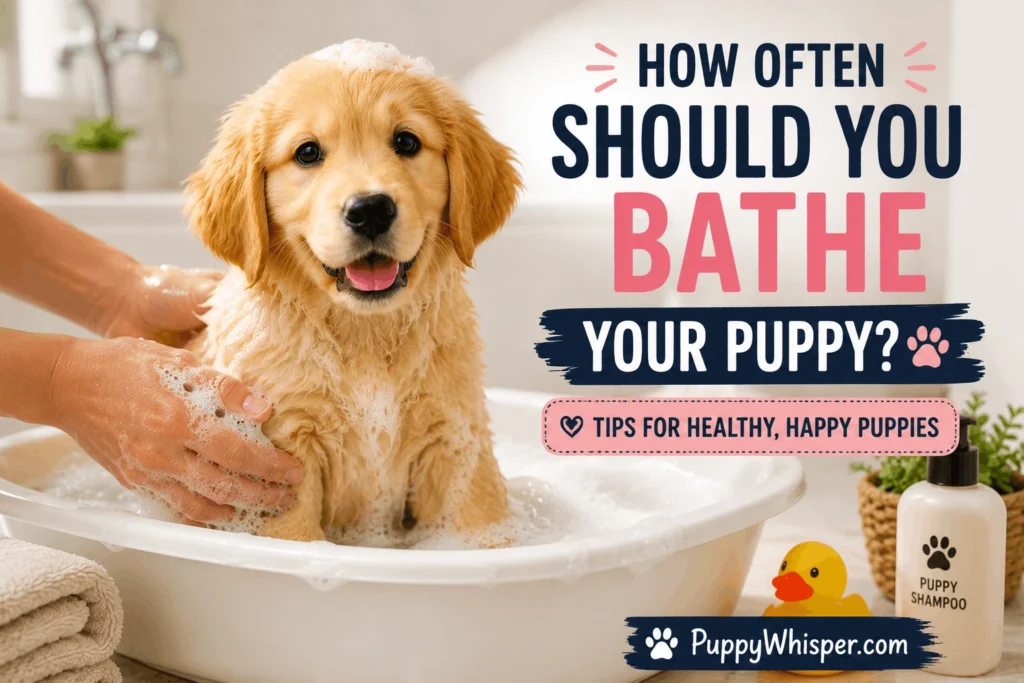
Once your tool kit is ready, round out the routine by learning how often you should bathe a puppy so bath day fits naturally alongside brushing and trimming. Add tools as your puppy grows and your confidence builds. The goal is a calm, consistent routine your puppy actually enjoys.
Start with the basics, stay patient, and your grooming sessions will get easier every single week.
Disclaimer: This article is for informational purposes only and does not replace professional veterinary advice. Always consult your vet for health concerns related to your puppy’s coat, skin, nails, or ears.
Disclosure: PuppyWhisper.com participates in the Amazon Associates Program and other affiliate programs. We may earn a commission when you purchase through links on this page, at no extra cost to you.

Muzammil Khan is a certified canine behaviorist and the founder of Puppywhisper. With 8+ years of experience in positive reinforcement training, Muzammil has helped over 1,000 puppies transition smoothly into their new homes. All health advice is reviewed in collaboration with licensed veterinarians.