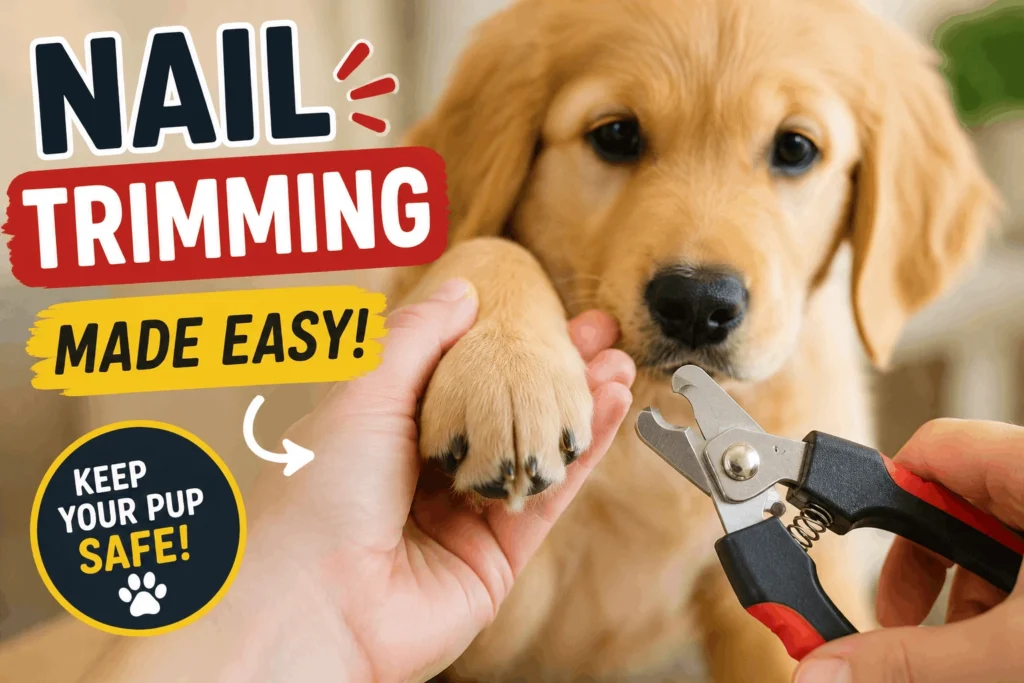
Your puppy squirms the second you pick up the clippers. Maybe you’ve already nicked the quick once and now you’re terrified to try again. You’re not alone nail trimming is one of the most avoided parts of puppy care, and that avoidance is exactly why nails get dangerously long. You must know about Puppy Nail Trimming Tips.
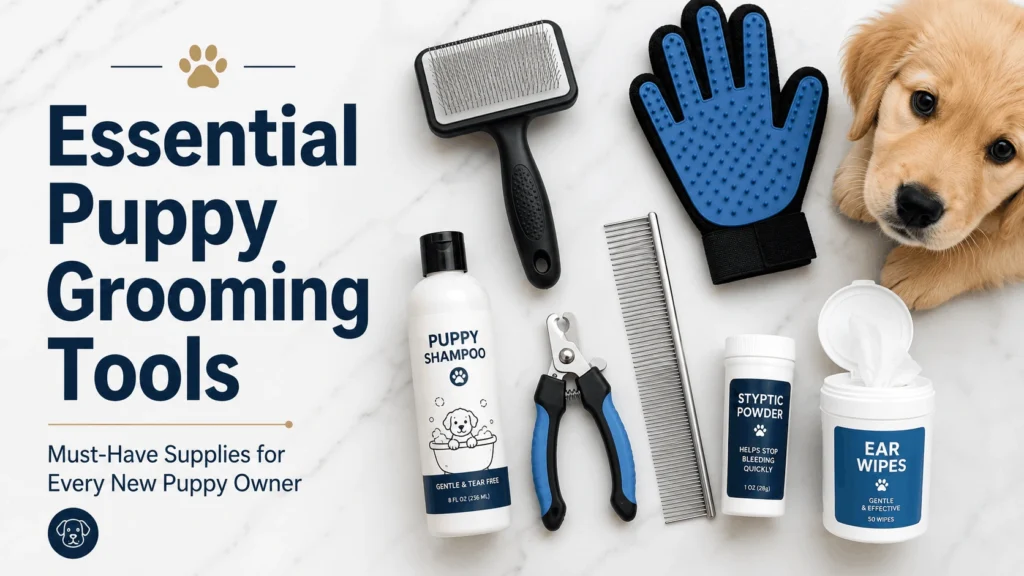
The good news: with the right tools and a calm approach, puppy nail trimming becomes a quick, low-stress task instead of a wrestling match. If you haven’t gathered your supplies yet, check out our full list of the best puppy grooming tools every new owner needs to see which clippers and grinders work best for beginners.
Quick Answer Puppy Nail Trimming Tips
Trim puppy nails every 1 to 2 weeks using sharp, puppy-sized clippers or a grinder. Cut small amounts at a time, stopping before the pink “quick” inside the nail. Keep styptic powder nearby in case of a small nick, and reward your puppy with treats throughout the process.
Why This Matters
Overgrown nails aren’t just a cosmetic issue. Long nails can:
- Force a puppy’s toes to splay unnaturally, affecting how they walk
- Lead to joint strain over time, especially in the wrists and shoulders
- Get caught on carpet, furniture, or fabric and tear painfully
- Curl into the paw pad in severe cases
Starting nail care early also shapes how your puppy feels about being handled for life. A puppy who learns that paw handling is safe and rewarding becomes an adult dog who tolerates vet exams, grooming, and at-home checkups without a fight. The same principle applies to coat care early, positive sessions with brushing your puppy build the same lifelong comfort with handling.
Understanding Puppy Nail Anatomy
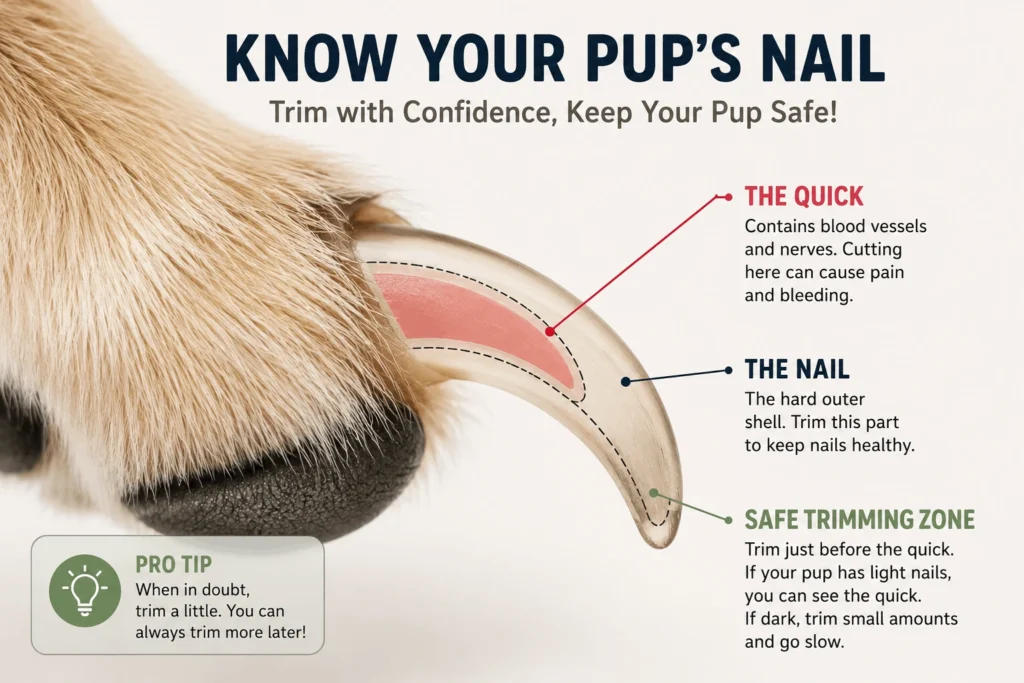
Inside every nail is a blood vessel and nerve bundle called the quick. Cutting into it causes pain and bleeding which is exactly what most new owners fear.
- Light-colored nails: The quick is usually visible as a pink area inside the nail, making it easier to avoid.
- Dark or black nails: The quick isn’t visible, so trims should be done in smaller increments.
As nails grow longer, the quick grows with them. Regular trimming keeps the quick receded, which is why consistent care makes each future trim easier and safer. VCA Animal Hospitals’ nail trimming guide offers additional visual guidance on locating the quick in both light and dark nails.
Tools You’ll Need
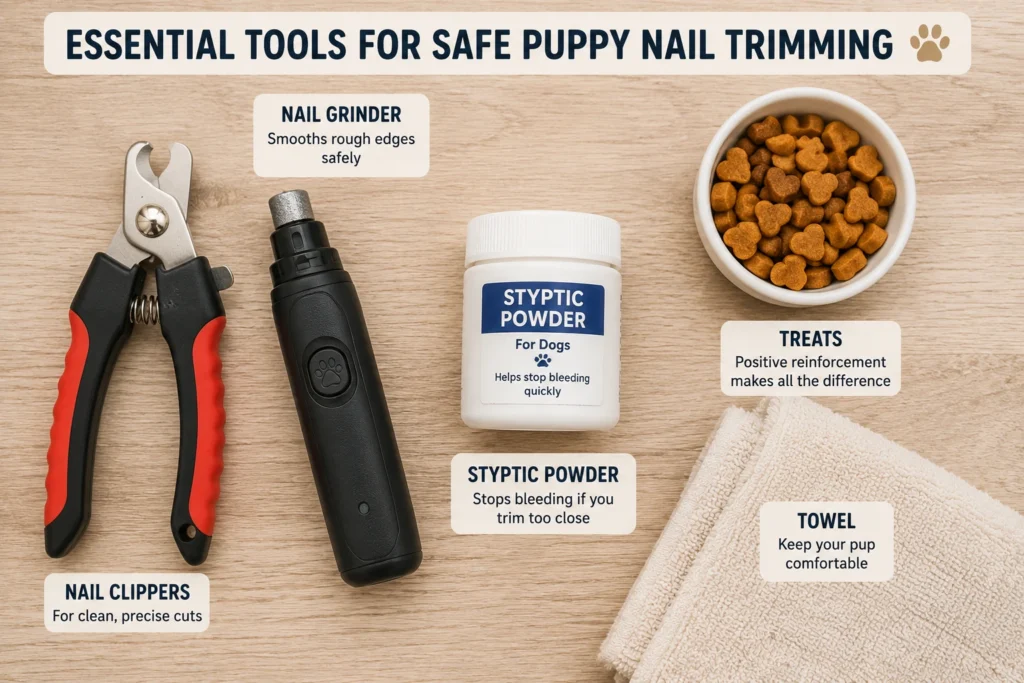
| Tool | Best For | Notes |
|---|---|---|
| Scissor-style clippers | Small or thin puppy nails | Clean, precise cut |
| Guillotine clippers | Slightly older puppies with thicker nails | Requires steady hand placement |
| Nail grinder | Puppies sensitive to clipper “snap” sound | Gradually files nail down |
| Styptic powder | Stopping bleeding from a nicked quick | Keep within reach during every trim |
| High-value treats | Building positive association | Use throughout, not just after |
A grinder is often the gentler starting point for nervous puppies since there’s no sudden pressure or sound.
Step-by-Step Guide
- Choose a calm moment. Trim after a walk or play session when your puppy is tired, not energized.
- Get your puppy used to paw handling first. Touch and gently squeeze each paw daily for several days before introducing clippers.
- Introduce the tool without cutting. Let your puppy sniff the clippers or grinder and reward calm behavior.
- Hold the paw gently but firmly. Support the paw from underneath, isolating one toe at a time.
- Trim small amounts. Cut only the curved tip of the nail, well before any pink area on light nails.
- Go slower on dark nails. Trim tiny slivers and stop as soon as you see a small gray or chalky dot in the center that’s your signal to stop.
- Reward after each nail, not just at the end. This builds tolerance faster.
- If bleeding occurs, press styptic powder firmly onto the nail tip for 30 seconds.
- End on a positive note, even if you only complete two or three nails on the first try.
How Often Should You Trim Puppy Nails?
Most puppies need a trim every 1 to 2 weeks. Active puppies who walk frequently on pavement may naturally wear nails down and need less frequent trims, while puppies that spend most time indoors need more regular attention.
Benefits of a Regular Trimming Routine
- Reduces the risk of painful cracks, splits, or torn nails
- Keeps your puppy’s gait and posture healthy
- Builds trust and comfort with handling
- Makes future vet and groomer visits far less stressful
- Prevents the quick from growing too long, making trims easier over time
Common Problems and Solutions
Problem: Puppy won’t stay still. Solution: Trim one or two nails per session instead of all at once. Short, frequent sessions build tolerance faster than one long struggle.
Problem: You’re afraid of cutting the quick. Solution: Use a grinder instead of clippers, or trim only the very tip of the nail until your confidence builds.
Problem: Nail bleeds after a trim. Solution: Apply styptic powder with firm pressure. If it’s a small nick, bleeding typically stops within a minute. If bleeding doesn’t stop or seems excessive, contact your veterinarian.
Problem: Puppy associates nail trims with stress. Solution: Practice “fake trims” holding the paw and touching clippers to the nail without cutting paired with treats, several times a week outside of actual trimming sessions.
Expert Tips
- Trim nails in good lighting so you can clearly see the quick on light-colored nails.
- Keep sessions under five minutes total, especially early on.
- Don’t forget the dewclaws (the small nail higher on the leg) they don’t wear down naturally and can grow into the skin if ignored.
- Pair every single nail trim with verbal praise, not just treats, so your puppy associates the entire process with calm energy.
- If your puppy is extremely anxious, ask your veterinarian or a professional groomer to demonstrate the technique once before doing it solo. The same advice applies to ear care a quick demonstration builds confidence fast, and our puppy ear cleaning tips guide covers the safe step-by-step process.
Common Mistakes to Avoid
- Cutting too much at once. Always trim conservatively you can always cut more, but you can’t undo cutting too much.
- Trimming when the puppy is overstimulated. Energy levels matter; trim during calm windows.
- Using human nail clippers. They crush rather than cleanly cut a dog’s nail structure and can cause splintering.
- Skipping the dewclaws. This commonly overlooked nail can curl into the paw pad if ignored for months.
- Avoiding trims after a bad experience. Skipping trims only allows the quick to grow longer, making future trims harder, not easier.
FAQ
How short should puppy nails be?
Nails should be short enough that they don’t touch the ground when your puppy is standing still. If you hear clicking on hard floors, it’s time for a trim.
What happens if you cut a puppy’s nail too short?
You may hit the quick, causing brief pain and light bleeding. This is rarely dangerous and stops quickly with styptic powder, though it should be avoided through small, careful cuts.
How do I get my puppy used to nail trimming?
Practice paw handling daily, introduce tools without cutting, and pair every step with treats and calm praise before attempting a full trim.
Can I use human nail clippers on a puppy?
No. Human clippers can crush or splinter a dog’s nail. Use clippers or grinders designed specifically for dogs.
How do I know if my puppy’s nails are too long?
If nails touch the floor when standing, click on hardwood, or visibly curve, they need trimming.
Is it normal for puppy nails to bleed a little after trimming?
A small amount of bleeding from a minor nick is common and usually stops within a minute with light pressure or styptic powder. Persistent or heavy bleeding warrants a call to your veterinarian.
Conclusion
Puppy nail trimming doesn’t have to be a dreaded chore. With the right tools, small consistent trims, and a calm, reward-based approach, most puppies learn to tolerate and eventually ignore the process entirely. Start with short sessions, watch for the quick, and keep styptic powder on hand just in case. Pair regular nail trims with a sensible bathing schedule too see how often you should bathe a puppy to keep the rest of the routine on track. Build the habit now, and you’ll have a dog that handles grooming with ease for years to come.

Muzammil Khan is a certified canine behaviorist and the founder of Puppywhisper. With 8+ years of experience in positive reinforcement training, Muzammil has helped over 1,000 puppies transition smoothly into their new homes. All health advice is reviewed in collaboration with licensed veterinarians.