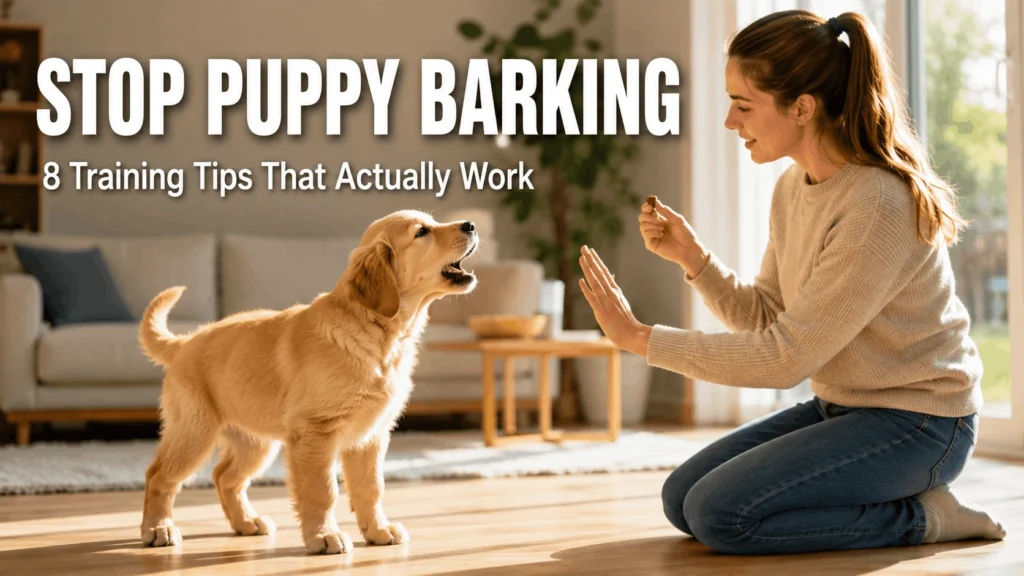
Your puppy seems to bark at everything. The doorbell rings, they bark. A neighbor walks by, they bark. You leave the room, they bark again.
While barking is a normal part of puppy communication, constant barking can quickly become frustrating for both owners and neighbors. The good news is that most barking problems can be improved with patience, consistency, and the right training approach.
Understanding why your puppy is barking is the first step toward solving the problem. If your puppy is also going through a mouthy phase, our puppy biting training tips use many of the same core principles.
Quick Answer How to Stop Puppy Barking
To stop puppy barking, identify what triggers the barking, avoid rewarding the behavior, and consistently reward quiet moments. Use positive reinforcement training, provide enough physical and mental exercise, teach a “quiet” cue, and address underlying issues such as boredom, fear, or separation anxiety.
Why This Matters
Ignoring excessive barking can create long-term behavior problems.
A puppy that learns barking gets attention may continue the habit into adulthood. Excessive barking can also lead to:
- Sleep disruptions
- Stress for family members
- Complaints from neighbors
- Increased anxiety in the puppy
- Difficulty managing behavior later
Early training helps build a calmer and more confident dog.
Why Do Puppies Bark?
Before correcting barking, understand the reason behind it.
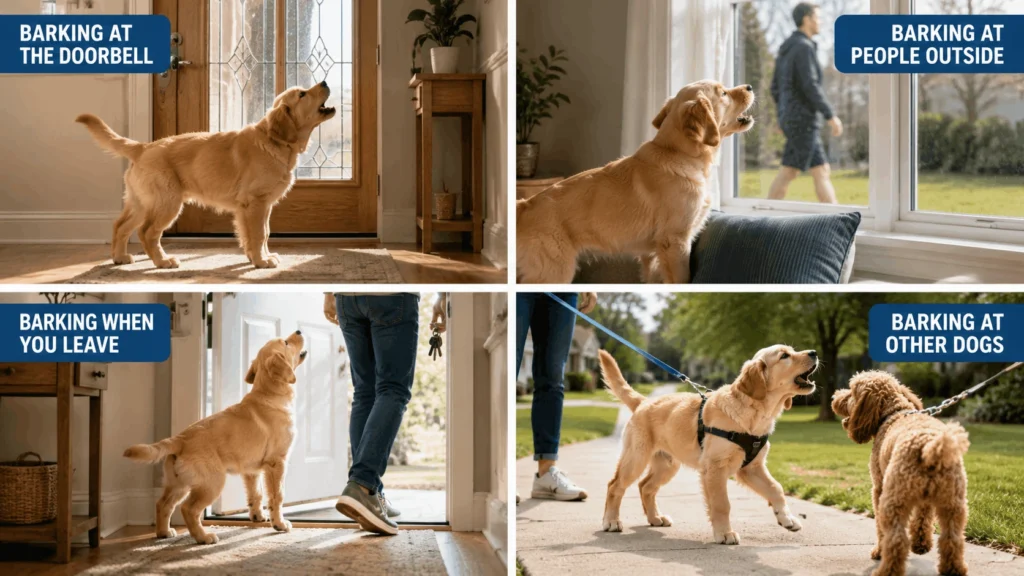
Common causes include:
| Cause | Description |
|---|---|
| Attention Seeking | Puppy wants interaction, food, or play |
| Boredom | Lack of exercise or mental stimulation |
| Fear | Unfamiliar people, sounds, or situations |
| Excitement | Greeting people or anticipating activities |
| Alert Barking | Noticing movement or noises |
| Separation Distress | Being left alone |
| Frustration | Unable to reach something desired |
Different causes require different solutions. Different causes require different solutions, and canine communication experts break these triggers down further in AKC’s breakdown of common dog vocalizations.
8 Proven Ways to Stop Puppy Barking
1. Identify the Trigger
Watch when the barking occurs.
Ask yourself:
- What happened right before the barking?
- Who or what is nearby?
- Is the puppy tired, excited, or anxious?
A barking journal can help identify patterns.
2. Reward Quiet Behavior
Many owners accidentally ignore quiet moments and only react when barking starts.
Instead:
- Keep treats nearby.
- Wait for a few seconds of silence.
- Reward immediately.
- Use praise consistently.
Your puppy learns that being quiet earns rewards.
3. Teach the “Quiet” Command
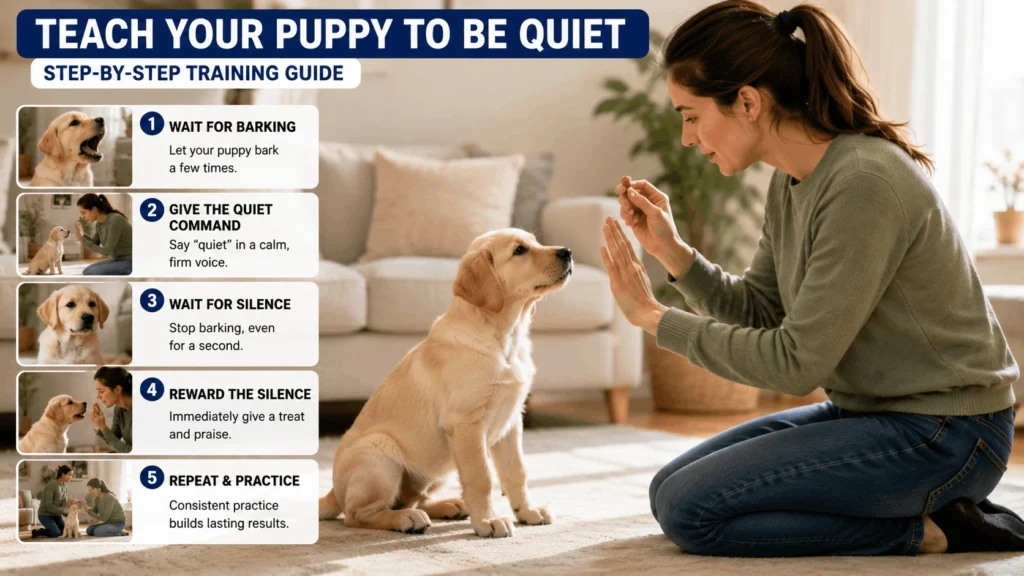
Once your puppy understands basic commands, teach a quiet cue.
Steps:
- Allow one or two barks.
- Say “Quiet” calmly.
- Wait for silence.
- Reward immediately.
- Repeat regularly.
Keep sessions short and positive.
4. Avoid Rewarding Barking
Puppies quickly learn what works.
If your puppy barks and immediately receives:
- Attention
- Treats
- Toys
- Playtime
They may repeat the behavior.
Wait for a brief pause before giving attention.
5. Increase Physical and Mental Exercise
A tired puppy is often a quieter puppy.
Daily activities may include:
- Walks appropriate for age
- Training sessions
- Puzzle toys
- Sniffing games
- Fetch
- Social interaction
Mental stimulation is just as important as physical exercise. A structured walk from our leash training a puppy guide is one of the easiest ways to burn off excess energy before it turns into barking.
6. Use Crate Training Correctly
Some puppies bark because they have not learned to feel comfortable in their crate.
Make the crate a positive place:
- Feed meals inside
- Provide safe chew toys
- Introduce it gradually
- Avoid using it as punishment
If barking occurs during crate training, check whether the puppy needs a bathroom break, exercise, or reassurance. For a full nighttime routine that prevents crate barking altogether, see our guide on crate training a puppy at night.
7. Socialize Your Puppy
Fear-based barking often improves with proper socialization.
Expose your puppy gradually to:
- New people
- Friendly dogs
- Different sounds
- Various environments
Keep experiences positive and age-appropriate.
8. Address Separation Issues Early
Some puppies bark whenever their owner leaves.
Practice short departures:
- Leave for a few seconds.
- Return calmly.
- Slowly increase time away.
- Avoid emotional departures or greetings.
If distress becomes severe, consult your veterinarian or a qualified behavior professional.
Puppy Barking Solutions by Situation
Barking at Night
Try:
- Consistent bedtime routine
- Potty break before sleep
- Comfortable sleeping area
- Adequate daytime exercise
Young puppies may need nighttime bathroom breaks.
Barking in the Crate
Check for:
- Hunger
- Bathroom needs
- Lack of exercise
- Crate discomfort
Avoid releasing your puppy while actively barking. Barking in the crate is often simply a bathroom signal, so make sure you’re following a consistent routine from our guide on how to potty train a puppy.
Barking at People
Reward calm behavior when visitors arrive.
Ask guests to ignore the puppy until they settle down.
Barking at Every Noise
Use controlled exposure.
Play low-volume recordings of common sounds and reward calm responses.
Benefits of Proper Barking Training
Consistent training can lead to:
- Better communication
- Reduced stress
- Improved obedience
- Stronger owner-puppy bond
- Greater confidence
- More peaceful home environment
Most owners notice improvement within a few weeks of consistent practice.
Common Barking Problems and Solutions
| Problem | Solution |
|---|---|
| Attention barking | Ignore barking and reward silence |
| Boredom barking | Increase enrichment activities |
| Fear barking | Gradual exposure and confidence building |
| Crate barking | Improve crate association |
| Night barking | Establish bedtime routine |
| Separation barking | Practice short absences |
Expert Tips
- Reward calm behavior throughout the day.
- Keep training sessions short and fun.
- Stay consistent with household rules.
- Use food puzzles and enrichment toys.
- Teach alternative behaviors such as “sit” or “place.”
- Focus on prevention rather than punishment.
Common Mistakes to Avoid
Yelling at Your Puppy
Your puppy may think you’re joining the barking.
Using Punishment
Harsh corrections can increase fear and anxiety.
Inconsistency
If one family member rewards barking while another ignores it, training becomes confusing.
Expecting Immediate Results
Behavior change takes time and repetition.
Ignoring Medical Issues
Sudden changes in barking behavior may require veterinary evaluation.
Frequently Asked Questions
Why does my puppy bark so much?
Most puppies bark due to excitement, attention seeking, boredom, fear, or alerting owners to something in their environment.
How do I stop my puppy from barking for attention?
Avoid giving attention while barking occurs. Reward calm and quiet behavior instead.
Is barking normal in puppies?
Yes. Barking is a natural form of communication. The goal is managing excessive barking, not eliminating barking entirely.
How long does it take to stop puppy barking?
Many owners see improvement within several weeks of consistent training, though results vary by puppy and cause.
How do I stop puppy barking at night?
Create a predictable bedtime routine, provide exercise during the day, and ensure potty needs are met before bedtime.
What is the quiet command?
A verbal cue such as “Quiet” that teaches a puppy to stop barking and remain silent briefly before receiving a reward.
When should I contact a veterinarian?
Contact your veterinarian if barking begins suddenly, appears linked to pain, anxiety, illness, or becomes unusually intense.
Conclusion
Learning how to stop puppy barking starts with understanding why your puppy is barking in the first place. Most barking problems improve when owners reward calm behavior, provide enough exercise, and stay consistent with training.
Focus on teaching your puppy what you want them to do instead of simply trying to stop the noise. Small daily training sessions can create lasting habits and help your puppy grow into a calmer, more confident companion.

Muzammil Khan is a certified canine behaviorist and the founder of Puppywhisper. With 8+ years of experience in positive reinforcement training, Muzammil has helped over 1,000 puppies transition smoothly into their new homes. All health advice is reviewed in collaboration with licensed veterinarians.