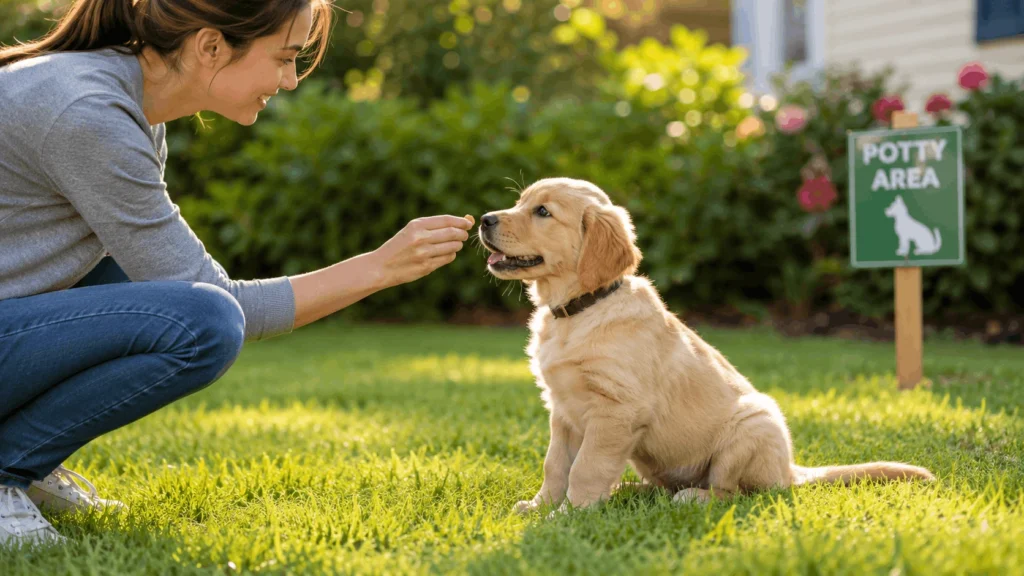
Learning how to potty train a puppy is one of the first challenges every new dog owner faces. Bringing home a new puppy is exciting, but dealing with accidents inside the house can quickly become frustrating. The good news is that most puppies can learn proper bathroom habits when given a consistent routine, positive reinforcement, and patience.
Potty training is one of the first and most important lessons your puppy will learn. A well-trained puppy grows into a cleaner, happier, and more confident adult dog. A properly sized crate speeds up potty training dramatically see our full guide on crate training a puppy at night for setup details.
Quick Answer How to Potty Train a Puppy
To potty train a puppy, take them outside frequently, use a consistent bathroom schedule, reward successful potty trips immediately, supervise closely indoors, and use a crate appropriately. Most puppies become reliably house-trained within 4 to 6 months, although some learn sooner.
Why Potty Training Matters
Potty training is about more than keeping your floors clean. Building trust starts on day one and it doesn’t stop at the bathroom. If your puppy is also nipping and mouthing, read our puppy biting training tips to handle both challenges at the same time.
Proper house training helps:
- Build trust between you and your puppy.
- Establish healthy routines.
- Prevent long-term behavioral problems.
- Reduce stress for both owner and dog.
- Improve cleanliness and hygiene at home.
A puppy that understands where to eliminate develops confidence and adapts more easily to household rules. Proper house training helps build trust and prevent long-term behavioral problems, a view widely shared among training authorities like the AKC’s official house-training guidelines.
When Should You Start Potty Training?
Start potty training as soon as your puppy arrives home.
Most puppies are adopted between 8 and 12 weeks of age, which is an ideal time to begin training.
General Bladder Control Guide
| Puppy Age | Approximate Bladder Control |
|---|---|
| 8 Weeks | 2 Hours |
| 10 Weeks | 2 to 3 Hours |
| 12 Weeks | 3 Hours |
| 4 Months | 4 Hours |
| 6 Months | 6 Hours |
Every puppy develops differently, so adjust expectations based on breed, size, and individual temperament. This is also the ideal window to begin leash training a puppy, since both skills benefit from an early start.
What You’ll Need Before Starting
Prepare these essentials:
Potty Training Checklist
✓ Dog crate
✓ Puppy treats
✓ Leash
✓ Enzyme-based cleaner
✓ Consistent feeding schedule
✓ Designated potty area
✓ Patience and consistency
Step-by-Step Guide to Potty Train a Puppy
1. Create a Consistent Schedule
Consistency is the foundation of successful potty training.
Take your puppy outside:
- First thing in the morning
- After meals
- After naps
- After play sessions
- Before bedtime
- Every 1 to 2 hours for young puppies
The more opportunities your puppy has to succeed, the faster training progresses.
2. Choose One Potty Spot
Always bring your puppy to the same outdoor location.
The familiar scent encourages elimination and helps your puppy associate the area with bathroom behavior.
Use a simple cue such as:
- “Go potty”
- “Bathroom time”
- “Do your business”
Keep the command consistent.
3. Reward Immediately
When your puppy finishes eliminating outdoors:
- Praise enthusiastically.
- Offer a small treat within 1 to 2 seconds.
- Use a happy tone of voice.
Immediate rewards help puppies connect the action with the reward.
4. Supervise Indoors
Unsupervised puppies often have accidents.
Watch for signs that your puppy needs to go outside:
- Sniffing the floor
- Circling
- Whining
- Restlessness
- Suddenly leaving playtime
If you notice these signals, take your puppy outside immediately. Whining can also be a general attention cue rather than a bathroom signal, so it helps to rule out other causes using our guide on how to stop puppy barking.
5. Use Crate Training Correctly
Dogs naturally avoid soiling their sleeping area.
A properly sized crate can accelerate potty training.
The crate should be large enough for your puppy to:
- Stand up
- Turn around
- Lie down comfortably
Avoid oversized crates, as puppies may use one corner as a bathroom.
6. Handle Accidents Properly
Accidents are part of the learning process.
If you catch your puppy in the act:
- Interrupt gently with a calm sound.
- Take them outside immediately.
- Reward them if they finish outdoors.
Never:
- Yell
- Hit
- Rub their nose in accidents
Punishment can create fear and confusion.
Use an enzyme cleaner to completely remove odors and discourage repeat accidents.
Sample Puppy Potty Training Schedule
A bathroom schedule works best when it fits inside your puppy’s full daily routine. See our complete puppy training schedule to build a structured day your puppy can actually follow.
8 to 12 Week Old Puppy
| Time | Activity |
| 6:30 AM | Potty Break |
| 7:00 AM | Breakfast |
| 7:15 AM | Potty Break |
| 9:00 AM | Potty Break |
| 11:00 AM | Potty Break |
| 12:00 PM | Lunch |
| 12:15 PM | Potty Break |
| 2:00 PM | Potty Break |
| 4:00 PM | Potty Break |
| 6:00 PM | Dinner |
| 6:15 PM | Potty Break |
| 8:00 PM | Potty Break |
| 10:00 PM | Final Potty Break |
Benefits of Proper Potty Training
Successful potty training provides:
- Fewer household accidents
- Better hygiene
- Reduced stress
- Improved obedience
- Stronger owner-puppy relationship
- Easier travel and socialization
Common Problems and Solutions
Puppy Keeps Having Accidents
Possible causes:
- Too much freedom
- Inconsistent schedule
- Insufficient supervision
Solution:
Return to frequent potty breaks and closer monitoring.
Puppy Won’t Potty Outside
Possible causes:
- Fear of outdoor environment
- Distractions
- Lack of routine
Solution:
Visit the same potty spot and wait patiently.
Puppy Has Accidents at Night
Possible causes:
- Bedtime water intake
- Young age
- Long overnight periods
Solution:
Provide a final potty break before bed and consider one nighttime break for very young puppies.
Expert Tips for Faster Results
Feed on a Schedule
Free-feeding makes potty timing unpredictable.
Scheduled meals help regulate bathroom habits.
Track Potty Patterns
Keep a simple log of:
- Meals
- Water intake
- Potty breaks
- Accidents
Patterns often become obvious within a few days.
Reward Every Success
During the first few weeks, reward every successful outdoor bathroom trip.
Consistency speeds up learning.
Be Patient
Some puppies learn quickly, while others require several months.
Consistency matters more than speed.
Common Mistakes to Avoid
Mistake 1: Punishing Accidents
Punishment damages trust and slows learning.
Mistake 2: Giving Too Much Freedom
Limit access to the home until training is reliable.
Mistake 3: Skipping Potty Breaks
Young puppies need frequent opportunities.
Mistake 4: Inconsistent Commands
Use the same potty cue every time.
Mistake 5: Cleaning Incorrectly
Regular cleaners may leave odor traces that encourage repeat accidents.
Frequently Asked Questions
How long does it take to potty train a puppy?
Most puppies require 4 to 6 months to become reliably house-trained, although some may learn sooner.
Can an 8-week-old puppy be potty trained?
Yes. Training should begin immediately when the puppy comes home.
Should I use puppy pads?
Puppy pads can be useful in some situations but may prolong outdoor potty training if used incorrectly.
How often should a puppy go outside?
Young puppies typically need bathroom breaks every 1 to 2 hours while awake.
What should I do if my puppy regresses?
Return to a stricter schedule, increase supervision, and reward successful potty trips consistently.
Conclusion
Learning how to potty train a puppy requires patience, consistency, and positive reinforcement. Establish a predictable schedule, supervise closely, reward outdoor success immediately, and use a crate appropriately. While accidents are normal during the learning process, most puppies become reliably house-trained with a structured routine and ongoing encouragement.
The effort you invest now will create habits that last for your dog’s lifetime.

Muzammil Khan is a certified canine behaviorist and the founder of Puppywhisper. With 8+ years of experience in positive reinforcement training, Muzammil has helped over 1,000 puppies transition smoothly into their new homes. All health advice is reviewed in collaboration with licensed veterinarians.