Your dog has chewed through another shoe, shredded a couch cushion, or spent the afternoon barking at nothing. That’s usually not a behavior problem. It’s a boredom problem. A dog with no outlet for mental energy will create one, and it’s rarely something you want destroyed.
The best interactive dog toys give dogs a job to do.. Instead of burning energy through destruction, they work their brain solving a puzzle, sniffing out hidden treats, or chasing a toy that moves unpredictably. This guide breaks down the main categories, how to pick the right one for your dog, and what to watch for so playtime stays safe.
Quick Answer About Best Interactive Dog Toys
The best interactive dog toys fall into four categories: treat-dispensing toys, puzzle feeders, snuffle mats, and automatic motion toys. Treat-dispensing toys and puzzle feeders work well for solo enrichment time, snuffle mats are great for calming anxious dogs, and motion toys suit high-energy breeds that need active play. Choose based on your dog’s chew strength and problem-solving experience.
Why This Matters
Physical exercise tires the body, but mental exercise tires the brain, and many owners only focus on the first one. A 20-minute puzzle-solving session can leave a dog just as settled as a 45-minute walk, which matters on rainy days or for owners with limited time.
Skipping mental stimulation often shows up as destructive chewing, excessive barking, or restlessness, especially in working breeds and high-energy puppies. Giving a dog the right outlet reduces those behaviors naturally instead of just managing the symptoms.
Types of Interactive Dog Toys
| Toy Type | Best For | Skill Level Needed |
|---|---|---|
| Treat-dispensing toys | Solo playtime, food motivation | Beginner |
| Puzzle feeders | Problem-solving, slow eating | Beginner to intermediate |
| Snuffle mats | Calming anxious or stressed dogs | Beginner |
| Automatic motion toys | High-energy dogs, active play | Beginner |
| Tug-and-pull interactive toys | Bonding play with owner | Beginner |
Treat-Dispensing Toys
These toys hold kibble or treats inside a hollow body that releases food as the dog rolls, noses, or chews it. They’re a strong starting point for puppies because the reward is immediate and the mechanics are simple to understand.
Look for adjustable difficulty settings so the toy can get harder to figure out as your dog improves, keeping the challenge fresh.
Puzzle Feeders
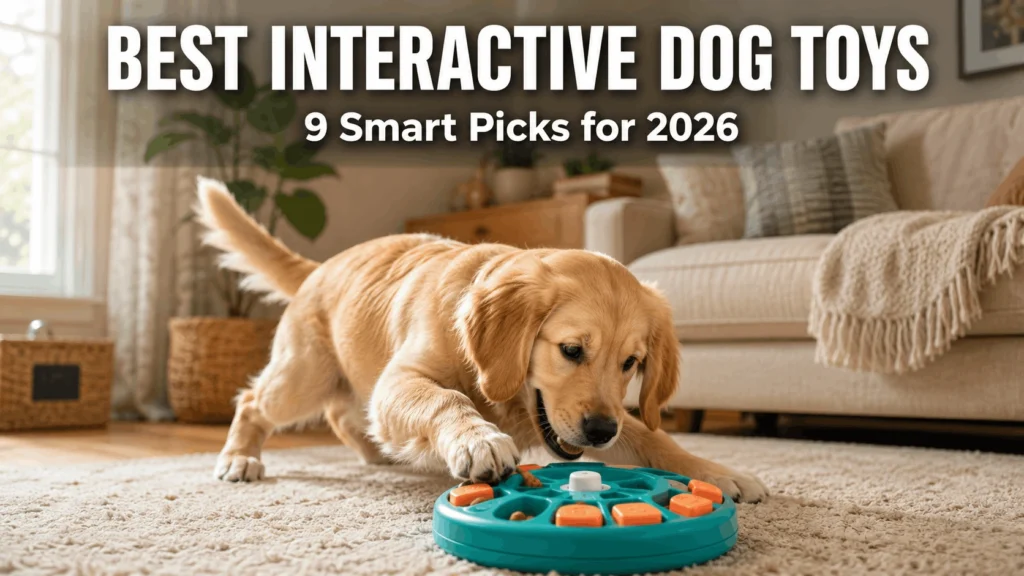
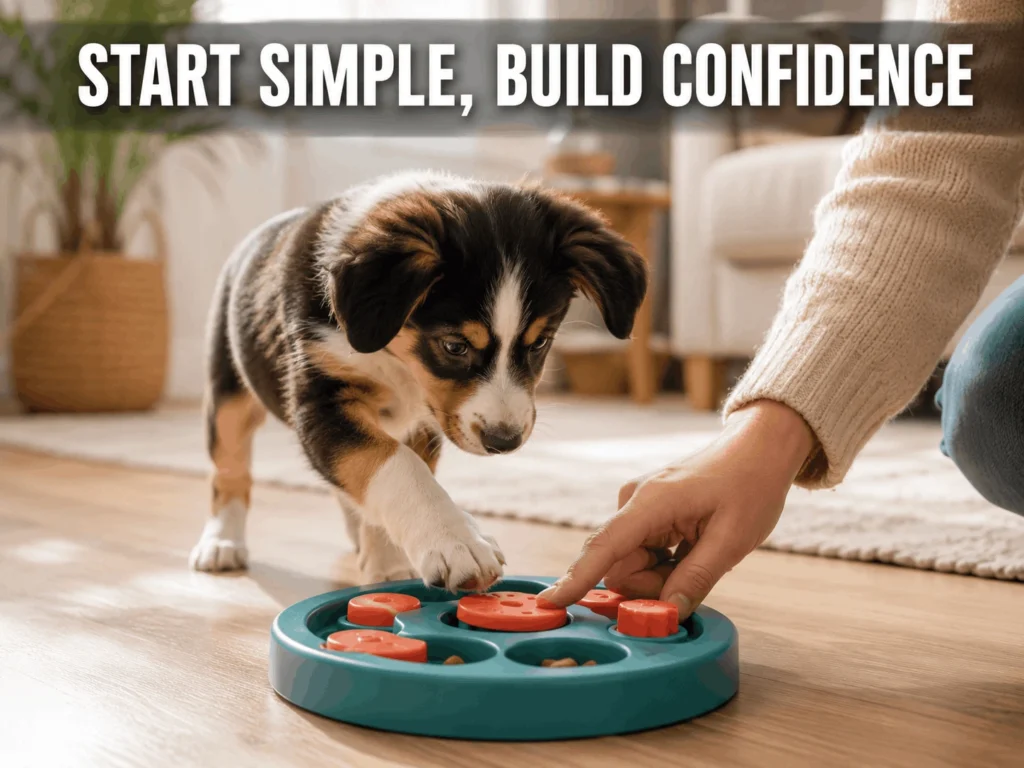
Puzzle feeders ask more of a dog’s brain. They often involve sliding compartments, lifting flaps, or spinning discs to reveal hidden treats. These are excellent for slowing down fast eaters and giving smart, high-energy breeds a real mental challenge.
Start with a one or two-step puzzle before moving to anything with multiple hidden compartments.
Snuffle Mats
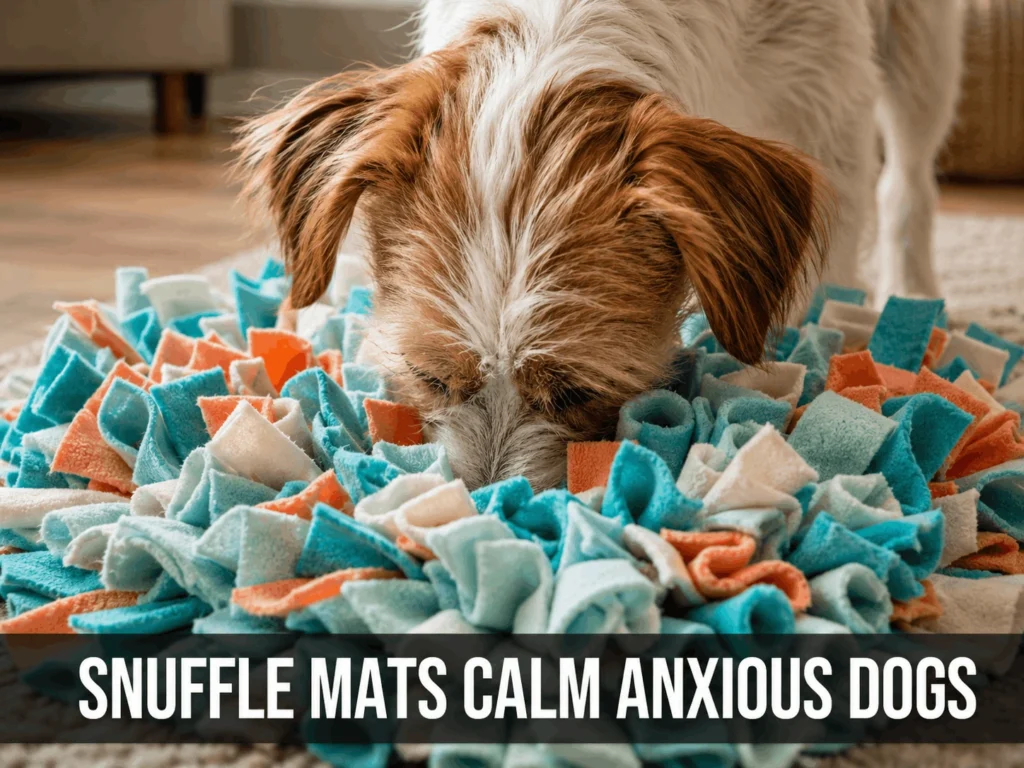
A snuffle mat is a fabric mat with fleece strips where treats get hidden. Dogs use their nose to “forage,” which taps into natural scenting instincts. This is especially useful for anxious dogs, since the repetitive sniffing behavior has a calming effect similar to slow, methodical exercise.
Automatic and Motion Toys
These toys move on their own, rolling, bouncing, or changing direction unpredictably to mimic prey-like movement. They’re a good fit for high-energy dogs who need active engagement and for owners who can’t always be present for play.
Always check battery compartments are secure and the toy is rated for your dog’s size before leaving it unsupervised.
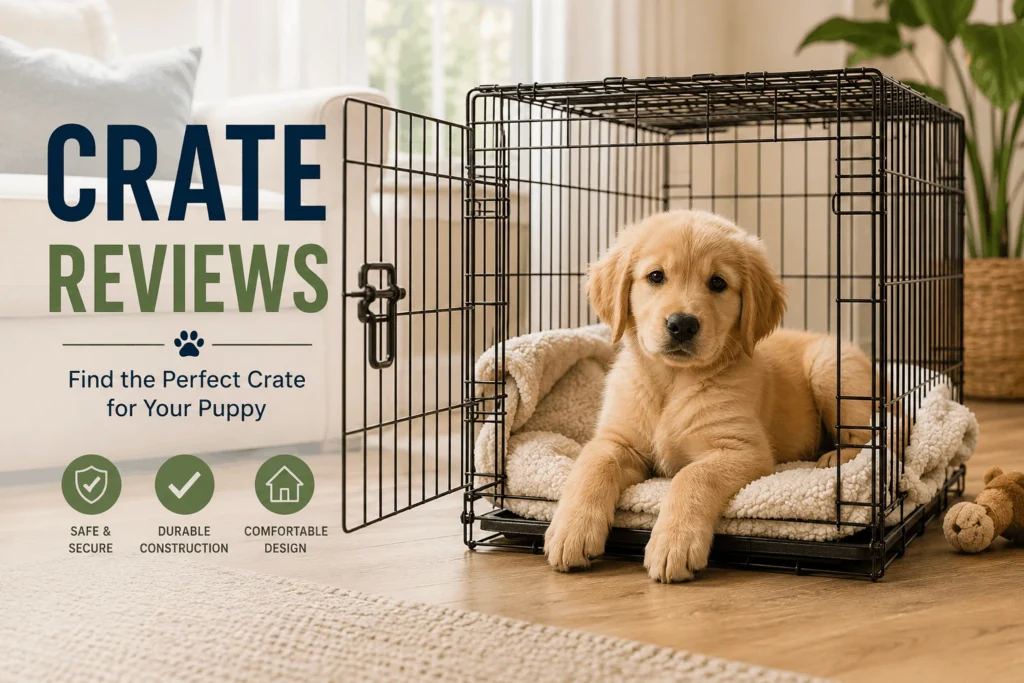
Many owners keep automatic toys inside a puppy crate during unsupervised play so the toy and any cords stay contained.
How to Choose the Right Interactive Toy for Your Dog
- Match the toy to chew strength. Aggressive chewers need reinforced rubber or nylon construction, not flimsy plastic.
- Consider your dog’s experience level. Puppies and toy-puzzle beginners should start simple before graduating to multi-step puzzles.
- Think about supervision. Treat-dispensing toys and snuffle mats are generally safer left unsupervised; automatic toys with small parts need more oversight.
- Pick based on the behavior you’re solving. Anxious dogs benefit most from snuffle mats; bored, food-motivated dogs do well with puzzle feeders.
Step-by-Step Guide: Introducing a New Puzzle Toy
- Start with the toy empty. Let your dog sniff and investigate it with no food inside first.
- Add an easy treat reward. Place a visible treat that requires minimal effort to get on the first try.
- Demonstrate if needed. Nudge the toy yourself so your dog sees how it works.
- Increase difficulty gradually. Once your dog solves the easy version consistently, move to a harder setting or a more complex puzzle.
- End on a win. If your dog gets frustrated, help them succeed before putting the toy away so the experience stays positive.
Benefits of Interactive Play
- Reduces destructive chewing and excessive barking caused by boredom
- Slows down fast eaters, which can reduce bloating risk in deep-chested breeds, and keeps mealtime mess contained on a washable mat or training pad.
- Builds problem-solving confidence, especially valuable for working and herding breeds
- Provides a calming outlet for anxious dogs through scent-based foraging
- Gives owners a reliable tool for rainy days or limited-exercise periods
Common Problems and Solutions
Problem: My dog loses interest in the toy quickly. Solution: Rotate toys every few days instead of leaving the same one out constantly. It’s also a good time for a quick wipe-down or bath with a gentle puppy shampoo, since toys spend a lot of time in your puppy’s mouth. Novelty matters more than variety in toy count.
Problem: My dog gets frustrated and gives up. Solution: Drop back to an easier difficulty level and rebuild confidence before increasing the challenge again.
Problem: My dog destroys the toy instead of solving it. Solution: Switch to a toy rated for heavy chewers, usually made of solid rubber or reinforced nylon rather than soft plastic.
Expert Tips
- Use puzzle toys at mealtime instead of a regular bowl a few times a week to combine feeding with mental stimulation.
- Keep 3 to 4 toys in rotation rather than leaving every toy out at once, which keeps each one feeling new.
- Supervise the first few sessions with any new toy to confirm your dog can’t break off and swallow small pieces.
- Pair toy time with calm settling cues so play sessions end with your dog relaxed, not wound up.
Common Mistakes to Avoid
- Choosing a toy too advanced for a beginner. Starting with a multi-step puzzle often leads to frustration instead of engagement.
- Leaving automatic toys unsupervised too soon. Battery compartments and small moving parts need a few supervised sessions first.
- Never rotating toys. Leaving the same toy out indefinitely causes most dogs to lose interest within days.
- Ignoring chew strength. A toy built for light chewers won’t survive a determined heavy chewer and can become a choking hazard once damaged.
FAQ Section
What are the best interactive toys for bored dogs?
Treat-dispensing toys and puzzle feeders are the strongest options for boredom, since they give a dog a clear, rewarding task to focus on.
Do puzzle toys really help with separation anxiety?
They can help with mild anxiety by providing a positive distraction, though severe separation anxiety usually needs a broader training plan and sometimes veterinary guidance.
How do I introduce a puppy to a puzzle toy?
Start with the toy empty so your puppy can investigate it safely, then add an easy treat reward before increasing difficulty.
Are interactive toys safe to leave puppies alone with?
Treat-dispensing toys and snuffle mats are generally safe unsupervised once you’ve confirmed durability; automatic toys with batteries or small parts need supervision at first.
What’s the difference between a puzzle toy and a treat-dispensing toy?
Treat-dispensing toys release food through simple motion like rolling, while puzzle toys require multi-step problem solving like sliding or lifting parts.
How often should I rotate my dog’s toys?
Every 3 to 5 days works well for most dogs, keeping engagement high without needing to buy new toys constantly.
Can interactive toys replace daily walks?
No. They support mental stimulation but don’t replace the physical exercise and outdoor experience dogs need from regular walks.
What size interactive toy should I get for a puppy?
Choose a size appropriate for your puppy’s current mouth and breed’s expected adult size, and size up as they grow.
Conclusion
The right interactive toy turns boredom into mental exercise, which solves more destructive behavior problems than most owners expect. Start simple, match the toy to your dog’s chew strength and experience level, and rotate toys regularly to keep engagement high. Once your dog has a solid toy rotation, pair it with a consistent puppy feeding schedule so playtime and mealtime work together instead of competing for attention.

Muzammil Khan is a certified canine behaviorist and the founder of Puppywhisper. With 8+ years of experience in positive reinforcement training, Muzammil has helped over 1,000 puppies transition smoothly into their new homes. All health advice is reviewed in collaboration with licensed veterinarians.