Introduction
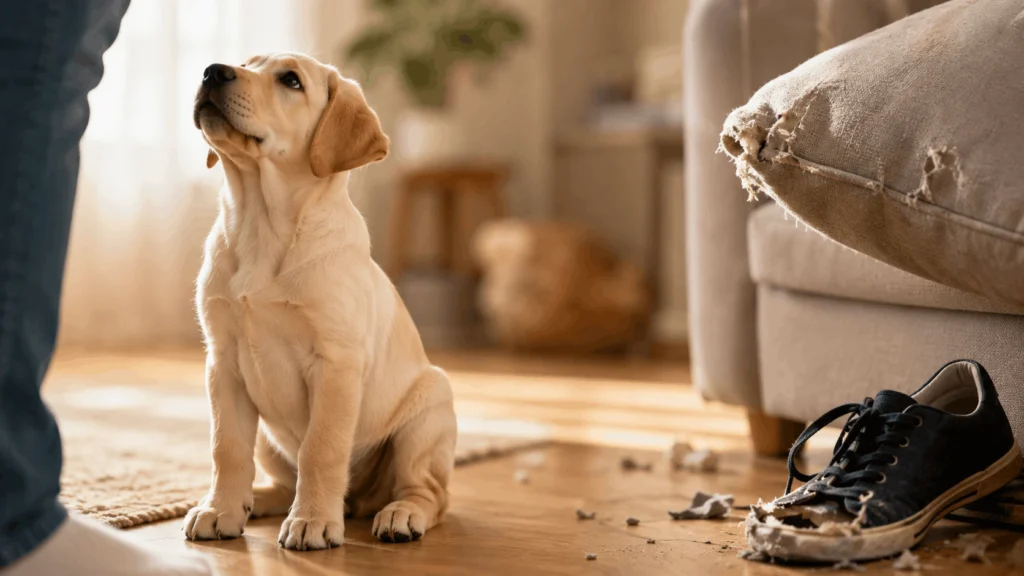
Your puppy just chewed the corner of your couch, ignored you at the park, and ripped up the mail again. You’ve probably heard someone tell you to “show him who’s boss.” Here’s the problem: that advice doesn’t actually teach a puppy anything. It just teaches him to be afraid of you.
Positive reinforcement puppy training works because it does the opposite. Instead of punishing mistakes, you reward the behavior you actually want, and your puppy learns to repeat it on his own, because it pays off for him. This isn’t a soft or slow method. It’s the training approach used by professional trainers, service dog organizations, and veterinary behaviorists because it builds real, reliable behavior without damaging trust.
This guide walks you through exactly what positive reinforcement training is, how to start it today, and how to avoid the mistakes that stall most new puppy owners in week one.
Why Trust This Guide
This guide is based on recommendations from veterinary behaviorists, certified professional dog trainers, and modern reward-based training methods used by organizations that train service dogs. The techniques are beginner friendly and focus on building lifelong good behavior without fear or punishment.
Positive Reinforcement Puppy Training: Quick Answer
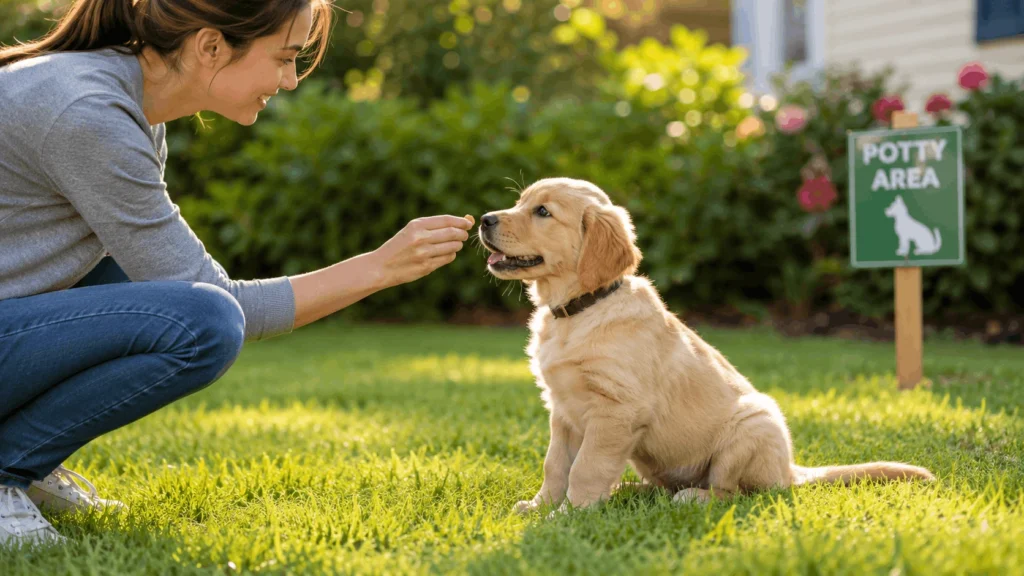
Positive reinforcement puppy training means rewarding your puppy immediately after they do something you want sitting, coming when called, going potty outside using treats, praise, play, or toys. The reward makes the behavior more likely to happen again. Start with short, 5-minute sessions, reward the instant the correct behavior happens, and stay consistent across the whole household.
What Is Positive Reinforcement Training?
Positive reinforcement is a learning principle: when a behavior is immediately followed by something the puppy values, that behavior becomes more likely to happen again. In plain terms your puppy sits, you give a treat, he sits more often.
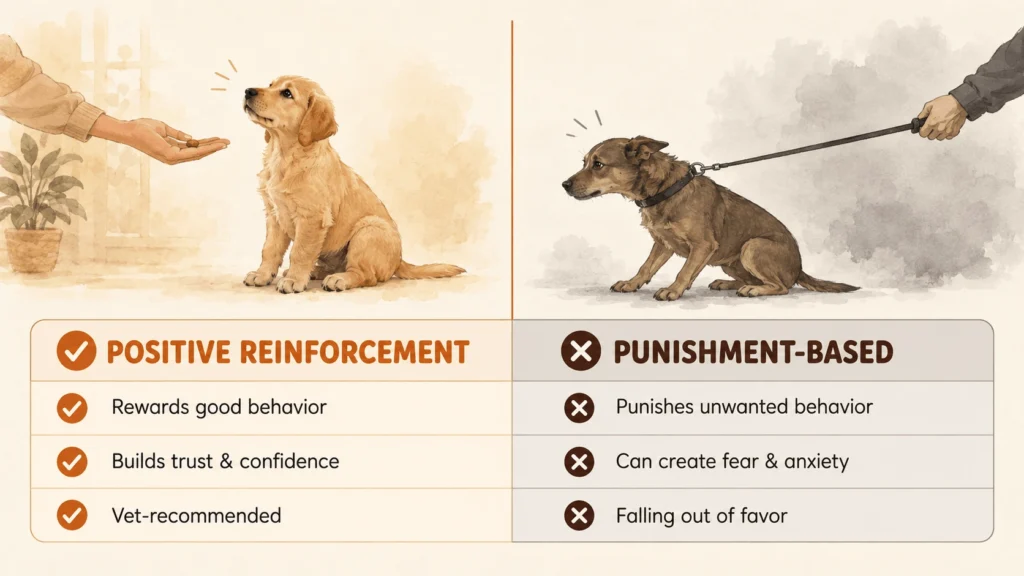
This differs from punishment-based methods (leash corrections, yelling, alpha rolls), which try to stop unwanted behavior through discomfort or fear. Modern trainers and veterinary behavior organizations favor reward-based methods because they build confidence instead of anxiety, and because fearful puppies are more likely to develop behavior problems like reactivity or avoidance later in life.
Why Positive Reinforcement Works Better Than Punishment
- It builds trust instead of fear. A puppy trained with rewards sees you as the source of good things, which makes recall, leash walking, and handling much easier long-term.
- It’s easier to be consistent. Rewarding good behavior is something every family member can do correctly. Punishment timing is much harder to get right and easy to misuse.
- It reduces fear-based behavior problems. Puppies trained with punishment are statistically more prone to fear and aggression issues later, according to veterinary behavior research summarized by the AVMA.
- It works for every stage of life. The same principle scales from basic obedience to advanced tricks, service work, and behavior modification.
Positive Reinforcement vs Punishment Training
| Positive Reinforcement | Punishment-Based Training |
|---|---|
| Rewards good behavior | Punishes unwanted behavior |
| Builds trust and confidence | Can create fear and anxiety |
| Encourages puppies to think and learn | Often stops behavior temporarily |
| Strengthens the bond with your puppy | May weaken the relationship |
| Recommended by veterinary behavior experts | Less commonly recommended today |
When to Start Positive Reinforcement Training
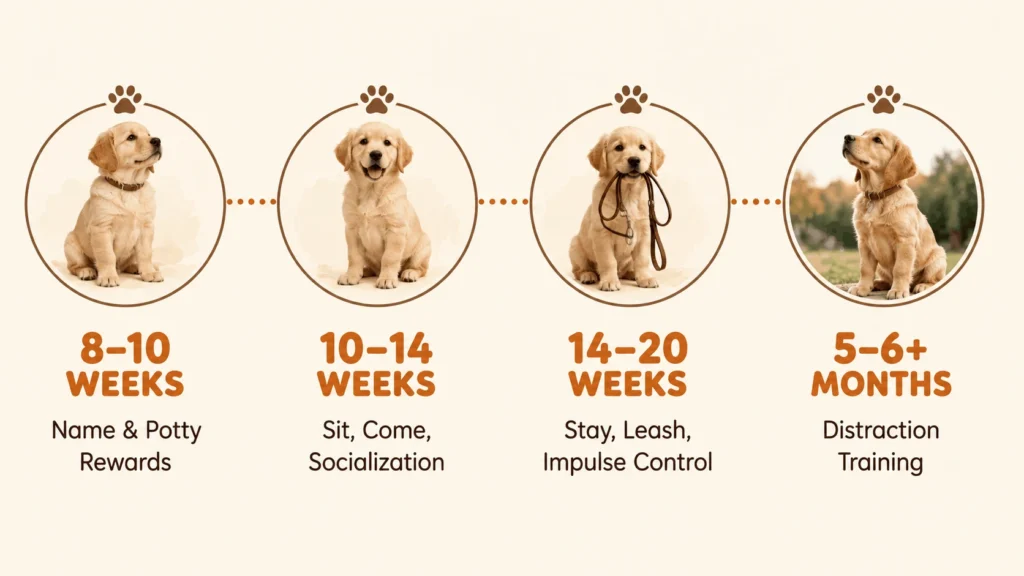
You can start the day you bring your puppy home, usually around 8 weeks old. For a full week-by-week breakdown of what to teach at each stage, check out our puppy training schedule by age. Early sessions should be short, simple, and low-pressure the goal at this age is building a positive association with learning, not perfect obedience.
| Puppy Age | Focus |
|---|---|
| 8–10 weeks | Name recognition, hand targeting, potty training rewards |
| 10–14 weeks | Sit, come, gentle leash pressure, socialization rewards |
| 14–20 weeks | Stay, loose-leash walking, impulse control games |
| 5–6+ months | Distraction training, public settings, longer duration behaviors |
What You’ll Need Before You Start
You don’t need expensive equipment to train your puppy successfully. Having a few simple supplies ready will make every session easier and more effective.
- Soft, pea-sized training treats
- A treat pouch or small container
- A flat collar or comfortable harness
- A standard 6-foot leash
- A clicker (optional)
- A quiet, distraction-free training area
- Five to ten minutes of uninterrupted time
Remember, your attention and consistency matter far more than buying fancy training tools. If you’re also working on nighttime routines, pairing this with crate training a puppy at night can speed up both processes.
How to Start Positive Reinforcement Training: Step-by-Step
1. Choose High-Value Rewards
Not all treats are equal to a puppy. Use small, soft, high-value treats for training — think pea-sized pieces of boiled chicken, freeze-dried liver, or a commercial training treat. Save your puppy’s regular kibble for meals, not training, unless he’s food-motivated enough that kibble still excites him.
2. Time the Reward Correctly
Timing is everything. The reward has to land within 1–2 seconds of the correct behavior, or your puppy won’t connect the two. This is exactly why many trainers introduce a marker word or clicker — a consistent sound (“Yes!” or a clicker click) that tells the puppy the instant he did it right, even before the treat arrives.
Example sequence:
- Puppy sits.
- You say “Yes!” the moment his rear hits the floor.
- You deliver the treat within a second or two.
3. Keep Sessions Short
Puppies have short attention spans. Five-minute sessions, two to three times a day, work far better than one long 30-minute session. End every session on a success, even if it’s a small one.
4. Add a Verbal Cue Once the Behavior Is Reliable
Don’t say “sit” until your puppy is already sitting reliably for a treat. Add the word right before he does it, so he starts connecting the word to the action.
5. Fade the Treats Gradually Don’t Cut Them Cold
Once a behavior is solid, start rewarding every other time instead of every time, then move to random intervals. Replace some treats with praise, play, or access to something the puppy wants (like going outside). This is called a variable reward schedule, and it actually makes behaviors more resistant to fading than constant rewards do.
6. Practice in Increasingly Distracting Environments
A puppy who sits perfectly in your kitchen may ignore you completely at the dog park. Practice the same cue in new locations, gradually increasing distractions, so the behavior generalizes.
Common Training Cues to Start With
There are following Training Cues to start with Positive Reinforcement.
- Sit foundational for greeting manners and impulse control
- Come the single most important safety cue
- Stay builds patience and impulse control
- Leave it prevents your puppy from grabbing something dangerous
- Loose-leash walking makes daily walks enjoyable instead of stressful
Many new owners are also managing other early habits at the same time our guides on how to stop puppy jumping and how to stop puppy barking walk through step-by-step fixes for both.
A Simple Daily Puppy Training Routine
You don’t need long sessions to see progress. A few minutes of focused practice each day is usually enough.
| Time of Day | Training Activity | Duration |
|---|---|---|
| Morning | Sit and Name Recognition | 5 minutes |
| Afternoon | Come and Loose-Leash Walking | 5 minutes |
| Evening | Stay and Calm Behavior Practice | 5 minutes |
Keep sessions fun and end while your puppy is still interested. Short, successful lessons build confidence and prevent frustration.
Expert Tips
- Train before meals, not after a slightly hungry puppy is more motivated by food rewards.
- Use a marker word or clicker consistently. Switching between them confuses the puppy.
- Reward calmness, not just commands. If your puppy settles quietly on his own, toss a treat near his bed. This teaches him that calm behavior pays off too.
- Involve the whole household. Puppies generalize faster when every family member uses the same cues and rewards the same way.
- Socialization counts as training. Rewarding calm behavior around new people, dogs, and sounds during the critical socialization window (roughly 3–14 weeks) pays off for years.
Signs Your Puppy Is Making Progress
Training doesn’t happen overnight, but you’ll usually notice small improvements before major ones.
Your puppy may be making good progress if they:
- Respond to cues more quickly.
- Offer good behavior without being asked.
- Stay focused longer during training sessions.
- Check in with you more often during walks.
- Recover quickly after distractions.
- Look excited when it’s time to train.
Celebrate these small wins because they show your puppy is learning.
Common Mistakes (and What to Do Instead)
Mistake 1: Rewarding too late. If you wait even 5–10 seconds to deliver the treat, your puppy may associate the reward with whatever he’s doing at that moment not the behavior you wanted.
Fix: Use a marker word to bridge the gap, and deliver the treat as fast as possible.
Mistake 2: Only training when there’s a problem. Owners often only “correct” a puppy after he’s already jumped or barked.
Fix: Proactively reward the behavior you want before the unwanted one happens reward four paws on the floor before your puppy has a chance to jump.
Mistake 3: Training sessions that are too long. A bored, tired puppy stops learning and starts disengaging.
Fix: Stop at five minutes, even if you feel like you’re on a roll.
Mistake 4: Using treats as a bribe instead of a reward. Holding a treat in front of your puppy’s nose to lure him into position every single time creates a puppy who only listens when he sees food.
Fix: Use luring only in the first few repetitions, then switch to rewarding after the behavior, not before.
Mistake 5: Inconsistent household rules. If one family member allows jumping and another doesn’t, the puppy gets mixed signals and progress stalls.
Fix: Agree on house rules and cues as a family before training starts.
When to Ask for Professional Help
Most puppies learn well with patience and consistency, but some situations benefit from professional guidance.
Consider contacting a certified dog trainer or your veterinarian if your puppy:
- Shows aggressive behavior toward people or other animals.
- Displays extreme fear in everyday situations.
- Makes little progress despite several weeks of consistent training.
- Guards food, toys, or other resources aggressively.
- Has severe separation anxiety or panic when left alone.
Early guidance can prevent small problems from becoming lifelong habits.
Frequently Asked Questions
Can I train my puppy without treats?
Yes. Treats are one of the easiest rewards to use during early training, but you can gradually replace them with praise, toys, games, or everyday rewards like going outside once your puppy reliably understands the behavior.
Should everyone in my family use the same commands?
Absolutely. Consistency helps puppies learn much faster. Decide on one cue for each behavior, such as “Sit” instead of mixing “Sit,” “Down,” and “Sit Down.”
How many commands should I teach at once?
Start with one or two simple behaviors, such as “Sit” and “Come.” Once your puppy responds consistently, introduce another cue. Teaching too many commands at once can slow progress.
What if my puppy ignores treats?
Try higher-value options like boiled chicken or cheese, train before mealtime when he’s hungrier, and shorten sessions so he doesn’t lose interest.
Can I combine positive reinforcement with saying “no”?
A calm interrupter word paired with redirecting to the correct behavior is fine. The key is avoiding fear-based corrections like yelling, leash jerks, or physical punishment.
Is clicker training necessary?
No, a clicker is a tool, not a requirement. A consistent verbal marker like “Yes!” works just as well if used consistently.
When should I start puppy training classes?
Many trainers recommend starting group classes once your puppy has had his first round of vaccinations, generally around 10–12 weeks, but check with your veterinarian first about safe timing for your specific puppy.
Does positive reinforcement work for fixing bad behavior, not just teaching new tricks?
Yes. It’s widely used for behavior modification, including fear, reactivity, and impulse control issues, often alongside guidance from a certified trainer or veterinary behaviorist for more serious cases.
Conclusion
Positive reinforcement puppy training isn’t about spoiling your puppy. It’s about clearly showing them which behaviors earn rewards so they naturally choose those behaviors more often.
Keep training sessions short, reward the correct behavior immediately, and stay consistent with your cues. Don’t worry if progress feels slow at first. Every puppy learns at their own pace, and small improvements add up over time.
Start today with one simple cue, such as “Sit.” Spend just five minutes rewarding your puppy for getting it right. Those few minutes of positive practice each day can lay the foundation for a confident, well-mannered companion that enjoys learning for years to come.

Muzammil Khan is a certified canine behaviorist and the founder of Puppywhisper. With 8+ years of experience in positive reinforcement training, Muzammil has helped over 1,000 puppies transition smoothly into their new homes. All health advice is reviewed in collaboration with licensed veterinarians.