Introduction
It’s 11 p.m. and your puppy just turned down dinner for the second time today. Or maybe she’s curled up in the corner instead of chewing your shoelaces like usual. You’re standing there wondering the same thing every new puppy owner eventually asks themselves: is this normal, or is something actually wrong?
Puppies can’t tell you when they feel bad. They can’t point to where it hurts or explain that their stomach has been upset since breakfast. All you have to go on is behavior, and behavior can be maddeningly ambiguous. A tired puppy after a long walk looks a lot like a puppy coming down with something, at least at first glance.
This guide breaks down exactly what separates a normal off day from a genuine health concern, so you can respond with confidence instead of guessing.
How to Tell If a Puppy Is Sick: Quick Answer
A sick puppy usually shows a combination of signs rather than just one. Watch for lethargy, loss of appetite, vomiting, diarrhea, unusual crying or whining, pale or discolored gums, a warm dry nose paired with other symptoms, coughing, and withdrawal from play. One isolated symptom that clears up within a few hours is often minor. Two or more symptoms together, or any symptom lasting beyond 12 to 24 hours, calls for a veterinary visit.
Why Puppies Get Sick More Easily Than Adult Dogs
Puppies are working with an immune system that’s still under construction. They haven’t finished their full vaccination series, their gut bacteria hasn’t matured, and they’re prone to eating things they shouldn’t. That combination means illnesses that an adult dog might shrug off can escalate quickly in a young puppy. Catching problems early genuinely changes outcomes, which is why learning to read these signs matters so much in the first several months of ownership.
12 Signs Your Puppy May Be Sick

If you want the short, printable version to keep on the fridge or save to your phone, check our quick sick puppy symptom checklist alongside the full breakdown below.
1. Lethargy or Unusual Withdrawal
A healthy puppy is a chaos machine. If yours suddenly prefers napping in a corner over chewing your favorite sock, take note. Lethargy isn’t just sleeping more; it’s a drop in overall responsiveness. A tired puppy still perks up for a treat or a favorite toy. A sick puppy often doesn’t.
2. Loss of Appetite
Skipping one meal isn’t automatically alarming, especially around a move to a new home or a diet change. But a puppy who refuses food for more than 12 hours, or who won’t touch even high-value treats, needs attention. Appetite loss combined with any other symptom on this list is a stronger signal than appetite loss alone.
3. Vomiting
A single episode of vomiting after eating too fast or gulping grass usually isn’t an emergency. If it keeps happening, our guide on why your puppy keeps vomiting walks through the most common causes. Repeated vomiting, vomiting that contains blood, or vomiting paired with lethargy is a different story and warrants a same-day call to your vet.
4. Diarrhea
Soft stool from a food switch is common and usually resolves in a day or two. Watery, bloody, or black tarry diarrhea is not something to wait out. Because puppies dehydrate faster than adult dogs, ongoing diarrhea can become dangerous within hours rather than days.
5. Fever
A puppy’s normal body temperature runs higher than a human’s, typically between 100.5°F and 102.5°F. You can’t reliably judge fever by feeling the nose or ears; a rectal thermometer is the only accurate home method. Anything above 103°F should prompt a vet call, especially if paired with lethargy or loss of appetite.
6. Pale, Blue, or Yellow Gums
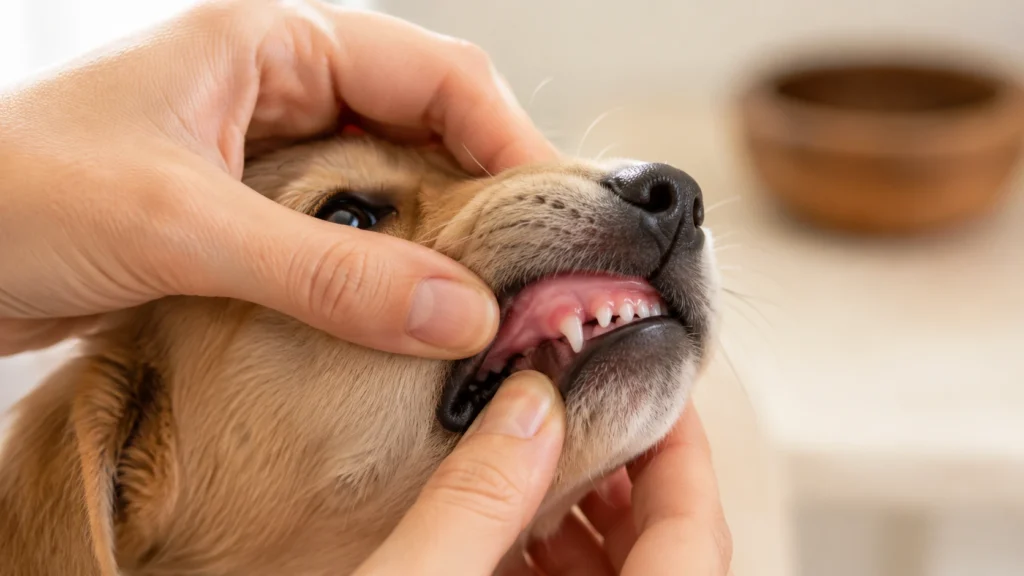
Healthy gums are pink and moist. Lift your puppy’s lip and take a look during a calm moment so you know their baseline. Pale or white gums can point to anemia or shock. Blue-tinged gums suggest a lack of oxygen. Yellow gums can indicate liver problems. Any of these is a reason to seek care immediately rather than monitor at home.
7. Coughing, Sneezing, or Nasal Discharge
Occasional sneezing is normal, especially for a curious puppy sniffing everything in sight. A persistent cough, honking sound, or thick yellow or green discharge from the nose points toward a respiratory infection like kennel cough, which spreads easily at daycare, parks, and puppy classes.
8. Eye Discharge or Squinting
Some morning eye crust is nothing to worry about. Red, swollen, or constantly weepy eyes are not. A puppy pawing at their eye or holding one eye shut needs to see a vet quickly, since rubbing can worsen minor irritation into a corneal injury.
9. Excessive Scratching or Ear Odor
A puppy who suddenly can’t stop scratching their ears, shaking their head, or who develops a noticeable odor from the ears may have an ear infection or parasites. This isn’t usually an emergency, but it should be checked within a few days.
10. Bloated or Painful Abdomen
A visibly swollen belly, especially combined with restlessness, repeated unproductive attempts to vomit, or obvious discomfort when touched, can signal a serious internal issue and needs same-day veterinary evaluation.
11. Weight Loss or Failure to Gain Weight
Puppies should be steadily gaining weight, not losing it. A kitchen scale is an easy way to spot-check young or small-breed puppies weekly. Weight loss paired with a normal or increased appetite can point to parasites and is worth mentioning at the next vet visit even if nothing else seems wrong.
12. Changes in Urination
Straining to urinate, blood in the urine, or a sudden increase in thirst and urination are all signs worth flagging to your vet, since they can point to anything from a urinary tract infection to a metabolic issue.
Normal Puppy Behavior vs. Signs of Illness
| Behavior | Usually Normal | Possible Warning Sign |
|---|---|---|
| Energy level | Bursts of play, naps in between | Won’t engage even with favorite toy or treat |
| Appetite | Skips one meal occasionally | Refuses food for 12+ hours |
| Stool | Soft after a diet change, resolves in 1-2 days | Watery, bloody, or lasting more than 2 days |
| Breathing | Panting after play or heat | Labored, rapid, or wheezing at rest |
| Gums | Pink and moist | Pale, blue, gray, or yellow |
| Nose | Slightly warm or cool, both are fine | Hot and dry combined with lethargy |
When to Call the Vet Immediately
Some situations don’t leave room for a wait-and-see approach. Contact your veterinarian or an emergency animal hospital right away if your puppy shows any of the following:
- Repeated vomiting or diarrhea lasting more than a few hours
- Blood in vomit or stool
- Difficulty breathing or persistent rapid breathing
- Collapse, seizures, or inability to stand
- Pale, blue, or yellow gums
- A swollen, hard, or painful abdomen
- Suspected ingestion of a toxic substance, medication, or foreign object
- No urination for over 12 hours
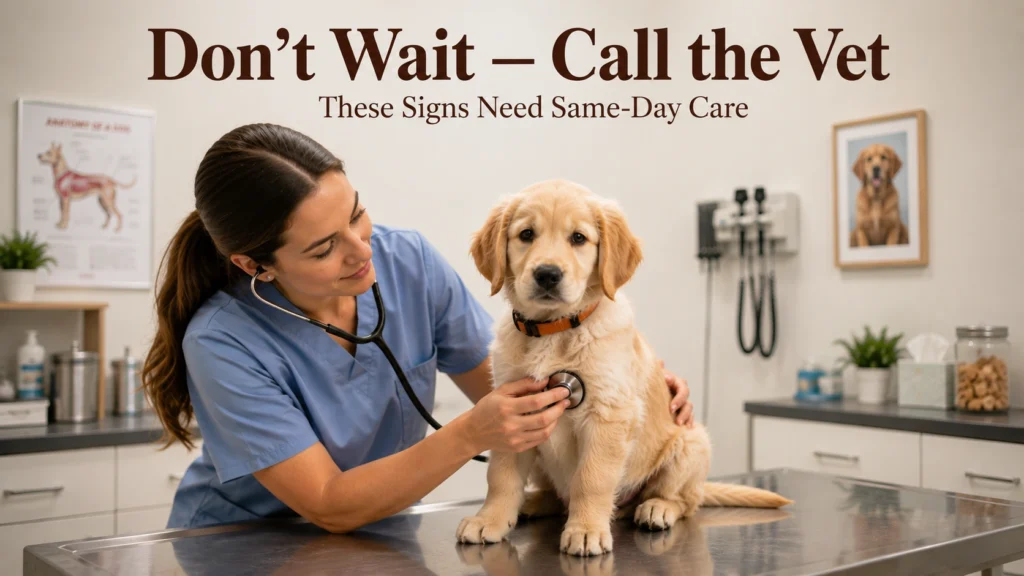
If you’re ever unsure whether a symptom counts as an emergency, calling your vet’s office or an emergency line and describing what you’re seeing is always the safer move. The American Veterinary Medical Association makes the same point: your vet, not the internet, should always be the final word on your puppy’s care.
How to Monitor a Puppy With Mild Symptoms
If your puppy has one mild symptom, such as slightly softer stool or one instance of vomiting, and is otherwise acting like themselves, playing and drinking normally, here’s a reasonable way to watch and wait:
- Track symptoms with timestamps in your phone’s notes app so you can report an accurate timeline if things worsen.
- Withhold treats and rich food for a few hours, offering small amounts of water.
- Check gums, energy, and appetite every few hours rather than assuming it will pass.
- Set a clear deadline. If there’s no improvement within 12 to 24 hours, or if a second symptom appears, call your vet.
Expert Tips for Catching Illness Early
- Learn your puppy’s baseline. Knowing what “normal” looks like for your specific puppy, including energy level, appetite, and stool consistency, makes it far easier to spot when something is off.
- Do a quick daily check. Running your hands over your puppy’s body while checking ears, eyes, and coat only takes a minute and helps you catch small changes before they become big problems.
- Keep vaccination and deworming on schedule. A puppy who is behind on their vaccine series is more vulnerable to serious illnesses like parvovirus, so staying current is one of the best preventive steps you can take.
- Photograph anything unusual. A photo of stool consistency or a rash is more useful to your vet over the phone than a verbal description.
Common Mistakes Puppy Owners Make
Mistake: Assuming a wagging tail means a puppy is fine. Why it’s a problem: Puppies can wag out of habit or anxiety even while feeling unwell, so tail behavior alone isn’t a reliable health indicator.
Do this instead: Look at the full picture, including appetite, energy, and stool, rather than one single cue.
Mistake: Waiting too long because symptoms seem minor. Why it’s a problem: Puppies dehydrate and decline faster than adult dogs, so a wait-and-see approach that works for a grown dog can be risky for a young puppy.
Do this instead: Set a firm time limit, such as 12 hours, before escalating to a vet call.
Mistake: Googling symptoms and self-diagnosing a specific disease. Why it’s a problem: Many illnesses share overlapping symptoms, and guessing wrong can delay the right treatment.
Do this instead: Use symptom research to decide how urgently you need care, then let your vet make the actual diagnosis.
Mistake: Giving human medication to help a puppy feel better. Why it’s a problem: Many common human medications, including basic pain relievers, are toxic to dogs even in small amounts.
Do this instead: Only give medication that your veterinarian has specifically prescribed or approved for your puppy.
Frequently Asked Questions
How can I tell if my puppy is just tired or actually sick?
A tired puppy still responds to favorite toys, treats, or people, even if only briefly. A sick puppy tends to stay withdrawn even when you try to engage them, and often shows at least one other symptom like appetite loss or an upset stomach.
What is the first sign of parvo in puppies?
Early parvo symptoms typically include lethargy, loss of appetite, and vomiting, followed by diarrhea that often becomes bloody. Puppies under six months who aren’t fully vaccinated are at the highest risk, and this is always a same-day emergency vet visit.
Is it normal for a puppy’s nose to be warm?
Yes. Nose temperature and moisture fluctuate throughout the day and aren’t a reliable way to judge illness on their own. A rectal thermometer is the only accurate way to check for fever.
How long can a puppy go without eating before it’s a concern?
Generally, 12 hours without eating for a young puppy is a reasonable point to start monitoring closely, and 24 hours without food is a reason to contact your vet, especially for toy or small breeds who are prone to low blood sugar.
Can teething cause symptoms that look like illness?
Teething can cause mild drooling, slightly reduced appetite, and a preference for chewing over playing, but it shouldn’t cause vomiting, diarrhea, fever, or lethargy. If those symptoms appear, don’t assume teething is the cause.
Should I take my puppy to the vet for one episode of vomiting?
Not necessarily, if your puppy is otherwise acting normal and it doesn’t happen again within a few hours. Repeated vomiting, or vomiting combined with any other symptom, should be evaluated the same day.
What household items are most likely to make a puppy sick?
Chocolate, xylitol (found in sugar-free gum and some peanut butter), grapes and raisins, certain houseplants, and human medications are among the most common causes of puppy poisoning emergencies.
How often should a healthy puppy be checked by a vet?
Most puppies need vet visits roughly every three to four weeks until their vaccine series is complete around 16 to 20 weeks of age, then annual checkups after that unless a health issue comes up in between.
Conclusion
Reading a puppy’s health signals gets easier the more time you spend with them. The goal isn’t to panic over every skipped meal or sleepy afternoon, it’s to recognize the combination of signs, and the timing, that separates a normal off day from something that needs professional attention. Keep a mental (or literal) baseline of how your puppy normally acts, trust the pattern of symptoms over any single one, and don’t hesitate to call your vet when something feels off. As a next step, save your veterinarian’s number and the nearest emergency animal hospital’s contact information somewhere you can find it instantly, before you actually need it.
Medical Disclaimer: This article is for general educational purposes only and is not a substitute for professional veterinary care. If your puppy is showing signs of illness, contact your veterinarian promptly for diagnosis and treatment.

Muzammil Khan is a certified canine behaviorist and the founder of Puppywhisper. With 8+ years of experience in positive reinforcement training, Muzammil has helped over 1,000 puppies transition smoothly into their new homes. All health advice is reviewed in collaboration with licensed veterinarians.