Medical Disclaimer: This article is for general educational purposes and is not a substitute for professional veterinary advice. If your puppy is showing signs of illness, contact your veterinarian or a local emergency animal hospital right away.
You’ve noticed something is off. Maybe your puppy skipped breakfast, seems quieter than usual, or has been napping more than playing. Every new puppy owner hits this moment the gut feeling that something isn’t quite right, paired with the uncertainty of not knowing whether it’s serious or just an off day.
That uncertainty is exactly why this guide exists. Puppies can’t tell you in words how they feel, so their body and behavior do the talking. Learning to read those signals early can mean the difference between a quick at-home fix and a medical emergency.
Quick Answer: signs of a sick puppy
The most common signs of a sick puppy include lethargy, loss of appetite, vomiting or diarrhea, pale or discolored gums, fever, unusual whining, and reluctance to play. A healthy puppy is typically alert, curious, and eager to eat. Any sudden shift away from that baseline especially combined with two or more symptoms is worth a call to your veterinarian.
Why This Matters
Puppies have smaller bodies, developing immune systems, and less reserve to fight off illness compared to adult dogs. A condition that might cause mild discomfort in an adult dog can progress quickly in a puppy, sometimes within hours.
Catching symptoms early gives you and your veterinarian more options and usually leads to a faster, less stressful recovery. Waiting too long, on the other hand, can turn a manageable issue into an emergency particularly with conditions like parvovirus or severe dehydration, both of which move fast in young dogs. Staying on top of your puppy’s shots also closes a lot of these risks early here’s the full puppy vaccination schedule broken down by age.
Behavioral Warning Signs
Behavior changes are often the first clue, appearing before any physical symptom shows up.
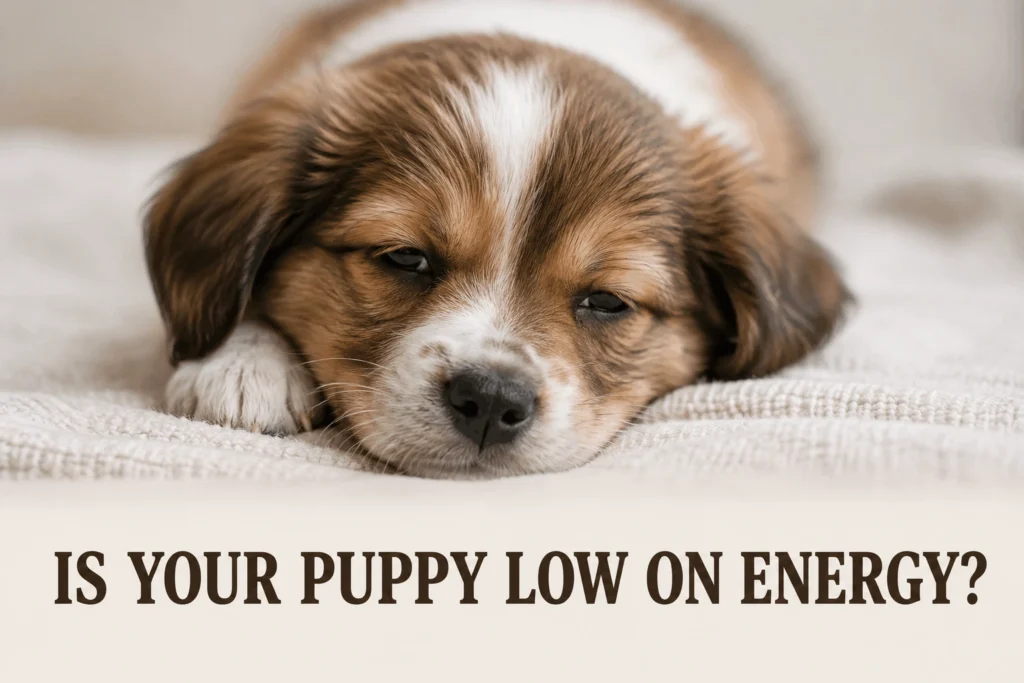
- Unusual lethargy — sleeping far more than normal or seeming uninterested in toys, walks, or family members
- Hiding or withdrawing — seeking out quiet, isolated spots instead of staying close to you
- Excessive whining or vocalizing — especially when touched in a specific area
- Restlessness or pacing — unable to settle, which can signal nausea or abdominal discomfort
- Sudden aggression or irritability — a normally friendly puppy snapping or growling when handled
Physical Warning Signs
- Pale, white, or bluish gums — healthy puppy gums are usually a healthy pink; pale or discolored gums can indicate poor circulation or anemia
- Fever — a warm, dry nose combined with lethargy and reduced appetite can point to fever; a thermometer reading above 103°F (39.4°C) is a reason to call your vet
- Nasal or eye discharge — thick, colored, or persistent discharge is different from the occasional clear drip
- Coughing or labored breathing — especially if breathing looks fast, shallow, or effortful
- Visible weight loss — noticeable rib or hip bones, particularly over just a few days
- Skin or coat changes — dull coat, flaking, redness, or hair loss
Digestive Warning Signs
- Vomiting — a single episode after eating too fast may be harmless, but repeated vomiting is not
- Diarrhea — especially if it’s watery, bloody, or lasts more than 24 hours
- Loss of appetite — skipping one meal can be normal; skipping two or more in a row is not
- Bloated or hard abdomen — can indicate gas, intestinal blockage, or in rare cases, a life-threatening condition
If loose stool is one of the symptoms you’re seeing, our guide to puppy diarrhea causes walks through exactly what’s likely behind it.

Signs That Mean Go to the Vet Immediately
| Symptom | Why It’s Urgent |
|---|---|
| Bloody vomit or diarrhea | Can indicate parvovirus or internal injury |
| Difficulty breathing | May signal airway obstruction or heart/lung issue |
| Collapsing or extreme weakness | Sign of severe dehydration or shock |
| Pale or blue gums | Possible oxygen or circulation problem |
| Inability to keep any water down | Rapid dehydration risk, especially in small breeds |
| Suspected toxin ingestion | Time-sensitive — don’t wait for symptoms to confirm |
If your puppy shows any of the symptoms above, treat it as an emergency and contact a veterinarian or animal ER immediately rather than waiting to see if it improves.
Step-by-Step Guide: What to Do When You Notice a Symptom
- Stay calm and observe. Note exactly what you’re seeing — when it started, how often it happens, and any pattern.
- Check the basics. Look at gum color, feel for fever (warm, dry nose plus lethargy), and check hydration by gently pinching the skin at the scruff — it should snap back quickly.
- Rule out simple causes. Did your puppy eat something new, get into the trash, or have a stressful day (new visitors, loud noises, a car ride)?
- Decide on urgency. Use the table above. If any urgent symptom is present, call your vet or emergency clinic immediately.
- Call your vet for guidance even for milder symptoms — many clinics offer phone triage to help you decide if an in-person visit is needed.
- Monitor closely over the next few hours if your vet advises a wait-and-watch approach, and keep food, water intake, and bathroom habits logged.
Benefits of Early Detection
Recognizing symptoms early typically means:
- Faster, often less expensive treatment
- Lower risk of the condition worsening overnight
- Less stress for both you and your puppy
- Better outcomes for fast-moving conditions like parvovirus or severe dehydration
Common Problems Owners Misjudge
- Mistaking lethargy for “just being tired.” Puppies are naturally energetic; persistent low energy across a full day is not typical.
- Assuming one vomiting episode is always harmless. Context matters frequency, what was vomited, and accompanying symptoms all count.
- Underestimating dehydration. Puppies dehydrate faster than adult dogs, especially in hot weather or with diarrhea.
- Waiting for multiple symptoms before acting. Sometimes a single symptom, like blood in stool, is enough to warrant an immediate call.
Expert Tips
- Keep your puppy’s vaccination schedule current many serious illnesses (like parvovirus and distemper) are largely preventable through timely vaccination.
- Learn your puppy’s normal baseline now, while healthy, so changes are easier to spot. Note typical energy level, appetite, and bathroom habits during the first few weeks the American Kennel Club recommends this same tracking approach for new owners.
- Keep your vet’s number and the nearest emergency animal hospital number saved in your phone before you need them.
- A simple at-home check: gums, gut, and gait. Healthy gum color, normal appetite/digestion, and normal movement together suggest your puppy is likely doing fine.
Common Mistakes to Avoid
- Self-diagnosing instead of calling a professional. Searching symptoms online is a good first step, not a replacement for a vet’s assessment.
- Giving human medication. Many over-the-counter human medications are toxic to puppies, even in small doses.
- Ignoring small changes. Subtle shifts in energy or appetite are often the earliest and most useful warning signs.
- Delaying care to “see if it gets better.” With puppies, conditions can escalate within hours, not days.
FAQ
What are the first signs of a sick puppy?
The earliest signs are usually behavioral reduced energy, less interest in food or play, and general quietness often appearing before any physical symptom is visible.
How can you tell if a puppy is dehydrated?
Gently pinch the skin at the scruff of the neck; in a hydrated puppy, it snaps back quickly. Slow-returning skin, dry gums, and sunken eyes are signs of dehydration that need veterinary attention.
Is it normal for a puppy to sleep most of the day?
Puppies do sleep a lot, often 16–20 hours a day, but they should still have clear bursts of energy and curiosity when awake. Complete disinterest in play or food alongside extra sleep is not typical.
What color should a healthy puppy’s gums be?
A healthy puppy’s gums are usually a consistent bubblegum pink. Pale, white, blue, or yellow-tinted gums all warrant a veterinary check.
When should I take my puppy to the emergency vet?
Go immediately if you see bloody vomiting or diarrhea, labored breathing, collapse, pale or blue gums, an inability to keep water down, or suspected ingestion of a toxic substance.
Can a puppy seem sick from stress alone?
Yes — stress from a new environment, loud noises, or travel can cause temporary appetite loss or low energy. However, symptoms lasting more than a day or combined with physical signs should still be checked by a vet.
Conclusion
Your puppy can’t tell you in words when something’s wrong, but their behavior and body almost always will. Watching for changes in energy, appetite, gum color, and bathroom habits gives you an early warning system you can rely on every day.
When in doubt, a quick call to your veterinarian costs far less than waiting and hoping a symptom resolves on its own. Trust your instincts — if something feels off, it’s worth checking.

Muzammil Khan is a certified canine behaviorist and the founder of Puppywhisper. With 8+ years of experience in positive reinforcement training, Muzammil has helped over 1,000 puppies transition smoothly into their new homes. All health advice is reviewed in collaboration with licensed veterinarians.