
You brought your puppy home, and everything felt perfect until something seemed off. Maybe they stopped eating, started coughing, or you noticed something strange in their stool. You’re not overreacting. Puppies are genuinely vulnerable in their first months of life.
Their immune systems are still developing, their vaccination schedules aren’t complete, and they’re constantly exploring the world with their mouths. That combination makes them easy targets for a surprising number of diseases, some of which can become serious very fast.
Knowing what to watch for gives you a real advantage. Early detection saves lives and vet bills.
Quick Answer About Common Puppy Diseases
The most common puppy diseases include parvovirus, canine distemper, kennel cough, roundworms, hookworms, giardia, ringworm, ear infections, mange, and puppy strangles. Most are preventable through timely vaccinations, regular deworming, and good hygiene. If your puppy shows lethargy, vomiting, diarrhea, or loss of appetite, contact your vet immediately.
Why Puppy Health Requires Early Attention
Puppies receive maternal antibodies through their mother’s first milk (colostrum), but that protection fades between 6 and 16 weeks of age. During that window sometimes called the “immunity gap” they’re at their highest risk.
Many puppy diseases spread through contaminated soil, dog parks, shared water bowls, and even contact with infected feces. You don’t need another dog in the home for your puppy to get sick.
The good news: most of these diseases are highly preventable with the right care the American Kennel Club confirms that timely vaccination and basic preventive care stop the majority of these illnesses before they start.
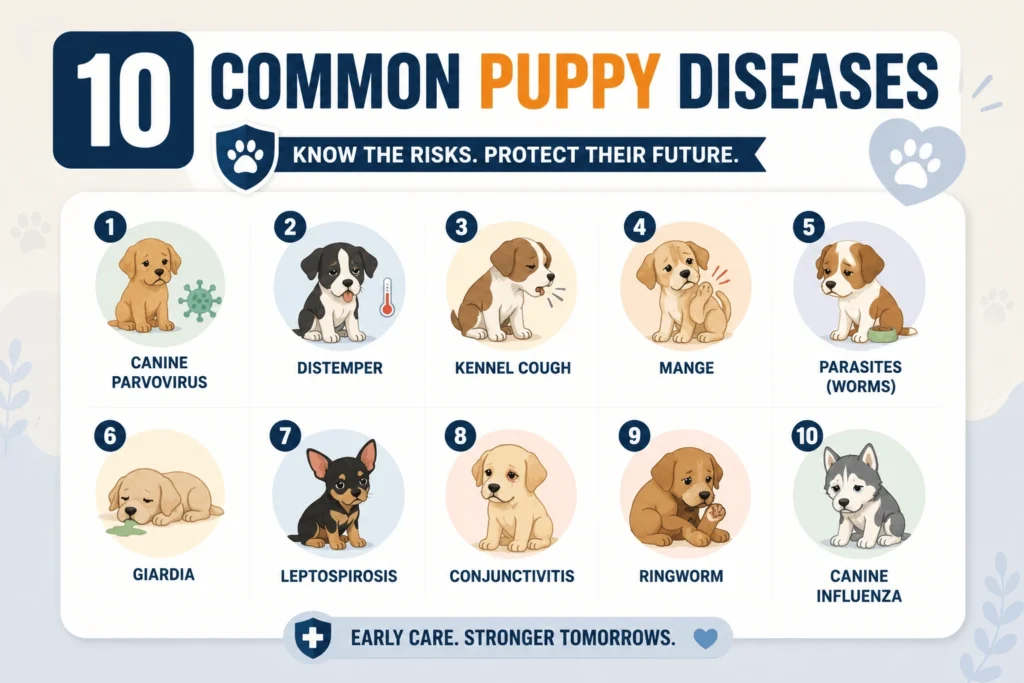
10 Most Common Puppy Diseases
1. Parvovirus (Parvo)
Parvo is one of the most serious and contagious viral diseases in young dogs. It attacks the digestive system and, in severe cases, the heart.
Parvovirus is one of the most deadly common puppy diseases if your puppy is also vomiting, read our complete guide on why puppies vomit to catch it early.
Symptoms: Severe bloody diarrhea, vomiting, extreme lethargy, loss of appetite, fever
How it spreads: Direct contact with infected dogs or contaminated surfaces, soil, and feces. The virus can survive outdoors for months.
Treatment: No antiviral cure exists. Treatment focuses on supportive care IV fluids, anti-nausea medication, and hospitalization. Survival depends on how quickly treatment begins.
Prevention: DHPP vaccine starting at 6–8 weeks. Avoid unvaccinated dogs and high-risk areas until your puppy’s series is complete.
2. Canine Distemper
Distemper is a serious viral illness that affects a puppy’s respiratory, gastrointestinal, and nervous systems. It’s often fatal without aggressive treatment.
Symptoms: Nasal discharge, coughing, eye discharge, vomiting, diarrhea, seizures in advanced cases
How it spreads: Airborne exposure to infected dogs, shared food bowls, or contaminated equipment
Treatment: Supportive care only. There’s no cure, which makes vaccination critical.
Prevention: Part of the core DHPP vaccine series.
3. Kennel Cough (Bordetella)
Despite the name, your puppy doesn’t need to visit a kennel to catch this one. It spreads anywhere dogs gather dog parks, pet stores, training classes.
Symptoms: Persistent honking cough, gagging, mild fever, nasal discharge. Most puppies remain alert and active.
How it spreads: Airborne droplets from coughing or sneezing dogs
Treatment: Mild cases often resolve on their own. Your vet may prescribe antibiotics or cough suppressants for more persistent cases.
Prevention: Bordetella vaccine, typically given as a nasal spray or injection. Required by most boarding facilities.
4. Roundworms
The most common internal parasite in puppies. Many are born with roundworms, passed from their mother before birth or through nursing.
Symptoms: Pot-bellied appearance, vomiting, diarrhea, poor coat condition, visible worms in stool or vomit
How it spreads: In utero transmission, nursing, or ingesting contaminated soil
Treatment: Deworming medication prescribed by your vet (typically pyrantel pamoate or fenbendazole)
Prevention: Regular fecal exams and a deworming schedule starting at 2 weeks of age, repeated every 2 weeks until 8 weeks old, then monthly through 6 months.
Note: Roundworms can infect humans, especially children. Always wash hands after handling puppies or cleaning up after them.
5. Hookworms
Hookworms are tiny but dangerous. They attach to the intestinal wall and feed on blood, which can cause life-threatening anemia in young puppies.
Symptoms: Pale gums, bloody or dark tarry stools, weakness, poor growth, skin irritation on paws
How it spreads: Through the mother’s milk, skin contact with contaminated soil, or ingestion
Treatment: Prescription deworming medication. Severe cases may require iron supplements or a blood transfusion.
Prevention: Same deworming protocol as roundworms. Keep your yard clean and avoid areas with unknown dogs.
6. Giardia
Giardia is a microscopic intestinal parasite that’s more common than most new owners expect.
Symptoms: Soft or watery diarrhea (often greasy or pale), gas, occasional vomiting, weight loss
How it spreads: Contaminated water sources, puddles, streams, or contact with infected feces
Treatment: Metronidazole or fenbendazole, prescribed by your vet. Thorough cleaning of your home and yard is also essential.
Prevention: Don’t let your puppy drink from puddles or natural water sources. Keep their living area clean and dry.
7. Ringworm
Confusing name ringworm is actually a fungal infection, not a worm. It’s highly contagious and can spread to humans and other pets.
Symptoms: Circular patches of hair loss, red or scaly skin, crusting around the edges of bald spots
How it spreads: Direct contact with infected animals, contaminated bedding, grooming tools, or soil
Treatment: Antifungal shampoos, topical creams, or oral antifungal medication for more severe cases
Prevention: Keep grooming tools clean and separate. Quarantine new pets before introducing them to your puppy.
8. Ear Infections
Puppies with floppy ears Beagles, Cocker Spaniels, Basset Hounds are particularly prone to ear infections, but any breed can develop them.
Symptoms: Head shaking, scratching at the ears, dark discharge, bad odor from the ear canal, redness or swelling
Causes: Bacteria, yeast, ear mites, moisture, or allergies
Treatment: Veterinary ear cleaning and prescription ear drops. Never insert anything deep into your puppy’s ear canal.
Prevention: Regular ear checks, keeping ears dry after baths or swimming, and routine vet cleanings.
9. Mange (Sarcoptic or Demodectic)
Mange is a skin disease caused by mites. There are two types, and they behave very differently.
| Type | Cause | Contagious? | Typical Outcome |
|---|---|---|---|
| Sarcoptic | Sarcoptes scabiei mite | Yes — to other pets and humans | Requires treatment |
| Demodectic | Demodex mite | No | Often resolves on its own in healthy puppies |
Symptoms: Intense itching, hair loss, crusty or thickened skin, red irritated patches
Treatment: Medicated dips, topical treatments, or oral medications depending on the type and severity
10. Puppy Strangles (Juvenile Cellulitis)
Less common but worth knowing. Puppy strangles is an immune-mediated skin disorder that primarily affects puppies under 6 months.
Symptoms: Swollen lymph nodes under the jaw, pustules or crusts on the face and muzzle, swollen eyelids, lethargy
Treatment: Requires prompt veterinary care. Oral corticosteroids are typically the first-line treatment. Untreated cases can lead to permanent scarring.

Warning Signs Your Puppy Needs a Vet Now
If your puppy is vomiting alongside diarrhea, read our full breakdown of why puppies vomit the two symptoms together can signal something serious.
Take your puppy to a vet immediately if you notice:
- Bloody diarrhea or vomiting
- Complete refusal to eat for more than 24 hours
- Pale, white, or blue-tinged gums
- Seizures or loss of coordination
- Difficulty breathing
- Severe lethargy won’t move or respond normally
- Signs of pain (whimpering, guarding body parts)
Trust your instincts. If something feels wrong, it’s always worth a call to your vet.
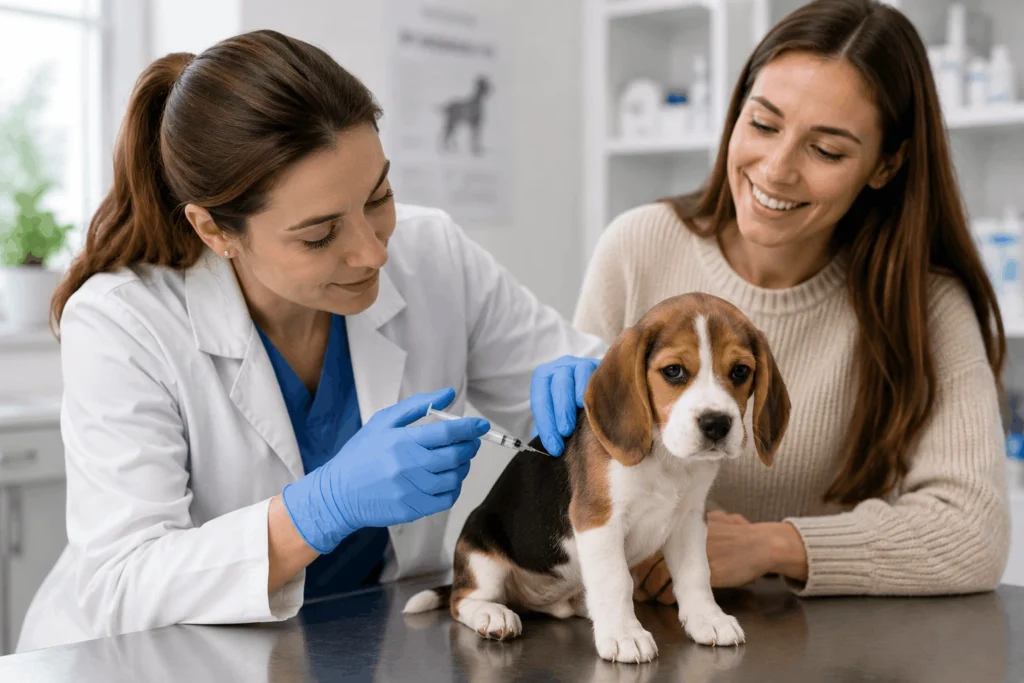
How to Prevent the Most Common Puppy Diseases
Prevention is significantly easier and cheaper than treatment. Here’s what to put in place from day one:
- Vaccination Schedule: Follow the DHPP series starting at 6–8 weeks, with boosters every 3–4 weeks until 16 weeks. Rabies vaccine at 12–16 weeks.
- Deworming Protocol: Begin at 2 weeks old, repeat every 2 weeks through 8 weeks, then monthly through 6 months.
- Flea and Tick Prevention: Use vet-recommended products. Fleas can transmit tapeworms; ticks can carry serious diseases.
- Hygiene Practices: Clean food and water bowls daily. Disinfect sleeping areas regularly.
- Controlled Socialization: Avoid dog parks and high-traffic areas until your puppy’s vaccine series is complete. Stick to playdates with vaccinated dogs you trust.
- Regular Vet Checkups: Schedule wellness visits at 8, 12, and 16 weeks at minimum.
Expert Tips from Canine Health Professionals
- Start fecal exams early. Your vet can identify parasites before symptoms appear. Most vets recommend a fecal test at every puppy visit.
- Don’t skip boosters. A single missed vaccine in the series can leave your puppy unprotected. The timing of each booster matters.
- Know your breed’s risks. Certain breeds are genetically more prone to specific conditions — Dachshunds to skin issues, Bulldogs to respiratory infections. Ask your vet about breed-specific concerns.
- Weight loss is a red flag. A puppy that’s losing weight while eating normally often has parasites or an underlying illness.
- Puppy immunity isn’t instant. Even after the final vaccine, it takes 7–10 days to develop full protection.
Common Mistakes New Owners Make
- Skipping the first vet visit. Many new owners wait too long. Your puppy should see a vet within the first week of coming home.
- Assuming “just a phase.” Persistent diarrhea, coughing, or low energy isn’t something to wait out. These are often early signs of something treatable.
- Buying over-the-counter dewormers without vet guidance. Not all dewormers cover all parasites. A fecal test tells you exactly what you’re dealing with.
- Letting puppies socialize too soon. Dog parks before completing the vaccine series is one of the fastest ways to expose an unprotected puppy to parvo.
- Ignoring gum color. Pale, white, or yellow gums in a puppy signal a medical emergency. Check them regularly.
Frequently Asked Question about Common Puppy Diseases
What are the most common diseases in puppies?
The most common include parvovirus, canine distemper, kennel cough, roundworms, hookworms, giardia, ear infections, mange, ringworm, and puppy strangles. Most are preventable with vaccinations and regular vet care.
How do I know if my puppy is seriously ill?
Watch for bloody diarrhea, pale gums, refusal to eat, extreme lethargy, difficulty breathing, or seizures. Any of these symptoms warrant an immediate vet visit, not a wait-and-see approach.
Can puppy diseases spread to humans?
Yes, some can. Roundworms, hookworms, ringworm, and sarcoptic mange are all zoonotic — meaning they can transfer to people. Regular handwashing and vet-supervised parasite control significantly reduce your risk.
What vaccines protect puppies from disease?
Core vaccines include the DHPP combo (Distemper, Hepatitis, Parvovirus, Parainfluenza) and Rabies. Your vet may also recommend Bordetella (kennel cough) and Leptospirosis depending on your puppy’s lifestyle and location.
When should I take a sick puppy to the vet?
Whenever symptoms concern you especially vomiting, diarrhea lasting more than 24 hours, loss of appetite, or visible lethargy. With puppies, it’s always safer to call your vet than to wait.
Can a vaccinated puppy still get sick?
Yes, though the risk is dramatically lower. No vaccine provides 100% protection, and puppies aren’t fully protected until the complete series is done. Keeping up with booster schedules and annual checkups keeps protection strong.
How long do puppy diseases last?
It depends on the disease. Kennel cough often clears in 1–2 weeks. Parvo can require 5–7 days of intensive hospitalization. Parasite infections clear within days of proper treatment but may recur without prevention.
Conclusion
Puppies are resilient but only when they get the right start. The diseases covered here range from common and easily managed to serious and fast-moving. The difference between a good outcome and a bad one usually comes down to how quickly an owner notices something is wrong and acts on it.
Get your puppy vaccinated on schedule, establish a deworming routine, keep their environment clean, and build a relationship with a vet you trust. Those four steps alone prevent the majority of what’s covered in this article.
If your puppy is showing any symptoms that concern you, don’t wait. Call your vet. Early treatment is almost always faster, easier, and less expensive than treating something that’s been progressing for days.

Muzammil Khan is a certified canine behaviorist and the founder of Puppywhisper. With 8+ years of experience in positive reinforcement training, Muzammil has helped over 1,000 puppies transition smoothly into their new homes. All health advice is reviewed in collaboration with licensed veterinarians.