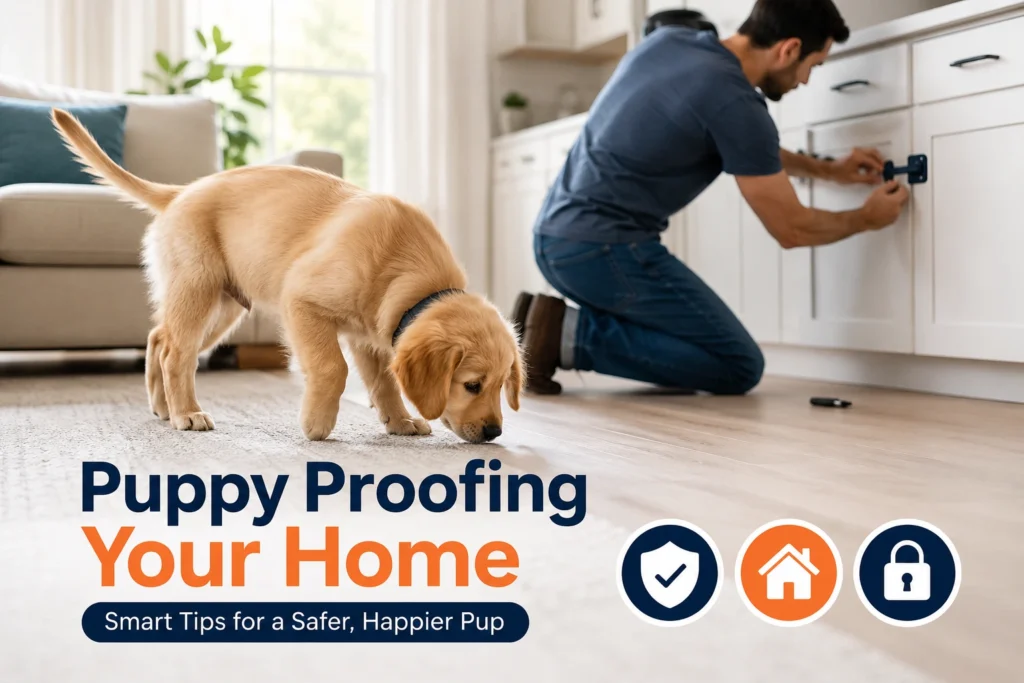
Bringing a new puppy home is exciting until you watch them disappear under the couch, chew through a phone charger, or gulp something off the kitchen floor in under three seconds.
Puppies explore everything with their mouths. They’re fast, curious, low to the ground, and have zero sense of danger. Before your puppy arrives, your home needs to become a place where their curiosity can’t hurt them.
This guide walks you through exactly how to do that, room by room. Once your space is secured, follow our first week with a new puppy guide for the daily routine that builds trust fast..
Quick Answer Puppy Proofing Your Home
Puppy proofing your home means removing or securing anything that could harm your puppy before they arrive. This includes:
- Hiding electrical cords and blocking access to wires
- Locking cabinets containing cleaning products, medications, or food
- Removing toxic houseplants
- Setting up a safe, designated space with a crate or playpen
- Checking fencing and outdoor areas for escape routes or hazards
Done right, it takes a few hours and can prevent serious injury.
Why Puppy Proofing Actually Matters
Puppies are involved in thousands of accidental poisonings, injuries, and emergency vet visits every year. The ASPCA Animal Poison Control Center handles over 400,000 calls annually and a large portion involve household items that owners never suspected were dangerous.
The cost of an emergency vet visit can run from $500 to over $3,000. More importantly, the trauma to your puppy and your family is avoidable.
Puppy proofing isn’t overprotective parenting. It’s basic preparation that gives your dog a safe start.
Start From Your Puppy’s Eye Level
Before touching anything in your home, get down on your hands and knees. Crawl through each room.
What do you see? Dangling cords. Gaps behind appliances. Small objects on the floor. Cabinet doors with no locks. This perspective reveals hazards that are invisible when you’re standing up.
Your puppy will find every single one of these. Your job is to find them first.
Room-by-Room Puppy Proofing Guide
Kitchen
The kitchen is the highest-risk room in your home for a puppy.
Secure these immediately:
- Lower cabinets — Install child-proof cabinet locks on any cabinet containing cleaning supplies, trash bags, aluminum foil, or food storage. Puppies can nose open unlocked doors.
- Trash cans — Use a lidded trash can or store it behind a locked cabinet. Garbage contains food scraps, bones, plastic, and toxic items like onion peels and coffee grounds.
- Food on counters — Grapes, raisins, chocolate, xylitol-containing gum, macadamia nuts, and onions are all toxic to dogs. Never leave these accessible.
- Dishwasher — Keep it closed. Residual detergent and sharp utensils are both hazards.
- Under the sink — This is often where bleach, dish soap, and drain cleaner live. Lock it every time.
Living Room
This is where your puppy will spend the most time and where they’ll find the most to chew.
- Electrical cords — Bundle cords with cord organizers or run them through cord covers. A puppy chewing a live wire can suffer severe burns or electrocution.
- Remote controls, TV remotes, game controllers — These contain batteries. Swallowed batteries cause chemical burns internally and are life-threatening.
- Small objects — Coins, buttons, hair ties, rubber bands, and small toys are choking hazards. Get into the habit of scanning the floor daily.
- Houseplants —Many common indoor plants are toxic to dogs, including pothos, peace lily, dieffenbachia, and snake plant check the ASPCA’s toxic and non-toxic plant list before deciding what stays in the house..
- Reclining furniture — Puppies crawl under and inside recliners. Check before sitting or reclining every time.
Bathroom
Always keep the bathroom door closed when not in use. Period.
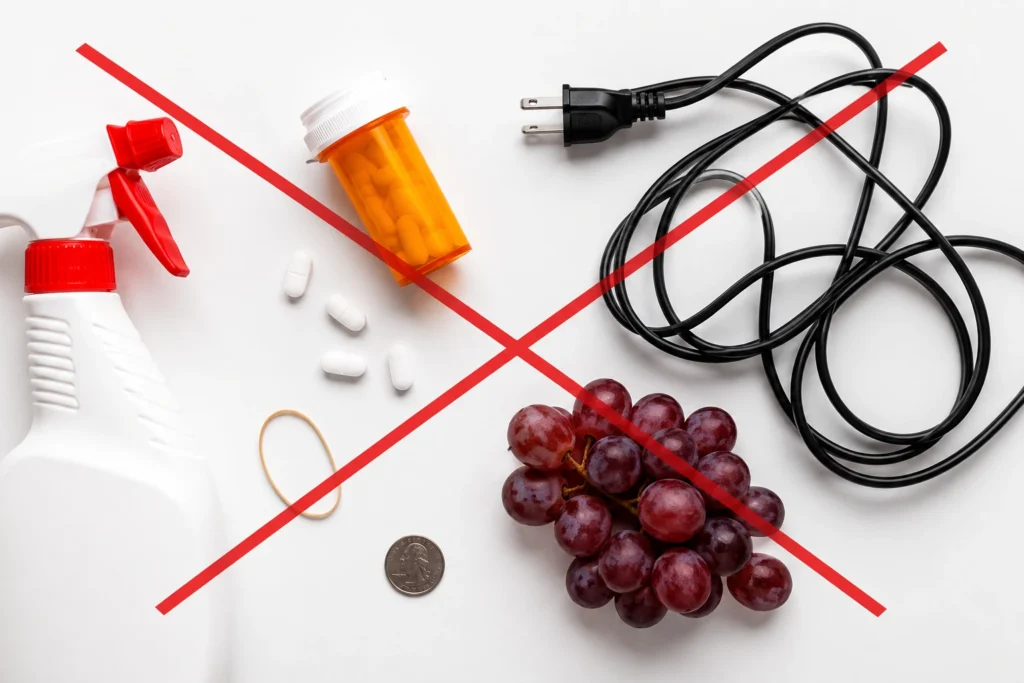
- Medications — Human medications, including ibuprofen, acetaminophen, and antidepressants, are among the most common causes of serious puppy poisonings. Store them in a high, locked cabinet.
- Toilet — Keep the lid down. Small puppies can fall in and drown.
- Razors and cotton swabs — These end up on floors and are swallowed more often than you’d think.
- Cleaning products — Toilet bowl cleaners, bleach sprays, and mold removers are highly toxic. Lock them up.
- Hair products — Hairspray, nail polish remover, and some shampoos can be harmful if ingested.
Bedroom
Bedrooms feel safe but contain hidden hazards.
- Under the bed — Puppies crawl under beds and get stuck or find old objects. Block access with bed skirts or pool noodle barriers, or use a baby gate.
- Clothing and shoes — Socks and shoelaces are swallowing hazards. Intestinal blockages from swallowed fabric are a common surgical emergency.
- Jewelry — Small clasps, rings, and earrings are choking hazards.
- Charging cables — Keep phone and laptop cables off the floor or in cord covers.
Garage and Laundry Room
These two rooms are the most dangerous in the house and should remain off-limits to your puppy unless directly supervised.
- Antifreeze — This smells sweet and is deadly in tiny amounts. Store it sealed on a high shelf and clean up any spills immediately.
- Motor oil, fertilizers, pesticides — All toxic. Store them locked away.
- Power tools and sharp objects — Keep these secured.
- Washing machine and dryer — Puppies can crawl inside. Always check before starting a cycle.
- Laundry detergent pods — Extremely toxic. Keep in a locked cabinet, never on top of the machine.
Outdoor and Yard Safety
If your puppy will have access to a yard, check these before their first day outside.
- Fencing: Walk the entire perimeter. Look for gaps at the base, loose panels, or areas where the ground dips enough for a puppy to dig under. Even a 6-inch gap is enough for a small breed to escape.
- Garden plants: Common garden plants that are toxic to dogs include azalea, oleander, sago palm, foxglove, and daffodil bulbs. Remove them or fence them off.
- Standing water: Puppies can drown in surprisingly shallow water. Cover or empty birdbaths, decorative ponds, and buckets.
- Fertilizers and pesticides: If you treat your lawn or garden, keep your puppy off the grass for the full re-entry period listed on the product label. Many lawn chemicals are toxic to dogs.
Dangerous Items Most Owners Overlook
These hazards catch even careful owners off guard:
| Item | Danger | Action |
|---|---|---|
| Xylitol (in gum, peanut butter, candy) | Severe hypoglycemia, liver failure | Read labels; remove from reach |
| Dryer sheets | Toxic if chewed | Store in closed cabinet |
| Essential oil diffusers | Toxic fumes and oils to dogs | Keep out of puppy areas |
| Vitamins and supplements | Iron overdose is common | Lock with medications |
| Rubber bands and hair ties | Intestinal blockage | Clear floors daily |
Setting Up a Safe Puppy Zone
Before your puppy arrives, designate one area of your home as their safe zone. This is where they eat, sleep, and spend time when unsupervised.
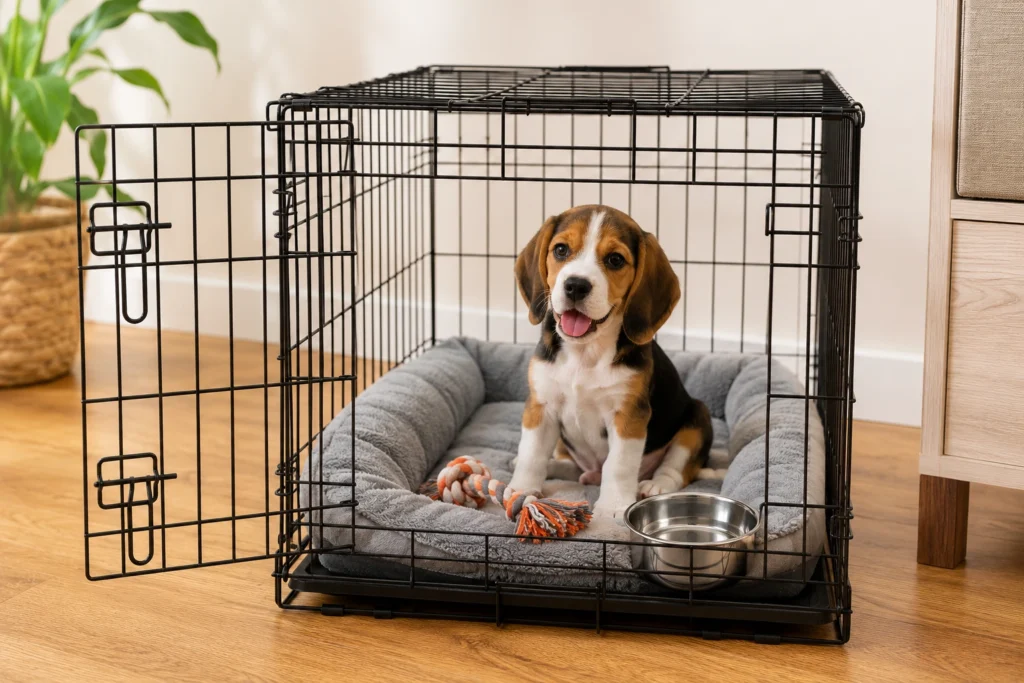
- Crate: A properly sized crate gives your puppy a den-like space where they feel secure. It also prevents unsupervised access to your home. Choose one that allows your puppy to stand, turn, and lie down without excess space that encourages accidents. Once it’s set up, our puppy sleep schedule guide shows you how to use it for better nights right away..
- Playpen: A puppy playpen expands their safe area without giving full home access. Use it during the day when you’re present but busy.
- Baby gates: Use baby gates to block rooms that haven’t been fully proofed or areas like staircases. Pressure-mounted gates are fine for doorways; hardware-mounted gates are safer at the top of stairs.
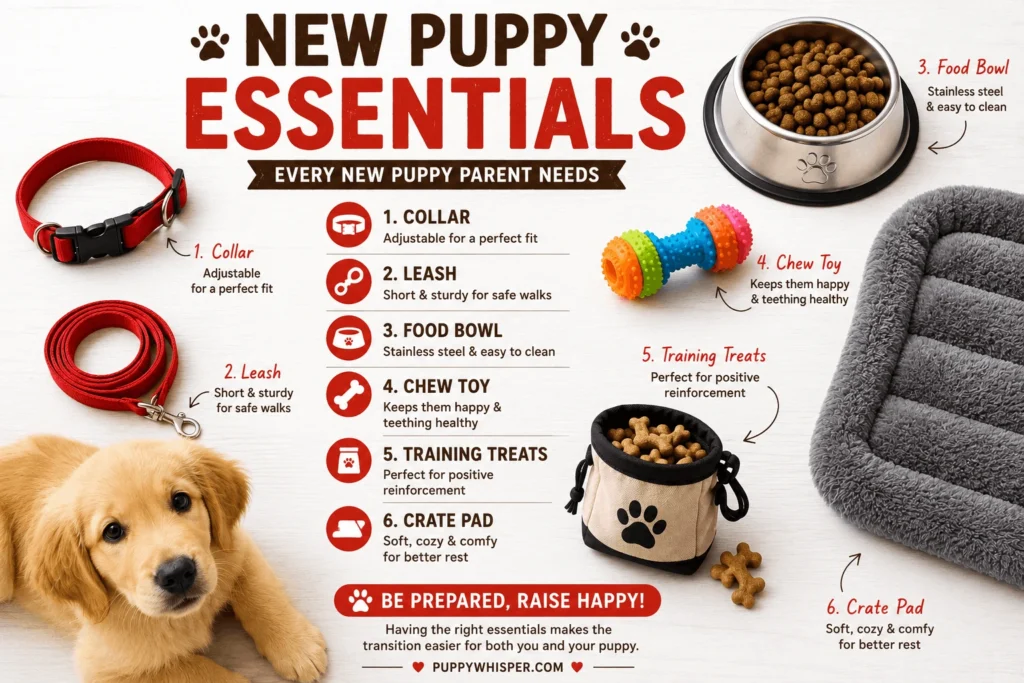
For help choosing the right crate size and the rest of your setup, see our new puppy checklist.
Common Mistakes to Avoid
- Assuming your puppy won’t reach something. Puppies grow fast. What’s out of reach today is accessible in two weeks. Think ahead.
- Puppy proofing only visible areas. Behind appliances, under furniture, and inside closets matter just as much as open spaces.
- Forgetting about guests. Visitors leave bags on the floor, drop medications, bring food in purses. Brief anyone who comes to your home and if it’s family meeting the puppy for the first time, our guide on introducing a puppy to family members keeps that moment calm too..
- Relying solely on training. Training takes months. Puppy proofing protects them during the time before training is reliable.
- Skipping the garage. Garages contain more concentrated hazards than any other space. Keep the door closed and your puppy out.
Expert Tips
- Use bitter apple spray on baseboards, furniture legs, and cord covers. Most puppies avoid the taste immediately.
- Rotate supervision zones. As your puppy earns trust, gradually expand their access to new rooms one at a time.
- Create a puppy emergency kit. Keep your vet’s number, the ASPCA Poison Control number (888-426-4435), and your nearest emergency animal hospital number saved in your phone before day one.
- Do a final sweep the night before pickup. Walk every room with a trash bag and remove anything on the floor.
Frequently Asked Questions
What is puppy proofing and why is it important?
Puppy proofing means removing or securing hazards in your home before your puppy arrives. It’s important because puppies explore with their mouths and have no way to assess danger. Proofing prevents injuries, poisonings, and emergency vet visits.
Which room needs the most puppy proofing?
The kitchen and garage are the highest-risk rooms. Both contain toxic substances, sharp objects, and food hazards that can seriously harm or kill a puppy.
What household items are most dangerous for puppies?
Medications, xylitol-containing products, antifreeze, cleaning products, electrical cords, small objects, and toxic plants are the most common serious hazards.
How do I keep my puppy from chewing wires?
Run cords through cord covers or cable management sleeves, bundle them out of reach, and apply bitter apple spray to exposed sections. Never leave your puppy unsupervised around loose cords.
What plants are toxic to puppies indoors?
Pothos, peace lily, dieffenbachia, snake plant, philodendron, and aloe vera are all toxic to dogs. Check the ASPCA toxic plant database for a full list.
Do I need a crate to puppy proof my home?
A crate is the single most effective tool for managing a new puppy safely. It prevents unsupervised access to hazards and supports house training. It’s strongly recommended for every new puppy owner.
How do I puppy proof my yard?
Check fencing for gaps, remove toxic plants, empty standing water, and avoid lawn chemicals during the adjustment period. Always supervise outdoor time until your puppy is reliably trained.
At what age can I stop worrying about puppy proofing?
Most puppies move out of the highest-risk chewing phase by 12–18 months, once adult teeth are fully settled. Until then, keep your environment proofed and continue expanding their freedom gradually as they demonstrate reliable behavior.
Conclusion
Puppy proofing your home takes a few focused hours but protects your dog from hazards they’re completely unequipped to recognize. Go room by room, get down to floor level, secure what needs securing, and set up a safe zone before your puppy walks through the door.
The goal isn’t a sterile house — it’s a home where your puppy can be a puppy without getting hurt. Start with the kitchen, lock the garage, and build outward from there.
Your next step: work through our new puppy checklist to make sure you have everything else covered before pickup day.

Muzammil Khan is a certified canine behaviorist and the founder of Puppywhisper. With 8+ years of experience in positive reinforcement training, Muzammil has helped over 1,000 puppies transition smoothly into their new homes. All health advice is reviewed in collaboration with licensed veterinarians.