Introduction
Your puppy just left a loose, messy pile in the yard, but two minutes later she’s chasing her tail like nothing happened. No whining, no hiding under the couch, full appetite at dinner. So why does the internet make it sound like diarrhea is always an emergency?
Here’s the honest answer: a puppy who has diarrhea but is otherwise acting completely normal is common, and it is usually not a crisis. But “usually not a crisis” is not the same as “ignore it.” There’s a real difference between a one-off loose stool from a stolen sock of grass and diarrhea that’s the first quiet sign of something more serious like parasites or a viral infection. This guide walks you through exactly how to tell the difference, what to do in the next 24 hours, and when normal behavior stops being a good enough reason to wait.
Puppy Diarrhea But Acting Normal: Quick Answer
A puppy with diarrhea who is still eating, drinking, and acting normally may have a mild digestive upset caused by a diet change, new treat, stress, eating something unusual, or intestinal parasites. However, normal behavior does not rule out illness. Monitor your puppy closely, keep fresh water available, avoid human medications, and contact your veterinarian for feeding advice. Very young or incompletely vaccinated puppies, puppies with vomiting or blood in the stool, or puppies showing weakness or dehydration should receive veterinary attention promptly.
Why “Acting Normal” Doesn’t Always Mean Nothing Is Wrong
Puppies are built to hide illness. It’s an instinct left over from the wild, where looking weak makes an animal a target. This means your puppy’s energy and appetite can stay completely normal for a day or two even while something is actively brewing in her gut, whether that’s a mild bacterial overgrowth, a few intestinal worms, or an early-stage viral infection.
That’s not meant to scare you. Most of the time, normal behavior really does mean a minor issue. But it explains why vets don’t use “acting fine” as the only measure of whether a puppy is okay. Behavior is one piece of the puzzle. Stool consistency, frequency, age, vaccination status, and how long the diarrhea lasts matter just as much. For the full list of physical and behavioral red flags to watch for, see our guide to signs of a sick puppy.
Common Causes of Puppy Diarrhea When Nothing Else Seems Wrong
Here’s a quick overview of the most frequent triggers. For a deeper breakdown of every possible cause, see our complete guide to puppy diarrhea causes.
| Cause | How Common | Typical Duration | Behavior Impact |
|---|---|---|---|
| Diet change or new treats | Very common | 1 to 2 days | Usually minimal |
| Stress | Very common | 1 to 3 days | Minimal to mild |
| Eating something unusual | Common | 1 to 2 days | Usually minimal |
| Mild food intolerance | Common | Varies | Usually minimal |
| Intestinal parasites | Common in puppies | Can persist if untreated | May initially be minimal |
| Bacterial imbalance | Occasional | 1 to 3 days | Minimal to mild |
| Viral infection | Less common but serious | Can worsen quickly | May initially appear normal |
Diet and Treats
The most frequent cause by far. Puppies have delicate digestive systems, and switching kibble brands too fast, giving a rich new treat, or letting them snack on a family meal can trigger loose stool within a few hours. This is why a slow, seven to ten day food transition matters more than most new owners realize.
Stress
A car ride to the vet, a new home, boarding, or even a loud thunderstorm can trigger stress colitis, which produces loose or jelly-like stool with mucus. It’s genuinely tied to the nervous system’s effect on gut motility, and it typically clears once the stressor passes.
Something They Shouldn’t Have Eaten
Grass, dirt, a dead bug in the yard, a wrapper. Puppies explore with their mouths, and their gut often reacts before anything else does. This is usually a one-time loose stool rather than repeated diarrhea. If vomiting shows up alongside it, our guide on why your puppy might be throwing up can help you narrow down the cause.
Parasites
Roundworms, hookworms, giardia, and coccidia are extremely common in puppies, especially those from shelters, breeders, or pet stores. A puppy carrying a light parasite load can look and act completely normal while still having intermittent soft stool. This is one of the biggest reasons vets recommend a fecal exam even when a puppy “seems fine.”
Bacterial Imbalance
Sometimes the gut’s normal bacteria get thrown off balance after antibiotics, a diet change, or minor illness. This can cause a few days of loose stool without any other symptoms.
What to Do in the First 24 Hours
If your puppy has a mild episode of diarrhea but is still alert, drinking, and behaving normally, monitor closely and keep their routine as calm as possible. Because puppies have different nutritional needs based on age, size, and health, ask your veterinarian for specific feeding advice rather than automatically fasting your puppy.
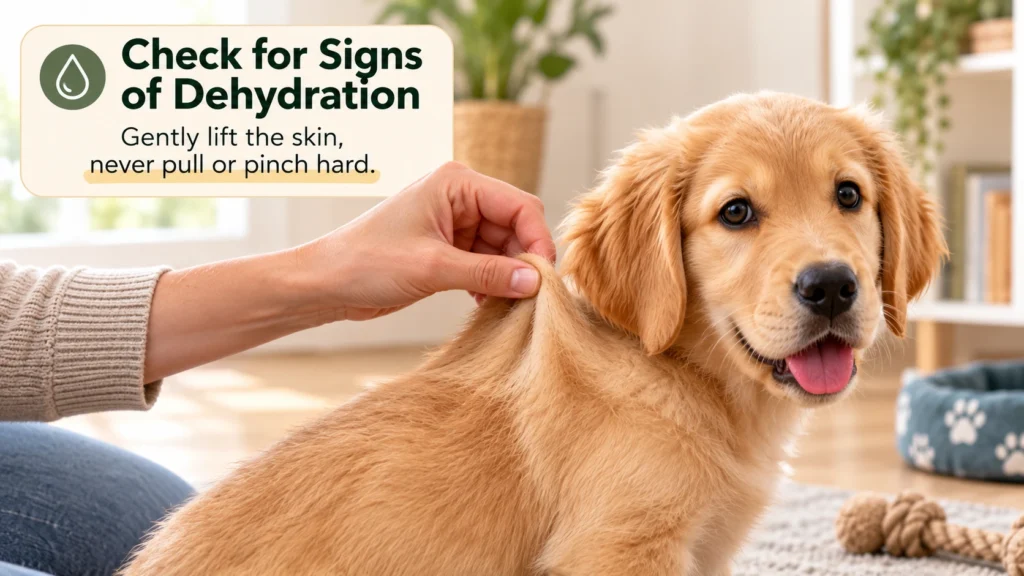
- Check hydration. Make sure fresh water is available at all times. Watch for signs such as very dry or sticky gums, unusual weakness, or a noticeable change in drinking.
- Don’t give human medications. Avoid products such as Pepto-Bismol or Imodium unless your veterinarian specifically tells you to use them and provides the appropriate instructions.
- Follow your veterinarian’s feeding advice. A veterinarian may recommend continuing the puppy’s normal food, temporarily changing the diet, or using an easily digestible diet depending on the puppy’s age and symptoms.
- Keep meals small if your veterinarian recommends feeding. Smaller, more frequent meals may be easier to tolerate than large meals during a digestive upset.
- Avoid new treats and table scraps. Keep your puppy’s diet simple and consistent while you monitor the diarrhea.
- Track every stool. Note the time, consistency, color, frequency, and whether the diarrhea is improving or getting worse.
- Contact your veterinarian if symptoms worsen. Blood, black or tar-like stool, repeated vomiting, weakness, dehydration, severe abdominal discomfort, or persistent diarrhea are reasons to seek veterinary advice.
What About a Bland Diet?
You may have heard that chicken and rice can help with diarrhea. A veterinarian may recommend a short-term, easily digestible diet for some puppies, but homemade chicken and rice is not a complete and balanced diet for a growing puppy.
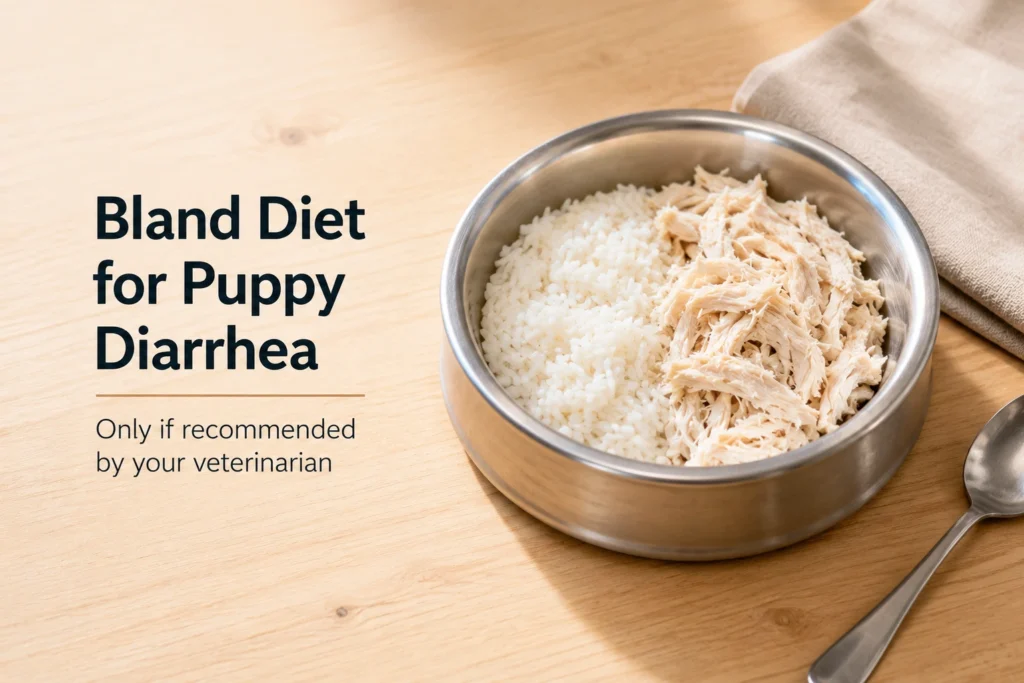
If your veterinarian recommends a bland diet, follow their instructions about what to feed, how much to offer, and how long to use it. Do not use a homemade bland diet as a long-term replacement for complete puppy food.
When “Acting Normal” Stops Being Reassuring
Take your puppy to the vet, even if she still seems playful, if you notice any of the following:
- Diarrhea lasting more than 2 days
- Blood (bright red or dark, tar-like stool)
- Mucus coating the stool repeatedly
- A strong, unusual odor that’s different from normal
- Your puppy is under 12 weeks old
- Your puppy isn’t fully vaccinated
- Diarrhea combined with even mild vomiting
- Visible worms in the stool
- Straining without much output
- Any change in drinking habits, either much more or much less
Young, unvaccinated puppies deserve extra caution. Conditions like parvovirus can look mild in the first several hours and turn serious very fast, and delaying care in that window matters more than in an older, fully vaccinated dog.
When to Call a Veterinarian Promptly
Contact a veterinarian promptly if your puppy has:
- Repeated or very watery diarrhea.
- Blood in the stool or black, tar-like stool.
- Diarrhea combined with vomiting.
- Weakness, unusual sleepiness, collapse, or a sudden change in behavior.
- Signs of dehydration or a major change in drinking.
- A swollen or painful abdomen.
- Possible exposure to a toxin or swallowed foreign object.
- Diarrhea while very young or not fully vaccinated.
- Diarrhea that continues, worsens, or keeps coming back.
Could It Be Parvovirus?
Parvovirus is one reason puppy diarrhea deserves extra attention, especially in very young or incompletely vaccinated puppies. Early signs can overlap with an ordinary stomach upset, so a puppy may not immediately look seriously ill.
Watch for diarrhea combined with vomiting, loss of appetite, unusual tiredness, weakness, dehydration, or a rapid decline in condition. Bloody diarrhea can occur, but blood is not required for parvovirus to be a concern.
If your puppy is not fully vaccinated and develops significant or worsening diarrhea, contact your veterinarian promptly. If parvovirus is suspected, keep the puppy away from other dogs and shared areas until your veterinarian gives you further instructions, because the virus can spread easily.
Expert Tips
- Don’t switch foods again mid-diarrhea. Stick with the bland diet until stool is fully formed for 24 hours, then transition back to regular food gradually over 3 to 5 days.
- Skip human anti-diarrheal medication unless your vet specifically prescribes it. Many over-the-counter options are unsafe for puppies.
- Bring a stool sample to the vet visit if you’re going in. A fresh sample (collected within a few hours) makes parasite testing far more accurate.
- Keep a simple log on your phone: time, consistency (using a 1 to 7 stool chart if you have one), and any other symptoms. This helps your vet spot patterns fast.
- Probiotics made for dogs can help rebalance gut bacteria after a mild episode, but check with your vet before starting one, especially for puppies under 12 weeks.
Common Mistakes Puppy Owners Make
Mistake: Waiting too long because the puppy “seems totally fine.” Why it’s a problem: Behavior lags behind what’s happening internally, especially with parasites or early viral illness. What to do instead: Use stool signs and duration, not just energy level, to decide whether to call the vet.
Mistake: Switching to a new food to “fix” the diarrhea. Why it’s a problem: A new food adds another variable and can prolong the upset instead of resolving it. What to do instead: Go bland and simple first, then reintroduce the regular diet slowly once things settle.
Mistake: Giving human medication like Pepto-Bismol or Imodium without vet approval. Why it’s a problem: Some ingredients are toxic to dogs, and dosing for a puppy’s small body weight is easy to get wrong. What to do instead: Call your vet or a pet poison hotline before giving anything not specifically labeled for dogs.
Mistake: Not testing for parasites because the puppy has already been dewormed once. Why it’s a problem: Puppies often need multiple deworming rounds, and reinfection is common in the first several months. What to do instead: Bring a fresh stool sample to routine vet visits, even if diarrhea has already resolved.
Mistake: Assuming one firm stool means the issue is over. Why it’s a problem: Diarrhea can come and go for a few cycles before fully resolving, especially with parasites or stress colitis. What to do instead: Watch stool consistency for a full 48 hours before considering the issue resolved.
Frequently Asked Questions
Is it normal for a puppy to have diarrhea and still be playful?
Yes, this is common with mild causes like diet change, stress, or minor stomach upset. Playfulness is a good sign, but it doesn’t rule out something that needs monitoring, like parasites.
How long can puppy diarrhea last before I should worry?
Beyond 48 hours without improvement is the general point to call your vet, especially for puppies under 6 months old.
Can teething cause diarrhea in puppies?
Teething itself doesn’t typically cause diarrhea, but puppies chew on more things during this stage, and swallowing something unusual can upset their stomach.
Should I feed my puppy if they have diarrhea but are acting normal?
A short 8 to 12 hour food break followed by a bland chicken and rice diet is generally recommended for puppies over 12 weeks. Very young puppies should not be fasted without vet guidance.
What color of puppy diarrhea is dangerous?
Black, tarry stool or stool with bright red blood both need prompt veterinary attention, as they can indicate bleeding in the digestive tract.
Can stress alone cause diarrhea in a healthy puppy?
Yes. Moving to a new home, car rides, or loud environments can trigger stress colitis, which often clears once the puppy settles and the stressor is removed.
Do I need to bring a stool sample to the vet?
Yes, if possible. A fresh sample allows for accurate parasite testing and can speed up diagnosis significantly.
Is watery diarrhea worse than soft, formed stool?
Generally yes. Watery stool carries a higher risk of rapid dehydration, especially in small or young puppies, and warrants closer monitoring or a same-day vet call.
Conclusion
A puppy with diarrhea who’s still eating, playing, and acting like herself is, in most cases, dealing with something minor and temporary. Diet changes, stress, and small parasite loads are the usual suspects, and a bland diet plus close monitoring resolves the majority of these cases within a couple of days. The key is not relying on behavior alone. Track the stool, watch the clock, and treat any blood, mucus, or diarrhea past 48 hours as your signal to call the vet, regardless of how good your puppy’s mood is.
Next step: Start a simple 48-hour stool log today, noting time and consistency after every bathroom trip, so you have clear information ready if you do need to call your vet.
About this article
This article provides general educational information about puppy diarrhea. It is not a diagnosis or substitute for veterinary care. Recommendations may vary based on a puppy’s age, vaccination status, size, medical history, and symptoms.
This article is for informational purposes only and is not a substitute for professional veterinary advice. If you’re concerned about your puppy’s health, please contact a licensed veterinarian.

Muzammil Khan is a certified canine behaviorist and the founder of Puppywhisper. With 8+ years of experience in positive reinforcement training, Muzammil has helped over 1,000 puppies transition smoothly into their new homes. All health advice is reviewed in collaboration with licensed veterinarians.