You are chopping vegetables for dinner and your puppy is sitting at your feet, watching every move. A carrot piece drops. Before you can grab it, you wonder: is this actually okay for a puppy?
Good news: usually, yes. But the details matter. Puppies are small, their digestive systems are still maturing, and they chew on everything. How you cut, cook, and portion a carrot makes the difference between a healthy snack and a choking scare or a messy stomach.
This guide covers when puppies can start eating carrots, how much is safe, raw versus cooked versus frozen, and what to avoid.
Can Puppies Eat Carrots? Quick Answer
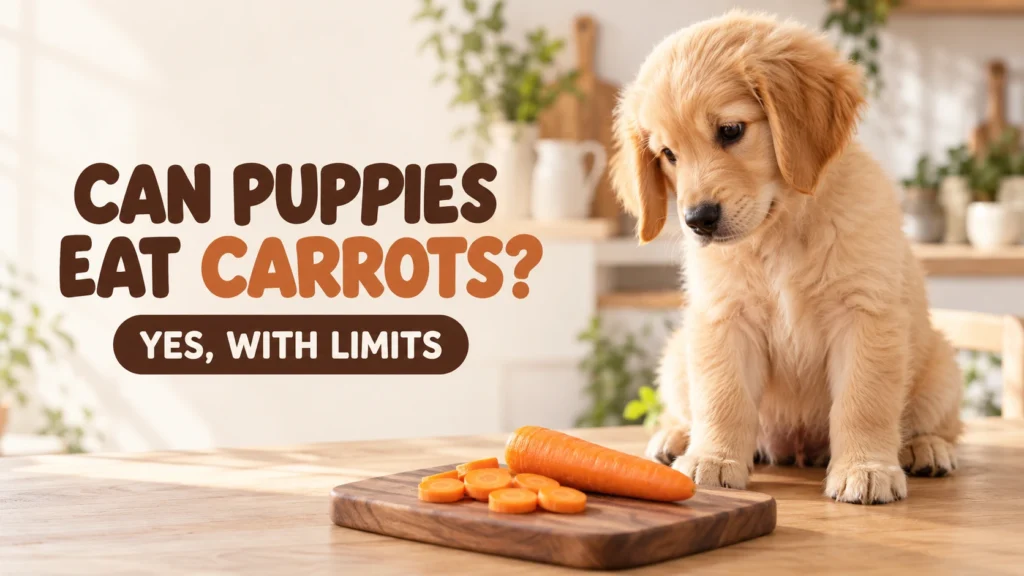
Yes, puppies can eat carrots. Plain carrots are safe, low in calories, and a good source of fiber and beta-carotene. Start after your puppy is eating solid puppy food (usually around 8 weeks), offer small bite-sized pieces, and keep treats under about 10% of daily calories. Cut carrots to size to prevent choking, and skip butter, salt, and seasoning.
Are Carrots Good for Puppies?
Carrots are a simple, whole-food snack that most puppies enjoy. They are crunchy, mildly sweet, and cheap. A medium raw carrot has only about 25 calories, so they fit easily into a healthy treat routine.
What carrots offer
| Nutrient | What it does for your puppy |
|---|---|
| Beta-carotene | Dogs convert it into vitamin A, which supports vision, skin, and immune function |
| Fiber | Supports normal digestion when given in small amounts |
| Potassium | Helps normal muscle and nerve function |
| Vitamin K | Supports normal blood clotting |
| Low calories | Lets you reward often without overfeeding |
What carrots do not do
Carrots are a treat, not a meal. Your puppy gets complete nutrition from a high-quality puppy food formulated to meet AAFCO nutritional standards for growth. Carrots add variety and chewing fun, but they do not replace balanced puppy food. And while crunchy chewing is satisfying, carrots are not a substitute for tooth brushing.
When Can Puppies Start Eating Carrots?
Most puppies are weaned and eating solid food by about 8 weeks old. Once your puppy is eating well on a feeding schedule for their age and has settled into your home, a few small pieces of carrot are generally fine.
If you have a very young, very small, or recently adopted puppy, wait until their stomach has settled and check with your vet first. A new home already brings stress, new water, and new food. Adding more new things at once makes it harder to tell what is causing any tummy trouble.
How Much Carrot Can a Puppy Eat?
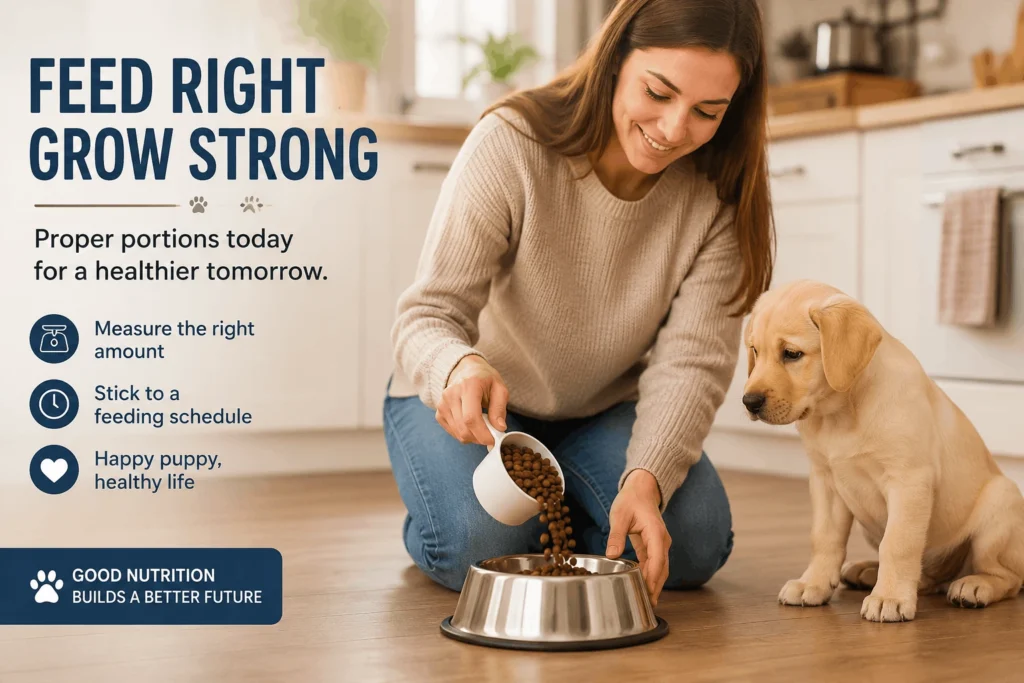
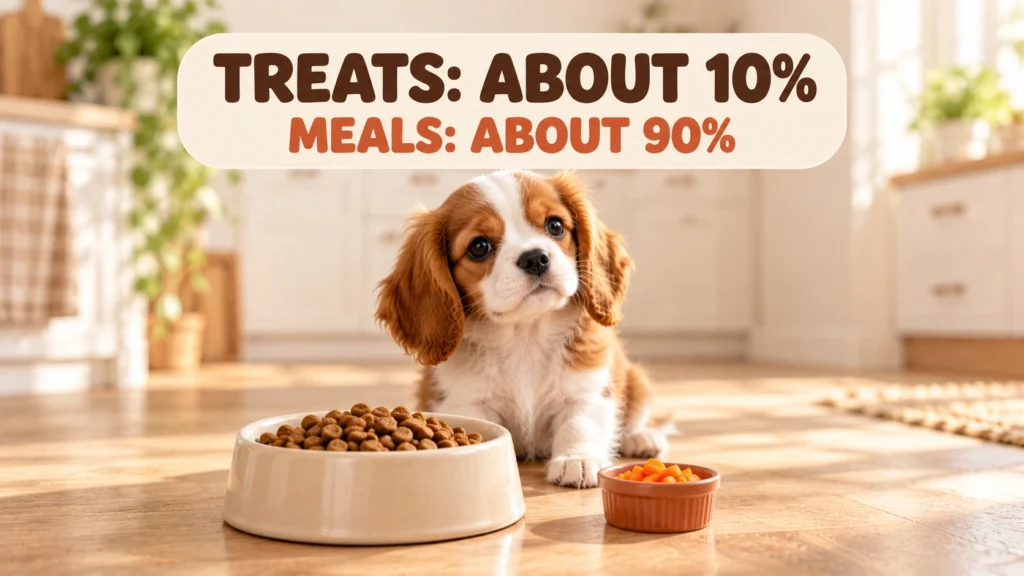
The standard guidance from veterinarians is that treats and extras should make up no more than about 10% of your puppy’s daily calories. The other 90% should come from complete puppy food, so it helps to know how much your puppy should eat each day.
Because puppies are small, portions are tiny. Use these as a starting point, not a prescription:
| Puppy size | First-time portion | Typical treat serving |
|---|---|---|
| Toy and small breeds | 1 to 2 pea-sized pieces | A few small pieces or about a teaspoon |
| Medium breeds | 2 to 3 small pieces | A tablespoon of diced carrot |
| Large and giant breeds | 3 to 4 small pieces | A few tablespoons of diced carrot |
The first-time rule
Offer a very small amount and wait 24 hours. If stools stay normal and your puppy acts fine, you can slowly offer a bit more next time. Introduce only one new food at a time, and check it against our list of foods puppies should avoid first.
Raw, Cooked, or Frozen: Which Is Best?
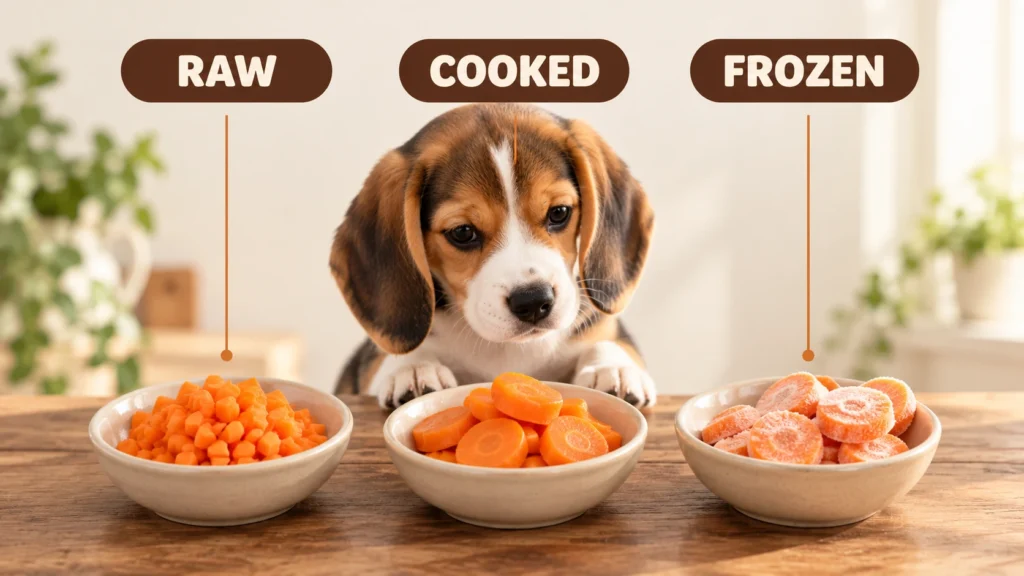
All three can work. The right choice depends on your puppy’s age, teeth, and chewing style.
| Type | Best for | Watch out for |
|---|---|---|
| Raw | Crunchy treat for puppies with strong chewing habits | Large chunks can be a choking hazard; hard for very young puppies |
| Cooked (steamed or boiled, plain) | Younger puppies, sensitive stomachs, mixing into meals | Never add butter, oil, salt, garlic, or onion |
| Frozen | Teething relief and cooling off in warm weather | Hard frozen chunks can be too tough; always supervise |
Raw carrots
Raw carrots are crunchy and satisfying, but they are firm. For puppies, grate them, dice them very small, or slice them into thin rounds. Skip large sticks, especially for small breeds.
Cooked carrots
Steamed or boiled carrots are softer and easier to digest, which makes them a gentler first option. Cook them until a fork goes through easily, let them cool, and serve plain. Cooking also makes carrots easier to mash into wet or dry puppy food.
Frozen carrots
Many owners use frozen carrots during teething, which typically starts around 3 to 4 months of age. The cold can feel soothing on sore gums, and the AKC notes that some vets recommend cold carrots for teething puppies. Use thin frozen slices or small frozen pieces rather than whole carrots, and stay close while your puppy chews. If a piece breaks off in a big chunk, take it away and replace it with a smaller one.
7 Safe Ways to Serve Carrots to Your Puppy
- Grated carrot on top of meals. Sprinkle a small amount over puppy food for a texture change.
- Steamed carrot coins. Slice thin, steam until soft, cool, and serve as a training treat.
- Mashed carrot. Mash cooked carrot and spread it on a lick mat for calming enrichment.
- Frozen carrot slices. Freeze thin rounds for teething sessions.
- Diced training rewards. Cut raw carrot into pea-sized bits for quick, low-calorie rewards.
- Carrot and plain pumpkin bites. Mix mashed carrot with a spoonful of plain, unsweetened pumpkin and freeze in a silicone mold.
- Stuffed toy filler. Pack small cooked pieces into a rubber chew toy, then freeze.
Always wash and peel or scrub carrots, and trim the ends.
Risks to Know About
Carrots are safe for most puppies, but a few risks are worth knowing.
Choking
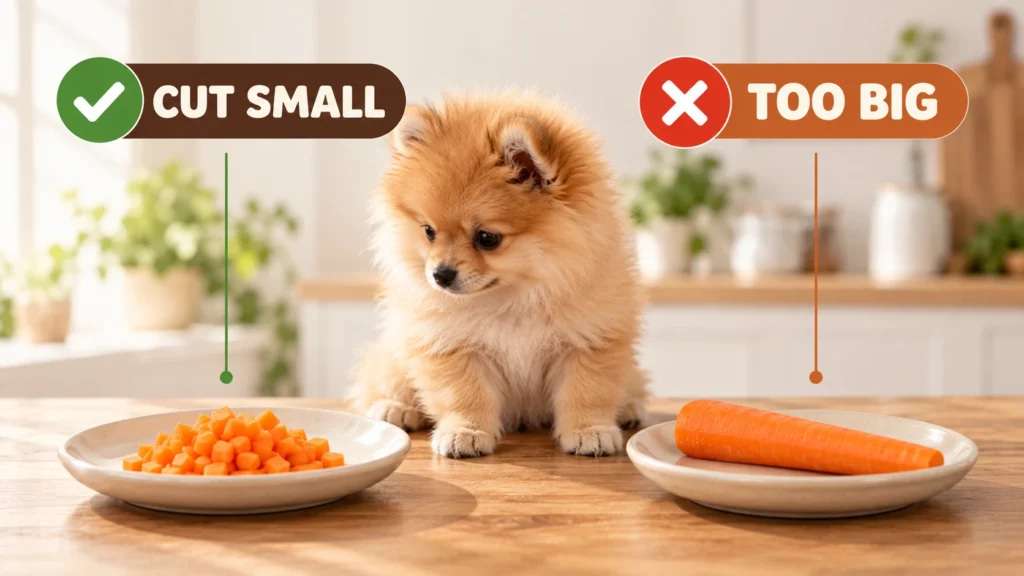
This is the biggest risk. Large raw carrot sticks or hard frozen chunks can lodge in a small puppy’s throat. Always cut to an appropriate size for your puppy’s mouth and supervise any chewing. If your puppy is gagging, pawing at the mouth, or struggling to breathe, contact an emergency vet right away.
Digestive upset
Too much fiber too quickly can cause gas, soft stools, or diarrhea. If your puppy has loose stools after carrots, stop offering them for a few days. For a closer look at what could be going on, read our guide on puppy diarrhea causes.
Food allergies and intolerance
True carrot allergies are uncommon, but any new food can cause a reaction. Watch for itching, hives, facial swelling, vomiting, or ongoing loose stools. Contact your veterinarian if you notice these signs. Facial swelling or trouble breathing is an emergency.
Seasonings and add-ons
Carrots themselves are fine. The problem is what gets added. Onion, garlic, excess salt, butter, sugary glazes, and certain sauces can be harmful to dogs. Serve carrots plain.
Too many treats
Even healthy treats add up. If carrots, training treats, and chews are all stacked on top of regular meals, your puppy may take in more calories than needed. Count carrot pieces as part of the 10% treat allowance.
When to Call Your Veterinarian
Call your vet if your puppy:
- Vomits more than once after eating carrots
- Has diarrhea lasting more than a day, or any blood in stool
- Seems lethargic, refuses food, or appears painful
- Shows signs of an allergic reaction
- Has a medical condition such as diabetes, or is on a special diet
Puppies can dehydrate quickly, so do not wait if symptoms continue. Our guide to the signs of a sick puppy can help you decide when it is time to call.
Expert Tips for Feeding Carrots to Puppies
- Match the size to the mouth. A good rule is to cut pieces smaller than your puppy’s kibble, especially for tiny breeds.
- Use carrots as training rewards. Small pieces work well for sit, down, and recall practice, particularly for puppies who are not very food-motivated about kibble.
- Offer after exercise or play, not right before meals. This keeps treats from replacing appetite for balanced food.
- Rotate with other safe options. Plain cooked pumpkin, cucumber, and blueberries are other common vegetable and fruit treats. Check any new item against the ASPCA’s list of toxic foods first.
- Choose plain, unseasoned carrots. Baby carrots are fine if they are plain and cut small. Skip pre-packaged glazed or seasoned versions.
- Store prepared carrot for 3 to 4 days. Keep cut carrot in a sealed container in the fridge and discard if it turns slimy.
Common Mistakes to Avoid
Giving whole carrots to small puppies. It looks like a fun chew, but a chunk can break off and cause choking. Cut carrots down or grate them instead.
Skipping the slow introduction. A big handful on day one can mean loose stools by night. Start tiny, wait a day, and then increase gradually.
Adding seasonings. Carrots cooked for the family dinner often contain butter, salt, garlic, or onion. Set aside a plain portion for your puppy before seasoning.
Replacing meals with vegetables. Puppies need complete, balanced nutrition for growth. Vegetables should supplement, never replace, quality puppy food.
Treating carrots as free food. Low calorie does not mean unlimited. Count them within the daily treat allowance.
Ignoring warning signs. Mild gas can be normal. Repeated vomiting, lethargy, or persistent diarrhea is not. Call your vet.
Frequently Asked Questions
Can 8-week-old puppies eat carrots?
Many 8-week-old puppies can have a tiny amount of plain, soft cooked carrot once they are eating solid puppy food and settled into their new home. Start with one or two very small pieces and check with your vet if your puppy is very small or has had any tummy problems.
Can puppies eat raw carrots?
Yes, but cut them small. Raw carrots are firm, so grate them, dice them, or slice them thin. Avoid long raw sticks for small breeds and young puppies because of the choking risk.
Can puppies eat cooked carrots?
Yes. Plain steamed or boiled carrots are softer and often easier on a young puppy’s stomach. Do not add butter, oil, salt, garlic, or onion.
Are frozen carrots good for teething puppies?
They can help soothe sore gums, but use thin slices or small pieces and supervise. Very hard frozen chunks can be difficult to chew and may break into pieces that are too large.
Can puppies eat baby carrots?
Yes, plain baby carrots are fine if they are cut into smaller pieces. A whole baby carrot can still be a choking hazard for a toy or small breed puppy.
How many carrots can a puppy have per day?
There is no single number for every puppy. Keep all treats, including carrots, to about 10% of daily calories. For most small puppies, that means just a few tiny pieces. Ask your vet for a personalized amount.
Can carrots give puppies diarrhea?
They can if your puppy eats too much too fast. Carrots contain fiber, and a sudden increase can cause soft stools or gas. If diarrhea lasts more than a day, or your puppy seems unwell, call your vet.
Conclusion
Carrots are one of the easier human foods to share with a puppy. They are low in calories, full of useful nutrients, and fun to crunch. The keys are simple: wait until your puppy is eating solid food, cut pieces small, serve them plain, start slowly, and keep treats to about 10% of daily calories.
Your next step: steam one carrot tonight, dice a few pea-sized pieces, and offer one or two after your puppy’s next training session. Then watch for any tummy changes over the next 24 hours before offering more.
Health note: This article is general education, not veterinary advice. Every puppy is different. If your puppy has a medical condition, a sensitive stomach, or is on a prescription diet, ask your veterinarian before adding new foods.

Muzammil Khan is a certified canine behaviorist and the founder of Puppywhisper. With 8+ years of experience in positive reinforcement training, Muzammil has helped over 1,000 puppies transition smoothly into their new homes. All health advice is reviewed in collaboration with licensed veterinarians.