
Introduction
You’re on your knees at 6 a.m. cleaning up puppy vomit off the carpet, and your first thought isn’t “gross.” It’s “Is my puppy okay?”
That worry is understandable. Puppies can vomit for relatively mild reasons, such as eating too quickly or having a sudden food change, but vomiting can also happen with parasites, infections, toxins, or an intestinal blockage.
The difficult part is knowing when you can monitor your puppy and when you should contact a veterinarian.
This guide explains common reasons puppies vomit, what different vomit appearances may indicate, what you can safely do while arranging veterinary advice, and the warning signs that mean your puppy needs prompt veterinary care.
Important: This article is for general educational and informational purposes only. It is not veterinary advice, a diagnosis, or a substitute for an examination by a licensed veterinarian. Puppies can become dehydrated or seriously ill quickly. If your puppy is repeatedly vomiting, appears weak or lethargic, has blood in the vomit, may have swallowed a foreign object or toxin, or has other concerning symptoms, contact your veterinarian or an emergency veterinary hospital promptly.
Why Is My Puppy Throwing Up: Quick Answer
Puppies can throw up for many reasons, including eating too quickly, dietary changes, eating something inappropriate, motion sickness, parasites, infections, toxins, and foreign objects.
A single episode of vomiting in a puppy that otherwise seems completely normal may sometimes be monitored closely. However, repeated vomiting, weakness, loss of appetite, abdominal pain, blood, diarrhea, or possible ingestion of an object or toxin should be taken seriously.
Because puppies are more vulnerable to dehydration and some serious infections, it’s better to contact your veterinarian when you’re unsure.
Puppy Vomiting: When to Monitor and When to Call the Vet
| Situation | What It May Mean | What to Do |
|---|---|---|
| Vomits once and acts completely normal | Mild stomach upset, eating too quickly, or another minor cause | Monitor closely and contact your vet if it happens again |
| Vomits more than once | Ongoing stomach or digestive problem | Contact your veterinarian promptly |
| Vomiting + diarrhea | Gastrointestinal illness, parasites, infection, or other causes | Contact your veterinarian, especially if symptoms are severe |
| Vomiting + lethargy or weakness | Possible significant illness or dehydration | Seek prompt veterinary care |
| Blood in vomit | Possible bleeding or irritation | Contact a veterinarian promptly |
| Repeated vomiting + swollen or painful belly | Possible obstruction or other serious condition | Seek emergency veterinary care |
| May have swallowed a toy, sock, bone, or other object | Possible foreign-body obstruction | Contact your veterinarian promptly |
| May have eaten a toxic substance | Possible poisoning | Contact a veterinarian immediately and don’t induce vomiting unless instructed |
| Vomiting with incomplete or unknown vaccination status | Infection such as parvovirus is one possible concern | Contact your veterinarian promptly, especially if diarrhea or lethargy is also present |
Is It Normal for Puppies to Throw Up Sometimes?
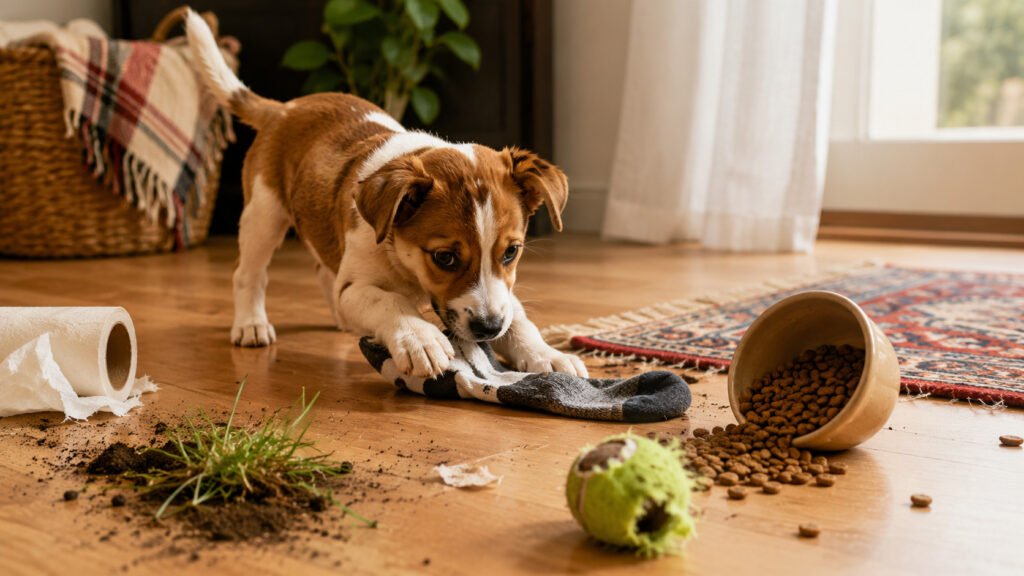
Occasional vomiting can happen in puppies. They are curious and may eat grass, dirt, pieces of toys, food scraps, or other things they should not eat.
A single episode may be less concerning if your puppy quickly returns to normal behavior, continues drinking, has normal energy, and does not develop additional symptoms.
For example, you may be able to monitor a puppy more closely after one isolated episode if the puppy:
- Returns to normal activity.
- Shows interest in food at the appropriate time.
- Drinks normally.
- Has no diarrhea or blood.
- Does not appear painful, weak, or unusually tired.
However, puppies should be monitored carefully. The pattern surrounding the vomiting matters more than the appearance of one episode alone.
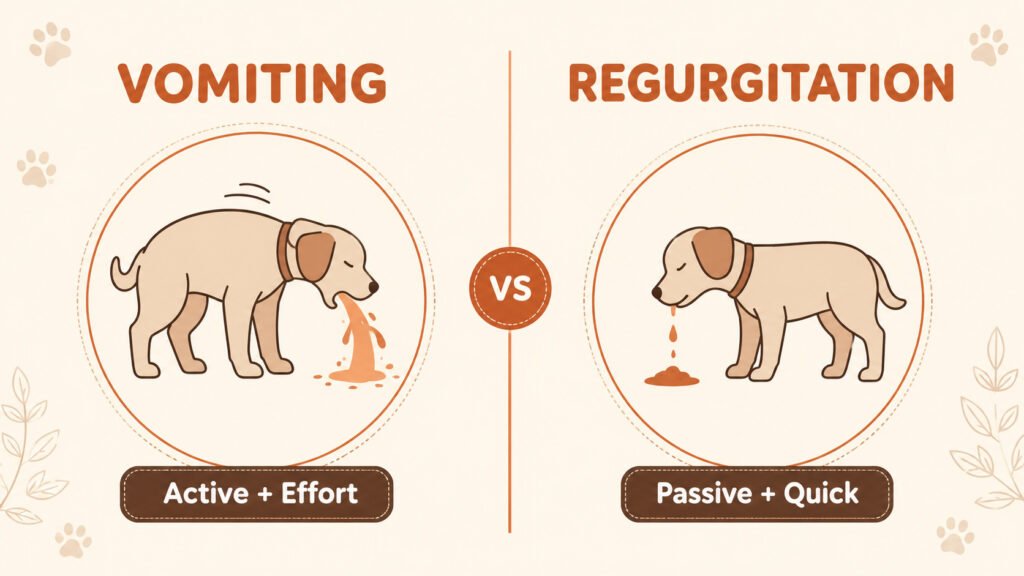
Vomiting vs. Regurgitation in Puppies
Not everything that comes out of a puppy’s mouth is technically vomiting. Knowing the difference can help your veterinarian understand what is happening.
| Feature | Vomiting | Regurgitation |
|---|---|---|
| What happens | Active emptying of the stomach or upper digestive tract | Passive return of food or liquid from the esophagus |
| Abdominal effort | Usually present | Usually absent |
| Retching | Common | Usually absent |
| Timing | Can happen at different times | Often occurs shortly after eating or drinking |
| Appearance | May contain partially digested food, fluid, bile, or foam | Often contains relatively undigested food |
| Why it matters | Can be caused by digestive illness, infection, toxins, obstruction, and other problems | Can be associated with problems affecting swallowing or the esophagus |
If you’re unsure whether your puppy is vomiting or regurgitating, record a short video if it is safe to do so and show it to your veterinarian.
9 Common Reasons Puppies Throw Up
1. Eating Too Fast
Some puppies gulp their food quickly and swallow a significant amount of air along with it. This can lead to vomiting or regurgitation shortly after eating.
This can be more common when several pets are eating together or when a puppy becomes excited around food.
What may help: Feeding smaller portions, using a slow-feeder bowl, or discussing feeding changes with your veterinarian can help some puppies eat more slowly.
2. Eating Something They Shouldn’t
Puppies investigate the world with their mouths. Grass, dirt, spoiled food, sticks, socks, pieces of toys, and other objects can irritate the digestive tract.
Eating something inappropriate can cause temporary stomach upset, but some objects can become stuck and cause an intestinal obstruction.
If you know or strongly suspect that your puppy swallowed a toy, sock, bone, rock, or other object, don’t wait for symptoms to become severe. Contact your veterinarian for advice.
3. Sudden Food Changes
Changing puppy food suddenly can cause digestive upset in some dogs.
When changing foods, a gradual transition is generally easier on the digestive system than switching overnight. Your veterinarian or the food manufacturer’s feeding guidance can help you determine an appropriate transition schedule.
If vomiting has already started, don’t keep changing foods in an attempt to fix the problem. Contact your veterinarian if the vomiting continues or other symptoms appear.
4. Motion Sickness
Some puppies experience motion sickness during car rides.
Vomiting that consistently happens during or shortly after travelling may be related to motion sickness, although other causes are possible.
If your puppy frequently gets sick in the car, talk with your veterinarian. They can help determine whether motion sickness is likely and whether any treatment is appropriate.
5. Intestinal Parasites
Parasites are common in puppies and can affect the digestive system.
Roundworms, hookworms, giardia, and coccidia are examples of parasites that may cause gastrointestinal symptoms. Depending on the parasite and severity of infection, signs can include vomiting, diarrhea, poor weight gain, a swollen-looking abdomen, or changes in appetite.
A veterinarian can recommend appropriate testing and deworming based on your puppy’s age, symptoms, and medical history.
6. Viral Infections, Including Parvovirus
Parvovirus is one of the serious infections puppy owners should know about.
Signs of canine parvovirus can include vomiting, loss of appetite, lethargy, abdominal discomfort, and severe diarrhea, which may sometimes contain blood. The disease can become dangerous quickly because of fluid loss and other complications.
Puppies that are not fully vaccinated or have an uncertain vaccination history deserve particular attention if vomiting occurs, especially when vomiting is accompanied by diarrhea, weakness, loss of appetite, or other signs of illness.
Vomiting alone does not prove that a puppy has parvovirus. A veterinarian may need to perform testing to determine the cause.
7. Bacterial or Other Gastrointestinal Infections
Gastrointestinal infections can also cause vomiting and diarrhea.
The cause may be difficult to determine at home because several different illnesses can produce similar symptoms.
If vomiting is persistent, accompanied by diarrhea, or associated with weakness, loss of appetite, fever, abdominal pain, or other changes in behavior, veterinary evaluation is appropriate.
8. Foreign Object or Intestinal Blockage
Puppies are notorious for chewing and swallowing things they shouldn’t.
Socks, pieces of toys, bones, rocks, fabric, and other objects can sometimes become lodged in the digestive tract.
Possible signs of an obstruction include:
- Repeated vomiting.
- Loss of appetite.
- Lethargy.
- Abdominal pain.
- Abdominal swelling.
- Diarrhea or changes in bowel movements.
An intestinal obstruction can become life-threatening and requires prompt veterinary assessment.
9. Stress or Anxiety
A major change in environment can temporarily affect a puppy’s digestive system.
Moving to a new home, travelling, loud noises, or other stressful events may contribute to digestive upset in some puppies.
However, don’t automatically assume that stress is the cause. If vomiting continues, becomes frequent, or is accompanied by other symptoms, contact your veterinarian.
What Does the Color of Puppy Vomit Mean?
The appearance of vomit can provide clues, but color alone cannot tell you what is wrong with your puppy.
| Vomit Appearance | Possible Explanation |
|---|---|
| Clear or foamy | Saliva, stomach fluid, or mild stomach irritation |
| Yellow | May contain bile, particularly when the stomach is relatively empty |
| Food-like material | Recently eaten or partially digested food |
| Green | May contain bile or recently eaten plant material |
| Pink or red | May indicate blood and should be discussed with a veterinarian promptly |
| Dark brown or coffee-ground-like material | May indicate digested blood and requires urgent veterinary attention |
| Worms visible | May indicate intestinal parasites and needs veterinary evaluation |
If you see blood, repeated vomiting, severe weakness, abdominal pain, or other concerning symptoms, don’t rely on the vomit’s color to decide whether your puppy is safe.
When to See a Vet Immediately
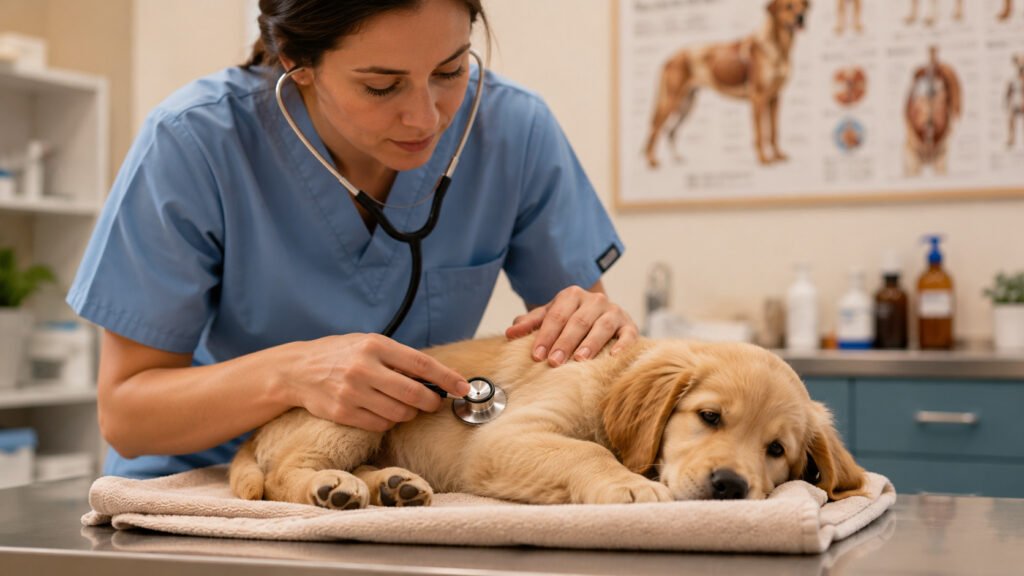
Contact your veterinarian promptly or seek emergency veterinary care if your puppy has any of these signs:
- Repeated or continuous vomiting.
- Blood in the vomit.
- Vomit that resembles coffee grounds.
- Severe lethargy or weakness.
- Difficulty standing or walking.
- Refusal to eat or drink.
- Vomiting accompanied by significant diarrhea.
- A swollen, painful, or tense abdomen.
- Repeated attempts to vomit without producing much.
- Known or suspected ingestion of a foreign object.
- Possible ingestion of a poisonous or toxic substance.
- Signs of dehydration.
- Vomiting in a puppy that is very young, unvaccinated, or has an uncertain vaccination history, especially when other symptoms are present.
Repeated vomiting can occur with conditions ranging from gastrointestinal irritation to poisoning or intestinal obstruction. Young animals can also become dehydrated quickly, so persistent vomiting should not be ignored.
If your puppy seems severely ill, collapses, has difficulty breathing, or cannot stand normally, seek emergency veterinary care immediately.
What Your Veterinarian May Ask About the Vomiting
When you contact your veterinarian, having a few details ready can make the conversation easier.
You may be asked:
- How many times has your puppy vomited?
- When did the vomiting start?
- What did the vomit look like?
- Was there food, foam, bile, blood, or another material in it?
- What did your puppy eat before vomiting?
- Could your puppy have swallowed a toy, sock, bone, plant, medication, or household chemical?
- Is your puppy drinking normally?
- Has your puppy eaten since vomiting?
- Does your puppy have diarrhea?
- Is your puppy acting normally or unusually tired?
- Is your puppy fully vaccinated?
- Is your puppy currently taking any medication or parasite prevention?
Write down these details rather than trying to remember everything during a stressful situation. If your veterinarian asks you to bring a sample, follow their instructions.
What Can You Do at Home for a Mild, Isolated Episode?
If your puppy vomits once but is otherwise acting normally, the safest approach is careful monitoring rather than trying multiple home remedies.
1. Contact your veterinarian if you’re unsure.
Because puppies can become ill quickly, a veterinary professional can help you decide whether monitoring at home is appropriate.
2. Don’t force food or water.
Do not force your puppy to eat or drink after vomiting. Large amounts at once may trigger additional vomiting.
Ask your veterinarian how much and how often your puppy should be offered water based on their age, size, health, and symptoms.
3. Avoid experimenting with human medications.
Do not give your puppy human medications such as anti-nausea medicines, Pepto-Bismol, Imodium, or painkillers unless your veterinarian specifically instructs you to do so.
Human medications can be inappropriate or unsafe for dogs, and puppy dosing can be particularly sensitive.
4. Don’t automatically use chicken and rice.
The traditional chicken-and-rice approach is not appropriate for every vomiting puppy. Your veterinarian may recommend a specific veterinary diet or another feeding plan depending on the suspected cause.
5. Never induce vomiting unless instructed by a veterinarian.
If you think your puppy swallowed something poisonous, don’t automatically try to make them vomit.
Some substances can cause more damage when brought back up, and inducing vomiting can be dangerous in certain situations. Contact your veterinarian or an appropriate veterinary poison service for specific instructions.
6. Monitor for changes.
Write down:
- When the vomiting occurred.
- What your puppy ate beforehand.
- How many times they vomited.
- What the vomit looked like.
- Whether diarrhea occurred.
- Whether your puppy is drinking.
- Any changes in energy or behavior.
This information can be useful when speaking with your veterinarian.
Expert Tips for Puppy Owners
- Keep potentially dangerous objects away from your puppy’s reach.
- Secure trash cans and food scraps.
- Keep medications and household chemicals stored safely.
- Follow the vaccination schedule recommended by your veterinarian.
- Keep your puppy’s parasite prevention and deworming plan up to date as recommended by your veterinarian.
- Monitor your puppy’s eating habits and weight.
- If vomiting happens during car rides, discuss motion sickness with your veterinarian.
- Keep a simple record of repeated vomiting episodes.
- If you’re concerned, contact your veterinarian rather than relying only on online information.
Common Mistakes Puppy Owners Make
Mistake: Waiting too long because it happened only once.
A single episode can sometimes be mild, but the situation can change. Watch for repeated vomiting, weakness, diarrhea, blood, abdominal pain, or changes in appetite and behavior.
Mistake: Changing food repeatedly.
Trying several foods in a short period can make digestive upset harder to evaluate.
Instead, speak with your veterinarian if vomiting continues or returns.
Mistake: Giving human medication.
Some medications that are commonly used by people are not appropriate for dogs.
Always ask your veterinarian before giving medication.
Mistake: Trying to make a puppy vomit after possible poisoning.
Inducing vomiting is not always safe.
Contact a veterinarian for specific instructions instead.
Mistake: Assuming vomiting is always caused by something the puppy ate.
Dietary indiscretion is one possible cause, but parasites, infections, foreign objects, toxins, and other conditions can also cause vomiting.
If symptoms continue, professional evaluation is important.
Frequently Asked Questions
Is it normal for puppies to throw up once in a while?
An isolated episode can happen, particularly if a puppy eats too quickly or experiences mild stomach irritation. However, puppies should be monitored carefully for repeated vomiting or other symptoms.
Should I withhold food after my puppy vomits?
Don’t make prolonged fasting a routine home treatment for puppies. Ask your veterinarian for feeding instructions based on your puppy’s age, size, health, and symptoms.
Can teething cause vomiting in puppies?
Teething itself is not generally considered a direct cause of vomiting. However, puppies may chew and swallow unusual objects while teething, which can contribute to stomach irritation or a foreign-body problem.
How do I know if my puppy has parvovirus?
Vomiting, diarrhea, lethargy, loss of appetite, and abdominal discomfort can occur with parvovirus. However, these signs can also occur with other illnesses. A veterinarian may need to perform testing to confirm the cause.
Why is my puppy throwing up yellow foam?
Yellow vomit may contain bile and can sometimes occur when the stomach is relatively empty. If it happens repeatedly or is accompanied by other symptoms, contact your veterinarian.
When should I take my puppy to an emergency vet?
Seek urgent veterinary care for repeated vomiting, blood in the vomit, severe weakness, collapse, difficulty standing, significant abdominal swelling or pain, suspected poisoning, or suspected ingestion of a foreign object.
Can stress or a new home cause puppy vomiting?
A new environment or stressful event may contribute to temporary digestive upset. However, persistent vomiting should not automatically be blamed on stress.
Is puppy vomit different from regurgitation?
Yes. Vomiting usually involves abdominal effort and retching. Regurgitation is more passive and often happens shortly after eating or drinking, with relatively undigested food coming back up.
Conclusion
A puppy throwing up once does not always mean something serious is wrong. Eating too quickly, dietary changes, motion sickness, mild stomach irritation, and other relatively minor problems can cause vomiting.
However, vomiting can also be associated with parasites, infections, toxins, foreign objects, and intestinal obstruction.
Because puppies can become dehydrated or seriously ill quickly, repeated vomiting or any warning sign deserves prompt veterinary attention.
If your puppy vomits again, keep a simple record of the time, what they ate, how many times they vomited, what the vomit looked like, and any other symptoms. That information can help your veterinarian determine what may be happening.
When in doubt, contact your veterinarian. Online articles can provide general information, but they cannot examine or diagnose your puppy.
Medical and Educational Disclaimer
This article is provided for general educational and informational purposes only. It is not intended to diagnose, treat, cure, or prevent any disease or medical condition in a puppy or dog. The information provided should not replace professional veterinary advice, examination, diagnosis, or treatment from a licensed veterinarian. Every puppy is different, and the appropriate response to vomiting depends on factors such as age, size, vaccination status, medical history, symptoms, and the possible cause. If your puppy is repeatedly vomiting, appears weak or lethargic, has blood in the vomit, has abdominal pain or swelling, may have swallowed a foreign object or toxic substance, or you are otherwise concerned, contact a veterinarian promptly.

Muzammil Khan is a certified canine behaviorist and the founder of Puppywhisper. With 8+ years of experience in positive reinforcement training, Muzammil has helped over 1,000 puppies transition smoothly into their new homes. All health advice is reviewed in collaboration with licensed veterinarians.