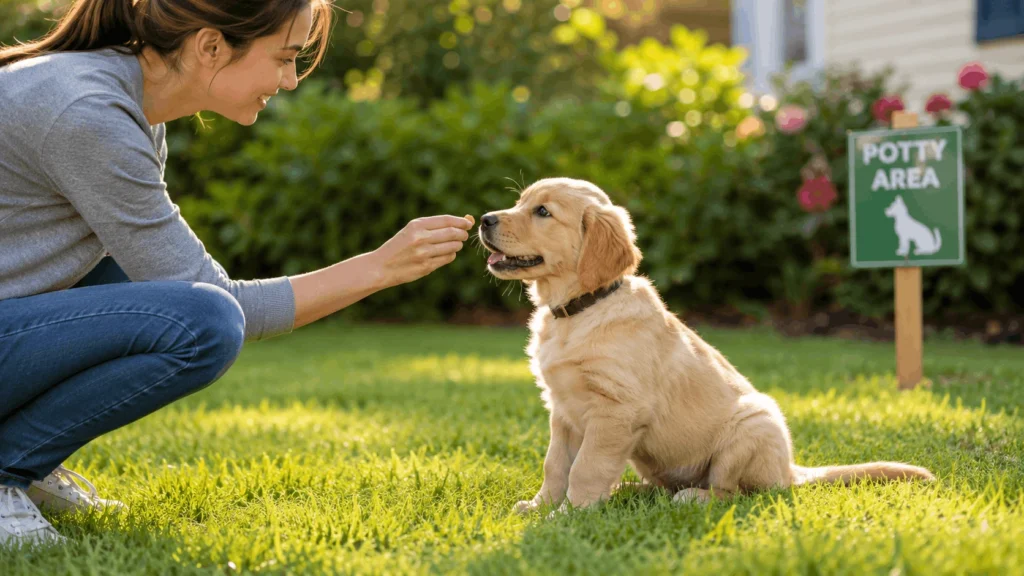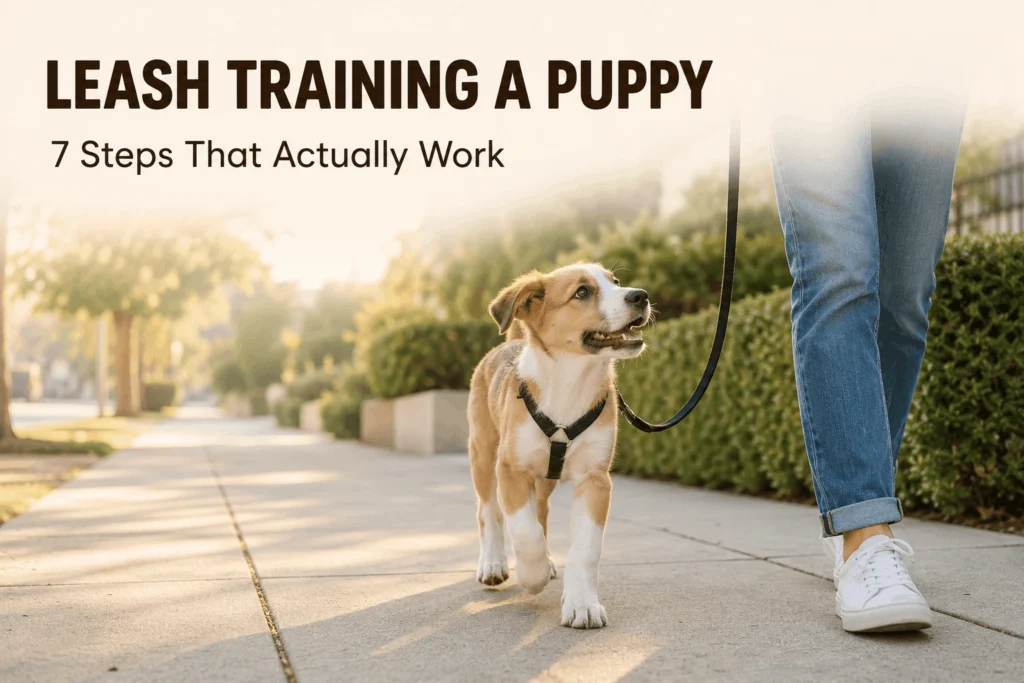
Your puppy plants all four paws on the sidewalk and refuses to move. Or maybe the opposite problem: the second the leash clips on, your puppy turns into a freight train, dragging you toward every smell, squirrel, and stranger in sight. Either way, walks feel less like bonding time and more like a tug-of-war.
The good news is that leash training a puppy is one of the most teachable skills in dog ownership. Puppies aren’t born knowing how to walk politely beside a human; it’s a learned behavior, and with the right approach, most puppies pick it up within a few weeks.
Quick Answer how do I leash train a puppy.
To leash train a puppy, start indoors with a properly fitted harness, let the puppy get comfortable wearing it, then add the leash and reward calm behavior near you. Practice short five-minute sessions in low-distraction areas before moving outside. Reward loose leash walking generously, stop moving when your puppy pulls, and stay consistent every single day.
Why Leash Training Matters
A puppy that pulls, bolts, or freezes on a leash isn’t just inconvenient; it can be unsafe. A strong sudden pull can injure a puppy’s neck if it’s wearing a flat collar, and a puppy that bolts toward traffic or another dog can end up in a dangerous situation fast.
On the flip side, a puppy that walks calmly beside you opens the door to longer adventures, easier vet visits, and stress-free trips to the groomer or pet store. Leash skills also build trust between you and your puppy, since the puppy learns to look to you for direction instead of reacting to every distraction on its own.
When to Start Leash Training
Most puppies can begin leash training around 7 to 8 weeks old, right after they’ve had a chance to settle into their new home. Early leash exposure, paired with positive associations, also supports healthy socialization during the critical window most veterinarians recommend, which generally runs through about 14 to 16 weeks of age.
If your puppy hasn’t completed its full vaccination series yet, keep early sessions indoors or in a securely fenced yard rather than public sidewalks or dog parks, and check with your veterinarian about when outdoor walks in public areas are safe. This timing lines up closely with the early days of how to potty train a puppy, so most owners work on both at once.
Check with your veterinarian about when outdoor walks in public areas are safe, since vaccination timing varies by pup AVMA’s guidance on puppy vaccination and socialization timing is a helpful reference.
Choosing the Right Gear
The right equipment makes leash training noticeably easier.
Harness vs Collar
| Gear | Best For | Why |
|---|---|---|
| Front-clip harness | Most puppies, especially pullers | Redirects pulling without neck strain |
| Flat collar | ID tags, light walkers | Not ideal for a puppy still learning leash manners |
| Back-clip harness | Calm puppies, short walks | Comfortable but can encourage pulling |
| Retractable leash | Not recommended for training | Reduces control and consistency |
A front-clip harness paired with a standard 4 to 6 foot leash is the combination most trainers recommend for beginners. Skip the retractable leash entirely until leash manners are solid; it teaches a puppy that pulling earns more freedom, which works against everything you’re trying to build.
Step-by-Step Guide to Leash Training a Puppy
Step 1: Introduce the Gear Indoors Let your puppy sniff the harness and leash first. Clip it on during a calm moment, like right before mealtime, and let your puppy wear it around the house for short stretches.

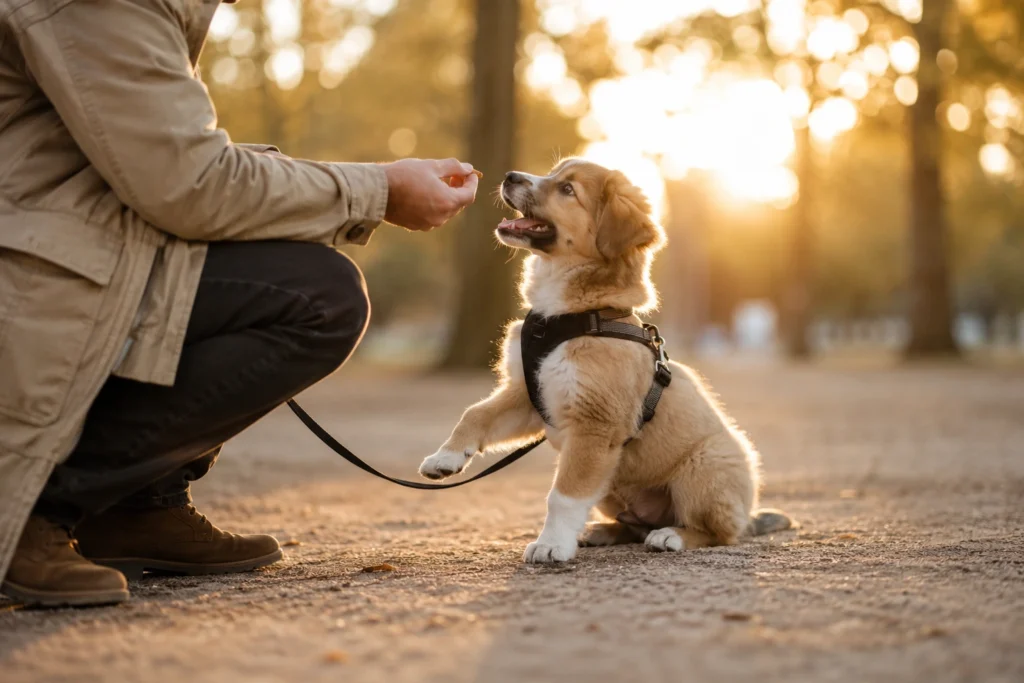
Step 2: Reward Calm Behavior in the Harness Drop a treat or two while the harness is on. The goal is for your puppy to associate the gear with good things, not restriction.
Step 3: Attach the Leash and Stay Still Clip on the leash but don’t move yet. Let your puppy drag it around safely under supervision so the leash itself stops feeling like a big deal.
Step 4: Practice Following You Indoors Hold the leash loosely and take a few steps. Every time your puppy moves with you instead of pulling away, mark it with a treat and a quiet “yes” or “good.”
Step 5: Move to a Low-Distraction Outdoor Space A quiet backyard or driveway works well. Keep sessions to 5 to 10 minutes so your puppy doesn’t get overwhelmed or bored.
Step 6: Reward Position, Not Just Movement Whenever your puppy walks near your side with slack in the leash, reward it. If your puppy pulls ahead, stop walking completely until the leash slackens again, then continue.
Step 7: Gradually Add Distractions Once your puppy is reliable in a quiet area, practice near light foot traffic, other yards, or familiar dogs. Increase difficulty slowly so your puppy keeps succeeding instead of getting overstimulated.
Benefits of Proper Leash Training
A well leash trained puppy gives you:
- Calmer, more enjoyable daily walks
- Safer outings near roads, bikes, and other dogs
- Easier vet, grooming, and travel experiences
- A stronger communication bond with your dog
- Fewer injuries from sudden pulling or lunging
A well-walked, calmer puppy is also far less likely to react loudly to passersby, which pairs naturally with the techniques in our guide on how to stop puppy barking.
Common Problems and Solutions
Puppy Won’t Move at All This is often fear, not stubbornness. Sit down at the puppy’s level, use a cheerful tone, and toss a treat a step or two away to encourage movement. Never drag a frozen puppy forward.
Puppy Pulls Constantly Stop moving the instant the leash goes tight. Only continue walking once your puppy returns to your side. This single habit, repeated consistently, fixes most pulling within a few weeks.
Puppy Bites or Chews the Leash This is common in teething puppies seeking something to chew. Redirect with a toy, keep sessions short, and avoid yanking the leash away, which can turn it into a game of tug. If chewing carries over into everyday mouthing, our puppy biting training tips cover redirection strategies that work well here too.
Puppy Gets Distracted by Everything Practice in a boring environment first. Save the exciting smells and sights for after your puppy has built a foundation of focus on you.
Expert Tips
- Keep training sessions short; five to ten minutes holds a puppy’s attention far better than a 30-minute slog.
- Use high-value treats outdoors, since distractions are stronger there than indoors.
- Practice at the same time each day to build a predictable routine.
- Let your puppy sniff during designated “sniff breaks” so the walk isn’t all work, which keeps motivation high.
- Avoid training right after a nap or a meal, when puppies tend to be either too sleepy or too excitable to focus.
Practicing at the same time each day builds the same kind of predictable routine that makes crate training a puppy at night successful.
Common Mistakes to Avoid
Starting With Long Walks Long walks before leash manners are solid just reinforce pulling. Start short and build up gradually.
Using Punishment Yanking the leash or scolding a puppy for pulling usually increases anxiety and can create leash reactivity later. Reward-based corrections work far better.
Skipping Indoor Practice Jumping straight to outdoor walks without any indoor groundwork sets puppies up to fail. Build the foundation at home first.
Inconsistent Rules If pulling is allowed sometimes and corrected other times, your puppy won’t learn a clear pattern. Stay consistent every single walk.
Frequently Asked Question
At what age should I start leash training my puppy?
Most puppies can start around 7 to 8 weeks old, beginning indoors with short, gentle sessions.
Why does my puppy refuse to walk on a leash?
This usually comes from fear or unfamiliarity with the equipment, not defiance. Build positive associations slowly rather than forcing movement.
How do I stop my puppy from pulling on the leash?
Stop walking the moment the leash tightens, and only continue once your puppy returns to a loose leash position. Repetition builds the habit.
Should I use a harness or a collar for leash training?
A front-clip harness is generally recommended for puppies since it reduces neck strain and gives you better control during the learning phase.
How long does it take to leash train a puppy?
Many puppies show solid improvement within 2 to 4 weeks of short, daily practice, though full reliability around heavy distractions can take longer.
Why does my puppy bite or chew the leash?
Teething puppies often chew the leash out of curiosity or discomfort. Redirect to a chew toy and keep sessions short to reduce frustration.
Conclusion
Leash training a puppy comes down to patience, the right gear, and short, consistent practice sessions. Start indoors, reward calm behavior, and resist the urge to rush outdoor distractions before your puppy is ready. Within a few weeks of daily five-minute sessions, most puppies move from leash chaos to confident, loose leash walking.
Next step: pick a quiet 10-minute window today, grab a front-clip harness and some small treats, and run through Step 1 with your puppy.

Muzammil Khan is a certified canine behaviorist and the founder of Puppywhisper. With 8+ years of experience in positive reinforcement training, Muzammil has helped over 1,000 puppies transition smoothly into their new homes. All health advice is reviewed in collaboration with licensed veterinarians.