
You’re slicing a banana for breakfast and your puppy is sitting at your feet, staring like you’re holding a steak. Sharing feels harmless, but puppies have small bodies and developing digestive systems, so it’s smart to check which human foods are safe first.
This guide covers whether bananas are safe, when to start, how much to give, and the mistakes that can turn a sweet treat into a messy night.
Medical disclaimer: This article is for general education and does not replace advice from a licensed veterinarian. If your puppy has a health condition, a sensitive stomach, or you’re unsure about a food, call your vet before offering it.
Can Puppies Eat Bananas? Quick Answer
Yes, puppies can eat bananas in small amounts once they’re eating solid food, usually from about 8 weeks old. Bananas are not toxic and contain fiber, potassium, and vitamins. They’re also high in natural sugar, so serve only a few small slices, remove the peel, and keep it an occasional treat.
Are Bananas Safe for Puppies?
Bananas are generally considered a safe fruit for dogs. The American Kennel Club notes that the flesh is a healthy treat when served in moderation, and that its natural sugar means it should be an occasional snack, not a daily staple.
That advice applies to adult dogs. Puppies need a bit more caution for three reasons:
- Their stomachs are still adjusting. Even a normal puppy can get loose stools from a new food.
- They’re tiny. A few bites of banana is a much bigger share of their daily calories than it would be for an adult Labrador.
- They’re building eating habits. Treats given now shape what your puppy expects later.
Bananas are also not a needed food. A complete, balanced puppy food already covers your puppy’s nutritional requirements. Think of a banana as a fun extra, not a supplement.
What Are the Benefits of Bananas for Puppies?
Bananas have a few things going for them as an occasional treat.
- Fiber. This supports regular digestion when portions are small.
- Potassium and magnesium. Both are minerals your puppy needs, though a balanced puppy food already supplies them.
- Vitamins B6 and C. Nice extras, but not something your puppy is missing.
- Lower in fat than many store-bought treats. Some vets suggest fruit like banana as an alternative to fatty or salty snacks, and puppy-safe carrots are another low-fat option.
- Soft texture. Mashed banana is easy to eat, which makes it handy for stuffing a toy or hiding a pill (ask your vet first about the specific medication).
Be realistic about it. A banana won’t fix a poor diet, boost your puppy’s immune system, or cure an upset stomach. Treat the “superfood” claims you see online with skepticism.
When Can Puppies Start Eating Bananas?
Wait until your puppy is fully eating solid puppy food and has settled into a normal feeding routine for their age. For most puppies that’s around 8 weeks, and many new owners bring their puppy home right about then.
Before that age, puppies should be on mother’s milk and the transition food your breeder or vet recommends. Adding fruit too early can upset a gut that’s still learning to handle solid food.
A good rule: if your puppy has just come home, give them a week or two to adjust before introducing any new treat. Their stomach is already handling a big change, and you don’t want to guess which new thing caused the diarrhea.
If your puppy has had recent vomiting or loose stool, skip the banana until they’re back to normal and your vet has cleared it. If you’re still figuring out the early routine, our guide to your puppy’s first night home is a good place to start.

How Much Banana Can a Puppy Eat?
Most vets suggest keeping all treats to roughly 10% of your puppy’s daily calories, with the rest coming from complete wet or dry puppy food. A whole banana is a lot of sugar and calories for a small puppy.
Use these as conservative starting points, not strict rules. Your vet can adjust them for your puppy, and our guide on how much a puppy should eat covers full daily meal portions.
| Puppy size | Starting portion | How often |
|---|---|---|
| Toy and small breeds (Chihuahua, Yorkie, Pomeranian) | 1 to 2 thin slices, about a quarter inch | Once or twice a week |
| Medium breeds (Beagle, Cocker Spaniel, Corgi) | 2 to 3 thin slices | Once or twice a week |
| Large and giant breeds (Lab, Golden, German Shepherd) | 3 to 4 slices | Two or three times a week |
How to introduce it
- Start with a single slice, nothing else new that day.
- Watch your puppy for the next 24 hours for vomiting, diarrhea, itching, or unusual tiredness.
- If everything looks normal, you can offer the regular portion next time.
- If anything seems off, stop and call your vet.
How to Serve Bananas Safely
Preparation matters as much as portion size.
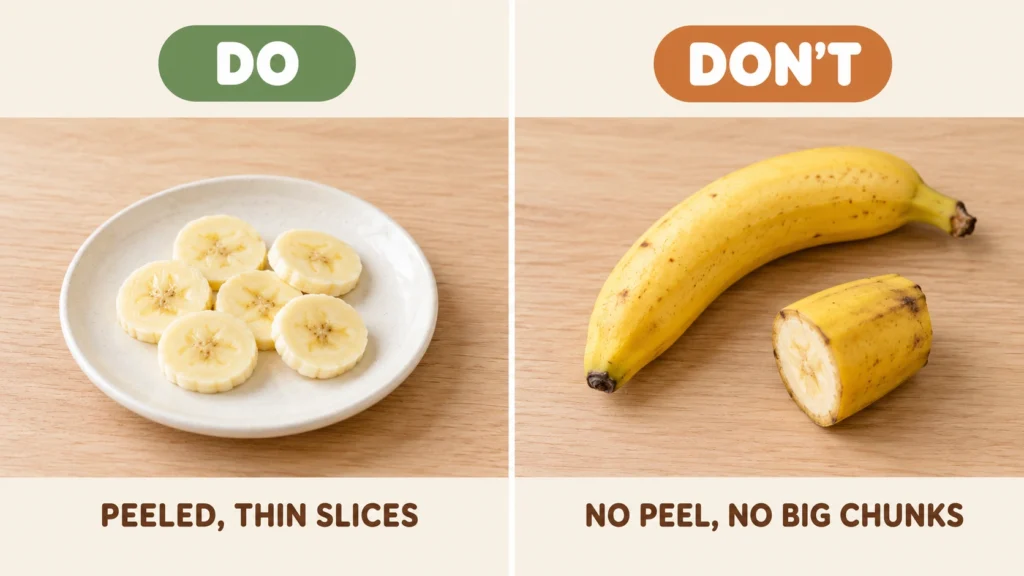
- Peel it. Banana peels aren’t toxic, but they’re hard to digest and can cause stomach upset or a blockage.
- Use a ripe banana. Yellow with a few spots is fine. Skip very green bananas (harder to digest) and anything moldy or fermenting.
- Cut small pieces. Slice thin rounds, and for tiny puppies cut those into halves or quarters to reduce choking risk.
- Serve it plain. No sugar, honey, peanut butter, or toppings.
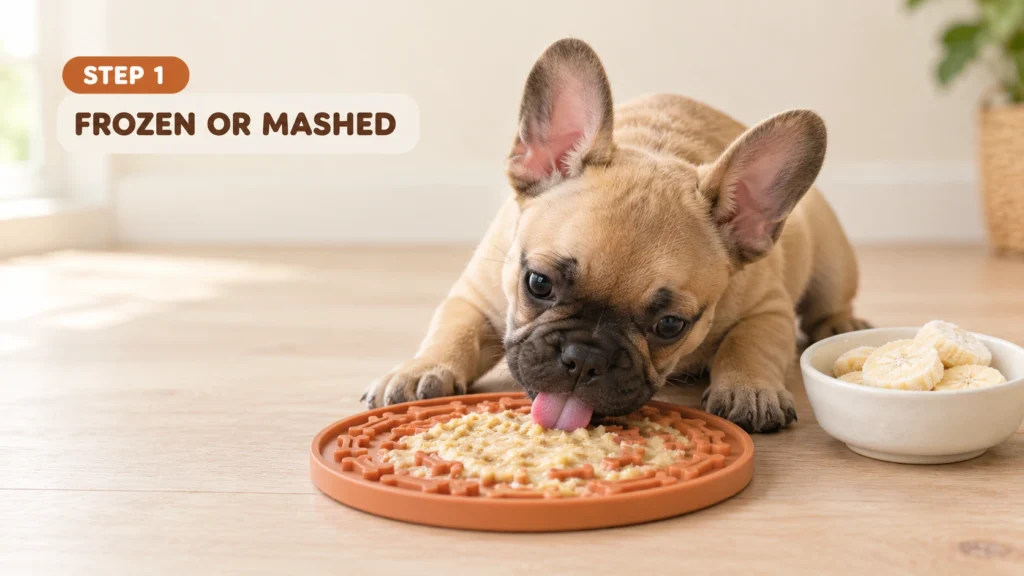
Easy Ways to Serve Banana
- Fresh slices as a training reward.
- Mashed and spread inside a lick mat.
- Frozen slices for a cool treat on hot days or when teething makes gums sore.
- Stuffed in a toy like a Kong, mixed with a bit of your puppy’s regular food.
For lick mats, freezing makes the treat last longer, which helps with crate time and boredom. It also keeps the portion honest, because it’s hard to wolf down a frozen treat.
Banana Products to Avoid
The plain fruit is the safe one. Many foods that contain banana are not.
- Banana bread and muffins. They often include sugar, butter, chocolate chips, raisins, or nuts. Chocolate and raisins are dangerous for dogs.
- Banana chips. Usually fried or sweetened, and high in fat and sugar.
- Banana-flavored yogurt, baby food, or smoothies. These may contain added sugar or xylitol, an artificial sweetener that is toxic to dogs. Always check the ingredient list.
- Banana peels. See above.
If your puppy gets into anything containing xylitol or chocolate, contact your vet or an animal poison control service right away. Don’t wait for symptoms.
Risks and Side Effects to Watch For
Most puppies tolerate a few banana slices fine. Problems usually come from too much, or from a puppy who’s already sensitive.
- Loose stool or diarrhea. Often from too much fruit too quickly.
- Constipation. Large amounts of fiber and sugar can have the opposite effect.
- Weight gain. Extra calories add up, especially in small breeds.
- Choking. A risk with large chunks, especially in tiny or fast-eating puppies.
- Allergic reaction. Uncommon, but possible. Watch for itching, hives, facial swelling, or repeated vomiting.
When to Call Your Vet
Contact your vet if your puppy:
- Vomits more than once or has diarrhea lasting more than a day
- Seems very tired, weak, or refuses food
- Has swelling around the face or difficulty breathing
- Ate a banana peel, a large amount of banana, or a banana product containing xylitol, chocolate, or raisins
- Has diabetes, obesity, kidney issues, or any condition that needs diet monitoring
Puppies can go downhill faster than adult dogs, especially with dehydration. When in doubt, call.
Can Bananas Help a Puppy With an Upset Stomach?
You’ll see this claim everywhere: bananas settle tummies. There’s a grain of truth, since the fiber can help some dogs, but it’s not a reliable treatment, and it can backfire.
If your puppy has diarrhea or vomiting, a banana isn’t the answer. Persistent stomach trouble in puppies can signal parasites, infection, or something more serious, and dehydration can set in quickly. Call your vet rather than treating it at home with fruit.
Expert Tips for Feeding Bananas
- Use them as training rewards. Tiny pieces work well for short sessions because most puppies love the taste.
- Count it toward the daily treat budget. If you’ve done a lot of treat-based training, skip the banana that day.
- Introduce one new food at a time. That way you’ll know what caused a reaction.
- Store leftovers properly. Peeled banana browns quickly. Freeze extra slices in a bag.
- Watch the whole picture. If your puppy loves banana but is gaining weight too fast, cut back.
- Ask your vet at the next visit. They know your puppy’s breed, weight, and health history.
Common Mistakes Puppy Owners Make
1. Giving a whole banana.
This is the most common one. A whole banana is a lot of sugar for a small puppy and can trigger diarrhea. Instead: start with one or two small slices.
2. Leaving the peel on.
Owners assume “natural” means safe. Peels are hard to digest and can lead to a blockage. Instead: always peel.
3. Feeding banana every day.
It becomes a habit, and the calories add up. Instead: keep it occasional.
4. Using banana to treat diarrhea.
This can delay real care. Instead: call your vet when stools are loose for more than a day.
5. Sharing banana bread.
Other ingredients may be harmful. Instead: give only plain banana.
6. Introducing several new foods at once.
You can’t tell what upset your puppy. Instead: one new food at a time.
Other Puppy-Safe Fruits to Try
If your puppy enjoys banana, these are generally considered safe in small portions, with seeds, pits, and rinds removed:
- Blueberries
- Watermelon (no seeds or rind)
- Apple slices (no core or seeds)
- Strawberries
Some fruits are dangerous. Grapes and raisins can cause kidney failure in dogs, and cherry pits and avocado pits can cause problems. When in doubt, check the AKC’s fruit and vegetable list or ask your vet.
Frequently Asked Questions
Can 8-week-old puppies eat bananas?
Yes, if they’re eating solid food and settled in their new home. Start with one tiny slice, watch for a day, and keep portions very small.
Can puppies eat banana peels?
No. Peels aren’t poisonous, but they’re hard to digest and can cause stomach upset or an intestinal blockage. If your puppy swallowed a large piece, call your vet.
Can puppies eat frozen bananas?
Yes. Frozen slices can be a soothing treat, especially during teething. Use small pieces and supervise so your puppy doesn’t swallow a hard chunk whole.
Are bananas good for a puppy with diarrhea?
Not reliably. The fiber may help some dogs, but diarrhea in a puppy should be taken seriously. Call your vet if it lasts more than a day or comes with vomiting or tiredness.
How often can I give my puppy a banana?
One or two times a week for small breeds and up to a few times a week for larger puppies is a reasonable ceiling. Keep all treats to roughly 10% of daily calories.
Can puppies eat banana bread or banana-flavored treats?
Avoid them. Banana bread often contains sugar, butter, and sometimes chocolate, raisins, or nuts. Flavored products may include xylitol. Stick to plain fruit.
Can puppies be allergic to bananas?
It’s uncommon but possible. Signs include itching, hives, swelling, vomiting, or diarrhea. Stop feeding it and call your vet if you see any of these.
Conclusion
Bananas are a safe, low-effort treat for most healthy puppies when you keep the portions tiny, remove the peel, and serve them plain. They’re a nice reward, not a nutritional need, and they should never replace a balanced puppy food or a vet visit when something seems wrong.
Your next step: at your puppy’s next meal, offer one thin slice of ripe, peeled banana, and watch how your puppy does over the next day. If all is well, you’ve got a new training reward. If anything seems off, skip it and ask your vet.

Muzammil Khan is a certified canine behaviorist and the founder of Puppywhisper. With 8+ years of experience in positive reinforcement training, Muzammil has helped over 1,000 puppies transition smoothly into their new homes. All health advice is reviewed in collaboration with licensed veterinarians.