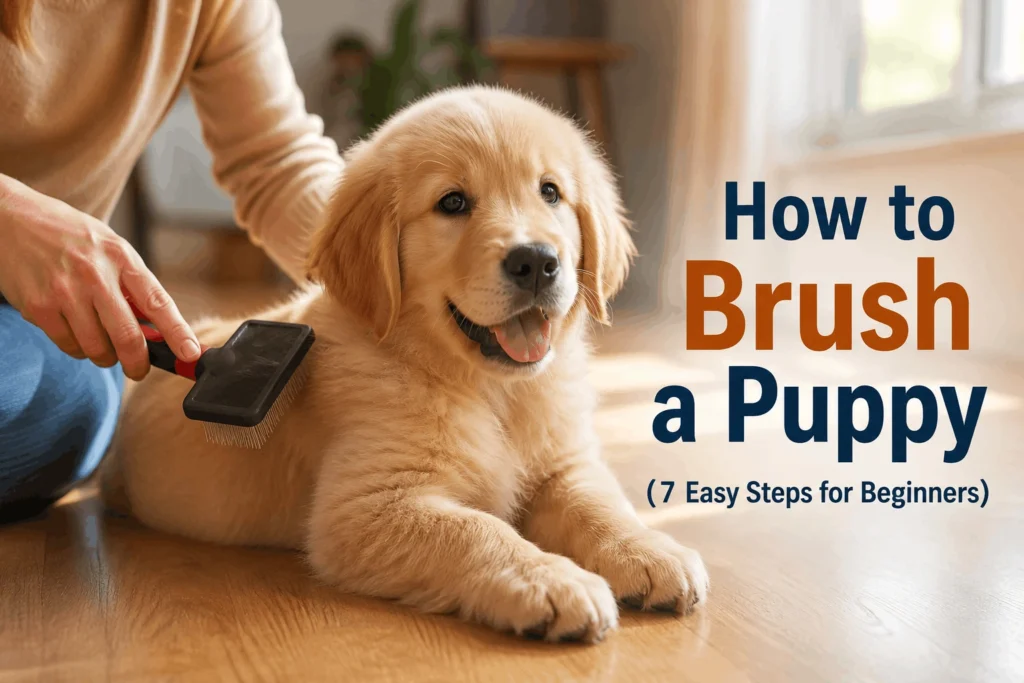
If your puppy squirms, nips at the brush, or bolts the second you pull out a grooming tool, you’re not doing anything wrong this is just new to them. Most puppies have never felt bristles against their skin before, and a little hesitation is completely normal.
The good news is that brushing doesn’t have to be a wrestling match. With the right brush, the right timing, and a few minutes of patience, you can turn grooming into something your puppy actually looks forward to.
Medical Disclaimer: This article is for general educational purposes and is not a substitute for professional veterinary advice. If your puppy shows signs of skin irritation, severe matting, or unusual hair loss, consult your veterinarian.
How to Brush a Puppy: Quick Answer
To brush a puppy, choose a brush suited to their coat type, let them sniff it first, then use short, gentle strokes in the direction of hair growth. Start with 2–3 minutes a day, reward calm behavior with treats, and gradually increase grooming time as your puppy gets comfortable.
Why Brushing Your Puppy Matters
Brushing isn’t just about keeping your puppy looking neat. It removes loose fur before it ends up on your furniture, prevents tangles and mats from forming on the skin, and distributes natural oils that keep the coat healthy.
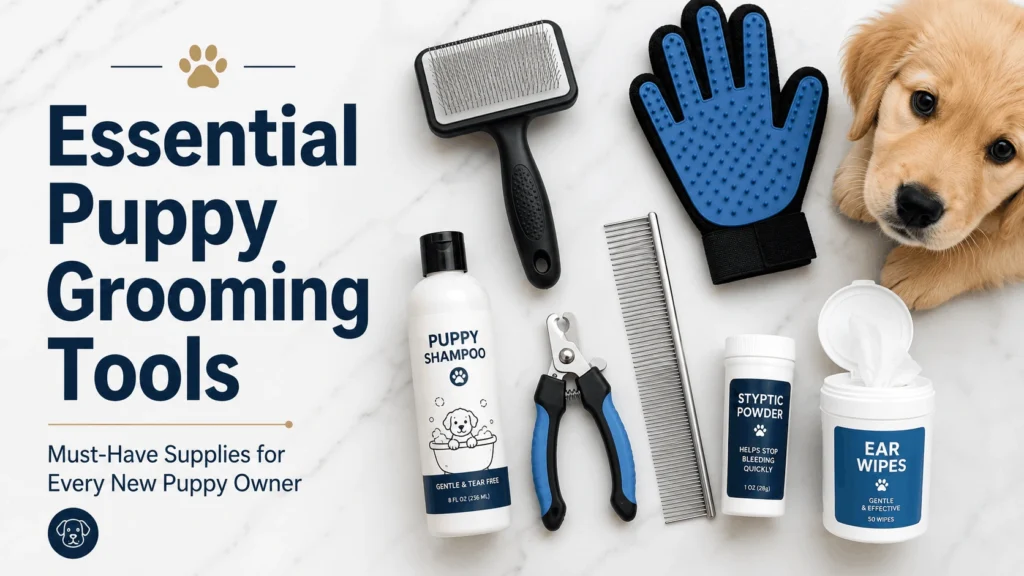
Regular brushing sessions also give you a chance to check for fleas, ticks, lumps, or skin irritation early long before they become bigger problems. If you haven’t assembled your grooming kit yet, our guide to the best puppy grooming tools every new owner needs walks through everything from brushes to nail clippers so you’re ready before you start. And just as importantly, early grooming experiences shape how your puppy feels about being handled for the rest of their life, including future vet visits and professional grooming appointments.
Choosing the Right Brush for Your Puppy’s Coat
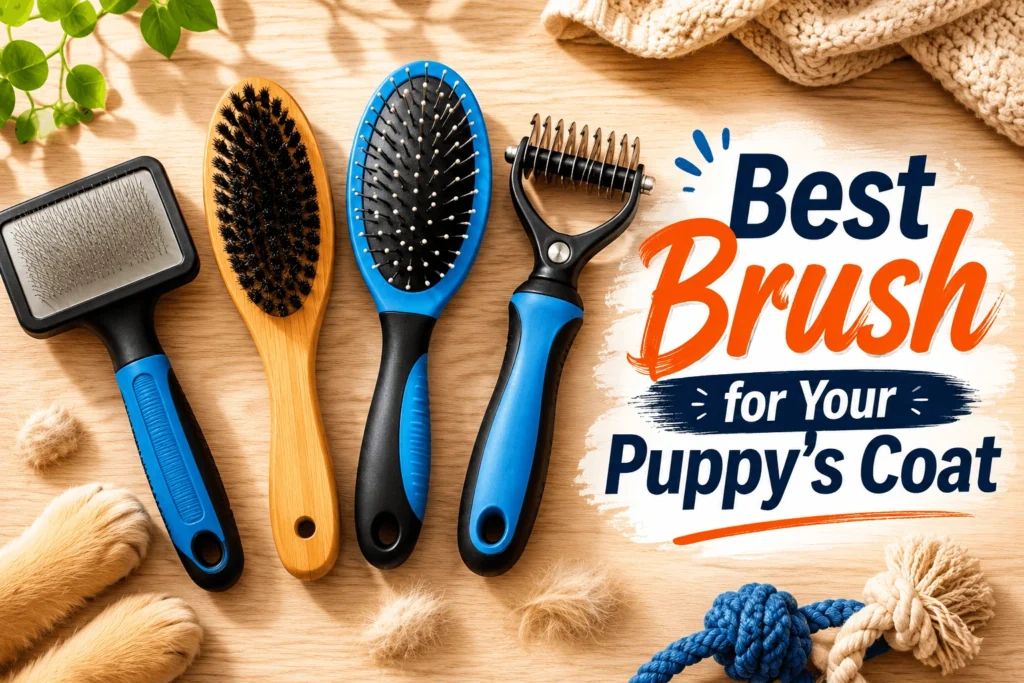
Not every puppy needs the same tool. Using the wrong brush can pull on the skin or simply fail to do the job.
| Coat Type | Best Brush | Example Breeds |
|---|---|---|
| Short, smooth coat | Soft bristle brush or grooming mitt | Beagle, Boxer, Labrador |
| Medium, dense coat | Slicker brush | Border Collie, Sheltie |
| Long or silky coat | Pin brush + comb | Maltese, Cocker Spaniel |
| Double coat (thick undercoat) | Undercoat rake + slicker brush | Golden Retriever, Husky |
| Curly or wiry coat | Slicker brush + metal comb | Poodle, Schnauzer |
If you’re unsure of your puppy’s coat type, a soft slicker brush is a safe, beginner-friendly starting point for most breeds. For more detail on matching brush style to coat type as your puppy grows, the AKC’s guide to dog brushes is a solid reference.
When to Start Brushing Your Puppy
You can start light brushing as early as 8 weeks old, once your puppy has settled into their new home. The goal at this stage isn’t a perfect grooming session it’s simply getting your puppy used to the feeling of a brush touching their fur.
Keep early sessions short, calm, and positive. Think of it as training, not just maintenance.
How Often Should You Brush a Puppy?
| Coat Type | Recommended Frequency |
|---|---|
| Short coat | 1–2 times per week |
| Medium coat | 2–3 times per week |
| Long or double coat | Daily or every other day |
| During shedding season | Daily, regardless of coat type |
Double-coated breeds shed heavily during seasonal coat changes, so daily brushing during these periods helps prevent loose fur from matting against the skin.
Step-by-Step Guide to Brushing a Puppy
- Pick a calm moment. Brush after playtime or a walk, when your puppy is naturally more relaxed.
- Introduce the brush first. Let your puppy sniff and investigate it before it touches their fur. Pair this with a treat.
- Start at the back. Use gentle, short strokes along the back and sides, where puppies are usually less sensitive.
- Move to the legs and belly slowly. These areas are more sensitive, so go slower and watch your puppy’s body language.
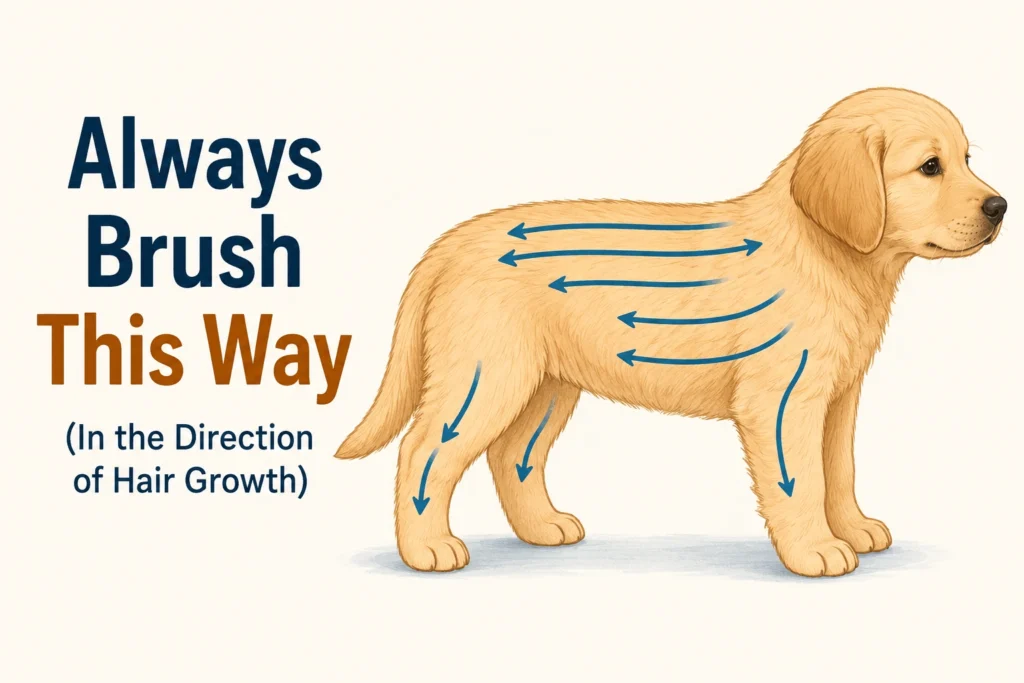
- Brush in the direction of hair growth. This prevents skin irritation and pulling.
- Check for mats or tangles. Gently work through any small knots with your fingers before brushing over them.
- End on a positive note. Finish with praise, a treat, or a short play session so your puppy associates brushing with good outcomes.
Keep early sessions to 2–3 minutes and build up gradually as your puppy’s tolerance improves.
Benefits of a Regular Brushing Routine
- Fewer mats and tangles, especially in long-coated breeds
- Reduced shedding around the house
- Healthier, shinier coat from distributed natural oils
- Early detection of fleas, ticks, or skin issues
- A calmer puppy during future vet visits and grooming appointments
- Stronger bond between you and your puppy through positive handling
Common Problems and Solutions
Problem: My puppy runs away from the brush. Solution: Shorten sessions to under a minute and pair every session with treats. Gradually increase duration over several days.
Problem: There are mats behind the ears or under the legs. Solution: Use a detangling spray and gently work through mats with your fingers first, then a comb. Never pull a mat out dry — this can hurt sensitive skin.
Problem: My puppy has flaky or red skin after brushing. Solution: Switch to a softer bristle brush and reduce pressure. If redness continues, consult your veterinarian, as this could indicate a skin sensitivity.
Problem: My puppy nips at the brush. Solution: This is often play behavior, not aggression. Redirect with a chew toy held in one hand while brushing with the other.
Expert Tips
- Brush near a window or in good lighting so you can spot fleas, ticks, or skin issues easily.
- Use a grooming mitt for puppies who dislike traditional brushes the glove shape feels less intimidating.
- Always brush before bathing, since wet mats are much harder to remove.
- Keep a small jar of treats next to your grooming spot so rewards are immediate. The same treat based approach works well for other grooming tasks too once your puppy is comfortable, many owners tackle puppy nail trimming in the same session.
- For double-coated puppies, never shave the coat to “help with shedding” this can damage the coat’s natural insulation.
Common Mistakes to Avoid
- Brushing against the grain too aggressively. This pulls on the skin and can make your puppy dread grooming sessions.
- Skipping the sensitive areas. Avoiding the belly, legs, and tail entirely means mats build up unnoticed in those spots.
- Using a human hairbrush. These aren’t designed for fur and can scratch the skin or fail to reach the undercoat.
- Grooming only when the coat looks bad. Reactive brushing leads to painful mat removal. Consistency prevents this.
- Forcing a struggling puppy to continue. This builds fear around grooming. Stop, calm your puppy, and try again later.
FAQ Section
How often should you brush a puppy?
Most puppies do well with brushing 1–3 times per week, though double-coated or long-haired breeds may need daily brushing, especially during shedding season.
What is the best brush for a puppy?
A soft slicker brush works well for most coat types as a starting point. Short-haired puppies may prefer a grooming mitt, while long-haired puppies benefit from a pin brush and comb combination.
Can you brush a puppy too much?
Yes. Brushing too aggressively or too frequently on sensitive skin can cause irritation. Stick to a consistent, gentle routine rather than over-brushing.
At what age can you start brushing a puppy?
You can begin gentle brushing around 8 weeks old, focusing on short, positive sessions rather than thorough grooming.
How do you brush a puppy that hates being brushed?
Shorten sessions, use treats throughout, and let your puppy get used to the brush before touching their fur. Patience over several days usually resolves resistance.
Do short-haired puppies need brushing?
Yes. Even short coats benefit from weekly brushing to remove loose fur and distribute natural oils, even though they need it less often than long-coated breeds.
Conclusion
Brushing your puppy doesn’t need special skills just the right brush, a little patience, and a routine that fits their coat type. Start slow, keep early sessions short and positive, and build up as your puppy grows more comfortable.
Over time, what feels like a chore becomes a quiet bonding ritual between you and your dog, and one that pays off in fewer mats, less shedding, and a healthier coat. Round out your routine by checking your puppy’s ears regularly too our puppy ear cleaning tips guide shows you how to do it safely.

Muzammil Khan is a certified canine behaviorist and the founder of Puppywhisper. With 8+ years of experience in positive reinforcement training, Muzammil has helped over 1,000 puppies transition smoothly into their new homes. All health advice is reviewed in collaboration with licensed veterinarians.