This article is for general educational purposes and is not a substitute for veterinary advice. If your puppy has eaten something toxic, contact your veterinarian or an animal poison control hotline immediately.
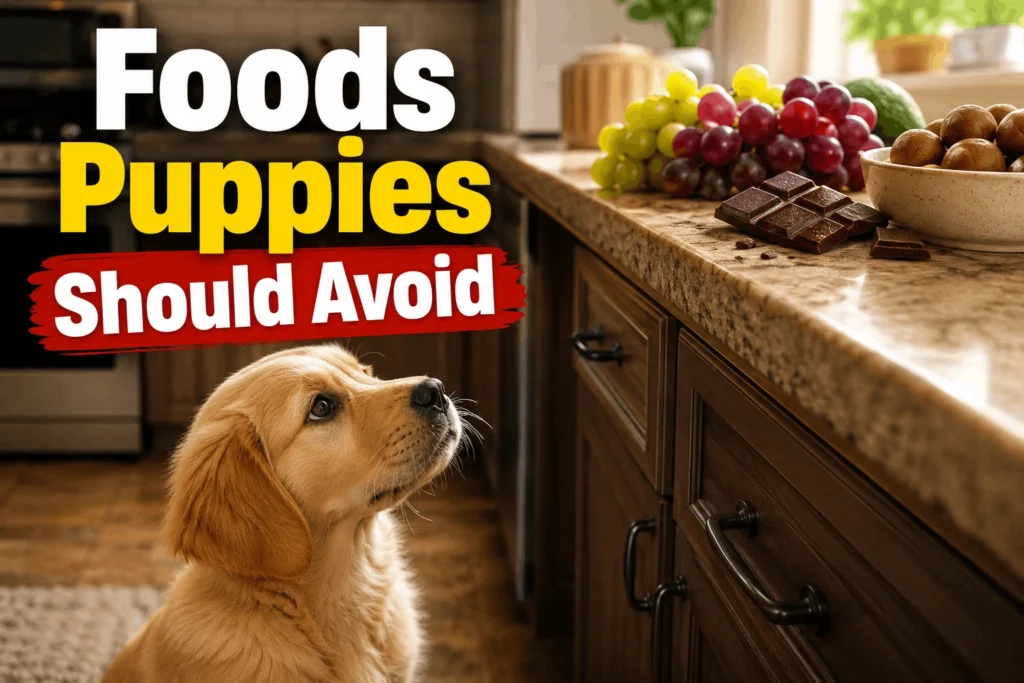
You’re cooking dinner, something slips off the counter, and your puppy snaps it up before you can blink. Every new owner has lived through that exact moment of panic, wondering whether what just got eaten is dangerous or harmless. Knowing the foods puppies should avoid before that moment happens is one of the simplest ways to prevent an emergency vet visit.
This guide covers the foods that pose real risk to puppies, why their small bodies make them more vulnerable than adult dogs, and exactly what to do if an accident happens.
Quick Answer About Foods Puppies Should Avoid
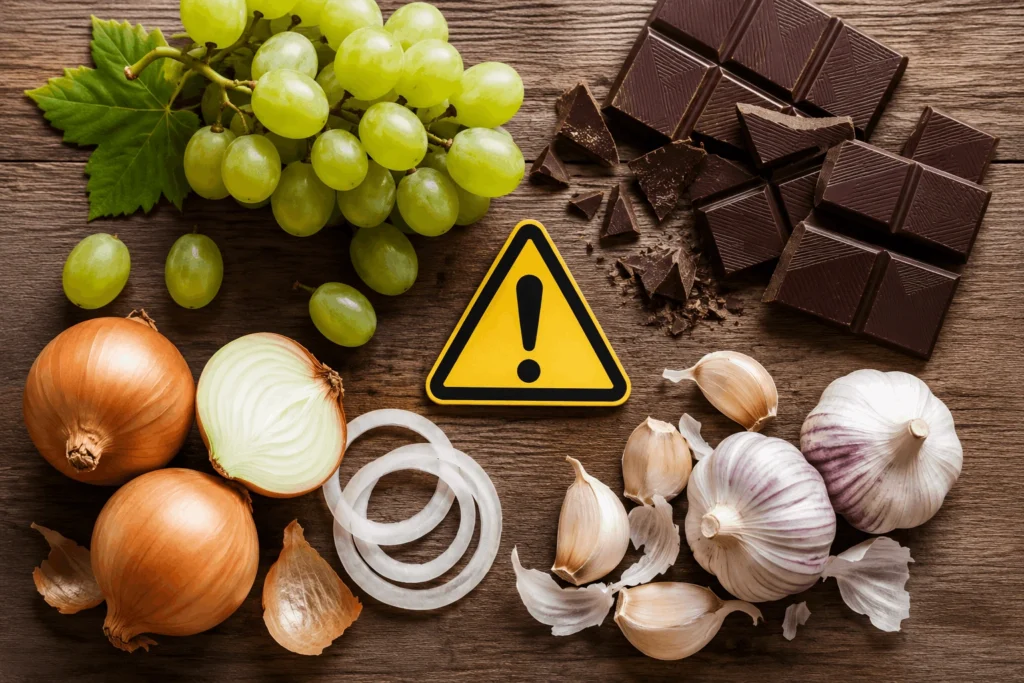
Puppies should avoid chocolate, grapes and raisins, onions, garlic, xylitol, alcohol, caffeine, macadamia nuts, avocado, raw bread dough, cooked bones, fatty or fried foods, and anything containing artificial sweeteners. These foods can cause anything from an upset stomach to life-threatening poisoning depending on the amount eaten and your puppy’s size.
Why This Matters
A 10-pound puppy reacts to toxins very differently than a 70-pound adult dog. The same square of chocolate that gives an adult dog mild stomach upset can be a medical emergency for a small puppy. Puppies also explore the world with their mouths, which means they’re far more likely to grab dropped food off the floor or counter than a trained adult dog would.
Ignoring this risk can lead to vomiting, seizures, organ damage, or worse, depending on what’s eaten. On the flip side, learning this list once means you can puppy-proof your kitchen with confidence and react quickly if something goes wrong.
The Full List of Foods Puppies Should Avoid
| Food | Risk Level | Why It’s Dangerous |
|---|---|---|
| Chocolate | High | Contains theobromine, which puppies can’t metabolize well |
| Grapes and raisins | High | Linked to sudden kidney failure, even in small amounts |
| Onions and garlic | High | Damage red blood cells, leading to anemia |
| Xylitol (sugar-free gum, candy) | High | Causes a rapid insulin spike and dangerously low blood sugar |
| Macadamia nuts | High | Can cause weakness, tremors, and elevated body temperature |
| Alcohol | High | Affects the liver and brain even in tiny amounts |
| Raw bread dough | Moderate-High | Expands in the stomach and produces alcohol as it ferments |
| Avocado | Moderate | Contains persin, which can upset the stomach |
| Caffeine (coffee, tea, energy drinks) | High | Overstimulates the heart and nervous system |
| Cooked bones | Moderate | Splinter easily and can cause choking or internal injury |
| Fatty or fried foods | Moderate | Can trigger pancreatitis, especially in small puppies |
| Salty snacks | Moderate | Can cause sodium ion poisoning in large amounts |
| Dairy products | Low-Moderate | Many puppies are lactose intolerant and react with diarrhea |
| Corn cobs | Moderate | A common cause of intestinal blockage |
| Raw eggs | Low-Moderate | Risk of salmonella and biotin deficiency over time |
Foods That Cause Severe Toxic Reactions
Chocolate, grapes, onions, garlic, xylitol, and macadamia nuts fall into this category. These aren’t a matter of “a little is fine.” Even small amounts relative to a puppy’s body weight can trigger symptoms within hours, including vomiting, lethargy, tremors, or abnormal heart rate.
Foods That Cause Digestive Problems
Fatty foods, dairy, corn cobs, and cooked bones are less likely to be life-threatening in small amounts but are a leading cause of vet visits for vomiting, diarrhea, or blockages. A puppy that swallows a corn cob or a handful of fried chicken skin can end up needing emergency treatment even though neither item is “toxic” in the traditional sense.
Why Puppies Are More Sensitive Than Adult Dogs
Puppies have smaller livers and kidneys, which is exactly why choosing the right puppy food matters, since these organs are still developing the capacity to filter toxins efficiently. Their lower body weight also means a smaller dose of any harmful substance reaches a dangerous concentration faster. This is why a half-eaten chocolate bar that an adult Labrador might shrug off can be a genuine emergency for an 8-week-old puppy of the same breed.
Safe Human Foods Puppies Can Have in Moderation
Not everything from your plate is off-limits for how much your puppy should actually eat, these are generally safe in small, plain portions:
- Plain cooked chicken (no skin, no seasoning)
- Plain cooked carrots or green beans
- Small pieces of apple (no seeds or core)
- Plain cooked pumpkin
- A small spoonful of unsweetened, xylitol-free peanut butter
Always introduce new foods gradually and watch for any signs of an upset stomach.
Step-by-Step Guide: What to Do If Your Puppy Eats Something Toxic
- Stay calm and identify what was eaten. Check packaging or remaining food to estimate the amount.
- Note your puppy’s weight and the time of ingestion. This information helps your vet assess risk quickly.
- Call your veterinarian or an animal poison control hotline immediately. Don’t wait for symptoms to appear.
- Do not induce vomiting unless instructed. Some substances cause more harm coming back up.
- Watch for symptoms like vomiting, diarrhea, tremors, weakness, or unusual behavior while you wait for guidance.
- Follow professional instructions exactly, whether that means home monitoring or an emergency clinic visit.
Benefits of Knowing This List
Learning which foods are dangerous ahead of time means faster reactions during an actual emergency, fewer unnecessary vet bills from preventable accidents, and more confidence letting your puppy explore the kitchen and yard safely. It also makes it easier to set consistent rules for kids and guests who might be tempted to share table scraps.
Common Problems and Solutions
Problem: Family members keep sneaking the puppy table scraps. Solution: Set one clear household rule and explain why, using a specific example like grapes or chocolate that makes the risk concrete.
Problem: The puppy counter-surfs and steals food. Solution: Keep counters clear during meal prep and use a crate or pen during cooking until counter-surfing habits are trained out.
Problem: You’re not sure if a small amount eaten is an emergency. Solution: When in doubt, call your vet or a poison control hotline. It’s always better to check than guess.
Expert Tips
- Keep your veterinarian’s number and an animal poison control hotline saved in your phone before you need them.
- Store toxic foods like onions, garlic, and chocolate in cabinets, not on open counters.
- Use a closed trash can with a lid your puppy can’t open.
- Teach a reliable “leave it” cue early, since it’s one of the most useful safety commands you’ll ever train.
Common Mistakes to Avoid
- Assuming “people food” means safe food. Many everyday ingredients are fine for humans but harmful for dogs.
- Waiting to see if symptoms appear before calling the vet. Early treatment is far more effective than reactive treatment.
- Leaving sugar-free gum or candy within reach. Xylitol poisoning can happen fast and is one of the most underestimated risks in homes with puppies.
- Feeding table scraps as a reward. This builds begging habits and increases the odds of an accidental toxic exposure over time.
FAQ Section
What foods are toxic to puppies?
Chocolate, grapes, raisins, onions, garlic, xylitol, alcohol, caffeine, and macadamia nuts are among the most dangerous foods for puppies.
Can puppies eat grapes or raisins?
No. Grapes and raisins are linked to sudden kidney failure in dogs, even in small amounts, and should never be given to a puppy.
Is chocolate always dangerous for puppies?
Yes, in any amount. Darker chocolate carries higher risk, but all chocolate contains theobromine, which puppies can’t process safely.
What human foods are safe for puppies?
Plain cooked chicken, carrots, green beans, and small apple pieces are generally safe in moderation, without seasoning or added sugar.
What should I do if my puppy eats something toxic?
Contact your veterinarian or an animal poison control hotline right away, and have the puppy’s weight and the suspected amount eaten ready to share.
Can puppies eat peanut butter?
Plain, unsweetened, xylitol-free peanut butter in small amounts is generally safe and often used for training treats or pill-giving.
Why are puppies more sensitive to toxic foods than adult dogs?
Their smaller body weight and still-developing liver and kidneys mean toxins reach a dangerous level faster than in adult dogs.
Do all dogs react the same way to toxic foods?
No. Reactions vary by breed, size, and individual sensitivity, which is why even small exposures should be taken seriously in puppies.
Conclusion
Most food-related emergencies in puppies come down to one dropped scrap or one unattended counter. Keep the dangerous items on this list out of reach, save a poison control number in your phone, and set one clear no-table-scraps rule for everyone in the house. Once your kitchen is puppy-proofed, take a look at a proper puppy feeding schedule to round out a safe, healthy nutrition routine.

Muzammil Khan is a certified canine behaviorist and the founder of Puppywhisper. With 8+ years of experience in positive reinforcement training, Muzammil has helped over 1,000 puppies transition smoothly into their new homes. All health advice is reviewed in collaboration with licensed veterinarians.