You just brought your puppy home, and the vet handed you a sheet covered in unfamiliar abbreviations and dates. DHPP, Bordetella, rabies it’s a lot to track when you’re already adjusting to sleepless nights and potty training. Getting the timing wrong feels risky, but the schedule itself isn’t complicated once it’s broken down clearly.
Quick Answer About Puppy Vaccination Schedule
Puppies need a series of core vaccines starting around 6-8 weeks, with boosters every 3-4 weeks until about 16 weeks old. Core vaccines include DHPP (distemper, hepatitis, parvovirus, parainfluenza) and rabies. Non-core vaccines like Bordetella or leptospirosis depend on lifestyle and location. A final adult booster typically follows at 12-16 months.
“This article is for informational purposes only and is not a substitute for professional veterinary advice. Always consult your veterinarian about your puppy’s specific vaccination needs.”
Why This Matters
Puppies are born with limited natural protection. They get some immunity from their mother’s milk, but that protection fades unevenly over the first few months, leaving gaps where serious diseases like parvovirus and distemper can take hold. Both are common, often fatal, and expensive to treat. Rabies vaccination is also legally required in most US states regardless of lifestyle. Sticking to the schedule closes those immunity gaps before they become a real threat. Missing these windows is exactly how illnesses like parvo and distemper take hold see our guide to common puppy diseases for the full picture.
Core vs. Non-Core Vaccines
| Type | Vaccine | Protects Against | Who Needs It |
|---|---|---|---|
| Core | DHPP | Distemper, Hepatitis, Parvovirus, Parainfluenza | All puppies |
| Core | Rabies | Rabies | All puppies (legally required) |
| Non-Core | Bordetella | Kennel cough | Dogs in daycare, boarding, grooming |
| Non-Core | Leptospirosis | Leptospirosis (bacterial, zoonotic) | Dogs with outdoor/wildlife exposure |
| Non-Core | Canine Influenza | Dog flu | Dogs in high-contact social settings |
| Non-Core | Lyme | Lyme disease | Dogs in tick-heavy regions |
Your vet decides which non-core vaccines fit your puppy’s actual lifestyle a city apartment dog and a rural farm dog don’t need identical protection. This risk-based approach mirrors the AAHA Canine Vaccination Guidelines, the veterinary industry’s standard reference for core and non-core protocols.
Age-by-Age Vaccination Schedule
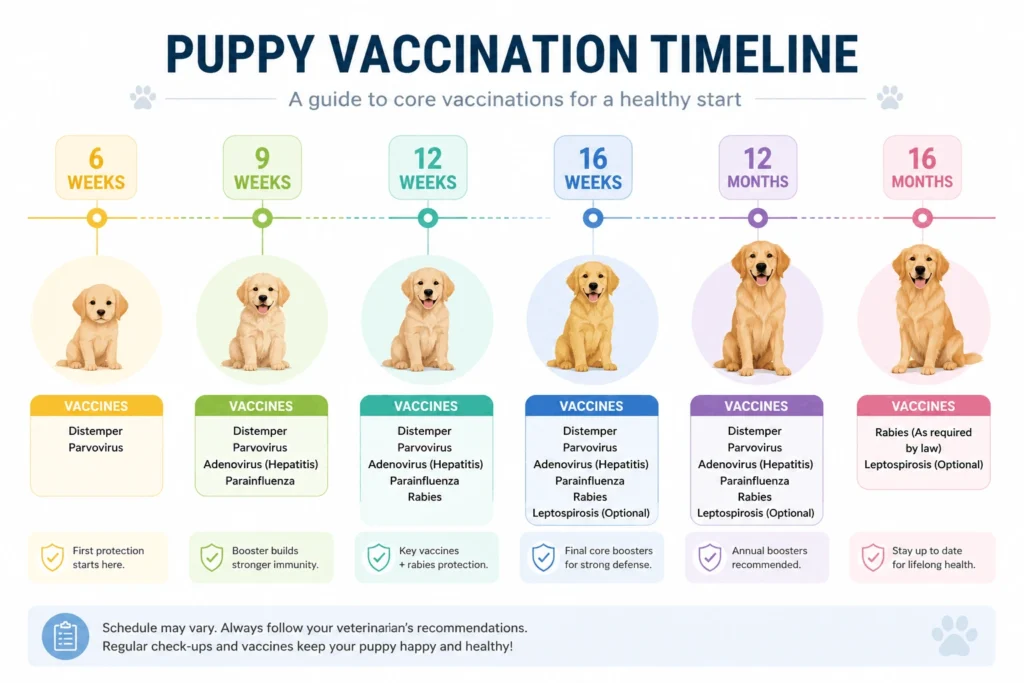
| Age | Vaccines | Notes |
|---|---|---|
| 6-8 weeks | DHPP (1st dose) | First vet visit, also a general wellness check |
| 10-12 weeks | DHPP (2nd dose), Leptospirosis (if recommended) | Bordetella may start here if needed |
| 14-16 weeks | DHPP (3rd dose), Rabies | Rabies timing varies by state law |
| 12-16 months | DHPP booster, Rabies booster | First adult booster round |
| Every 1-3 years after | DHPP, Rabies boosters | Frequency depends on vaccine type and local law |
Why Multiple Rounds Are Needed
This is the part most new owners ask about first: why does my puppy need three rounds of the same vaccine? The maternal antibodies a puppy receives from nursing can actually block the vaccine from working if given too early but those antibodies also fade unpredictably between puppies. Spacing doses every 3-4 weeks ensures that once the maternal protection wears off, the vaccine has a real chance to build the puppy’s own immunity, rather than guessing the exact week it’s safe to rely on a single shot.
Step-by-Step: What Happens at Each Vet Visit
- Weigh-in and physical exam — vet checks weight gain, heart, eyes, ears, and teeth.
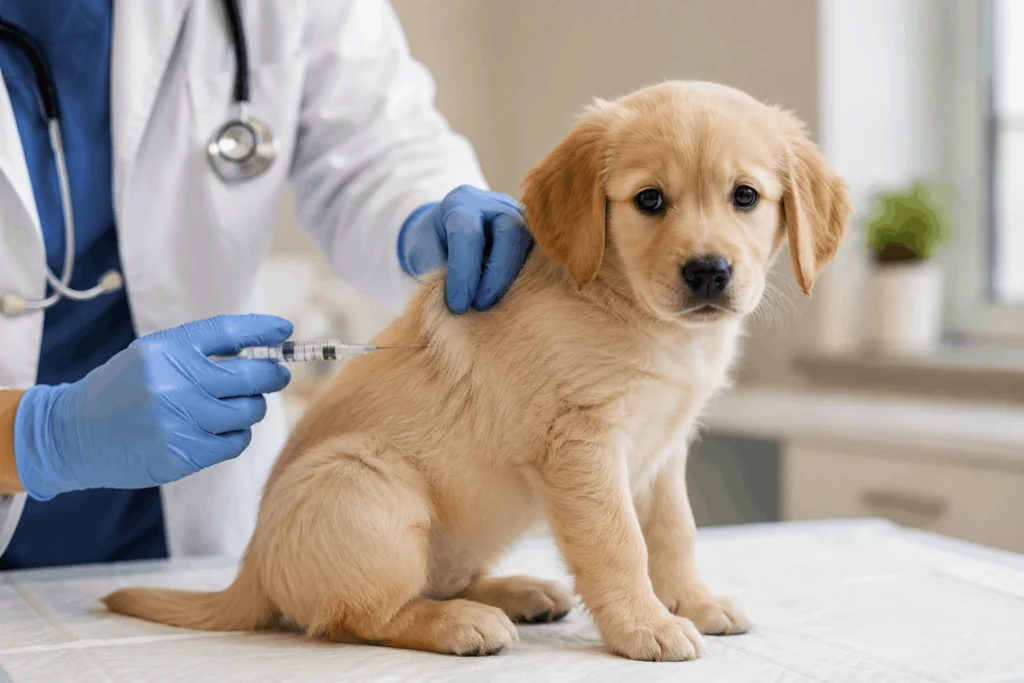
- Vaccine administration — usually a quick injection, often well tolerated.
- Parasite screening — a fecal sample check for worms is common at early visits.
- Discussion of next steps — your vet will tell you exactly when to return.
- Record update — make sure you get a copy of the updated vaccine record for daycare, boarding, or travel later.
Benefits of Staying on Schedule
- Lower risk of parvovirus and distemper, two of the most common fatal puppy illnesses
- Legal compliance with rabies vaccination laws
- Easier access to daycare, grooming, and boarding (most require proof of vaccination)
- Avoids costly emergency treatment for preventable diseases
Common Problems
- Missed or delayed doses. Life happens if you miss a booster window, don’t restart the whole series. Call your vet; most catch-up schedules just resume from where you left off.
- Mild reactions. A little post-shot tiredness is normal, but if something feels off beyond that, our guide to signs of a sick puppy can help you tell the difference.
- Cost concerns. A full puppy vaccine series in the US typically runs higher than people expect once you add wellness exams. Ask your vet clinic about puppy wellness packages, which often bundle visits at a lower combined cost.
Expert Tips
- Keep a written or photo copy of the vaccine record many boarding and daycare facilities ask for it on short notice.
- Avoid dog parks and pet store floors until at least one week after the final core vaccine round.
- Socialization can still happen safely before vaccines are complete carry your puppy in low-risk settings or invite healthy, vaccinated dogs to your home instead of public spaces.
- Ask your vet specifically which non-core vaccines apply to your area; regional disease risk varies a lot.
Common Mistakes to Avoid
- Assuming one shot covers everything. A single DHPP dose doesn’t provide full protection skipping the follow-up rounds leaves real gaps.
- Over-restricting socialization. Some owners keep puppies isolated until 16+ weeks out of caution. This can backfire, since the early weeks are also a critical socialization window. Safe, controlled exposure (your yard, healthy dogs, calm people) can continue during vaccination.
- Ignoring vaccine reactions that don’t resolve. Mild soreness is normal; vomiting, facial swelling, or repeated lethargy beyond 24 hours is not that warrants a same-day call to your vet.
Frequently Asked Question About Puppy Vaccination Schedule
1. What is the first vaccine a puppy should get?
The first DHPP dose, typically given around 6-8 weeks old at the puppy’s first vet visit.
2. How many rounds of shots does a puppy need total?
Usually three DHPP rounds in the first series, plus one rabies vaccine, finishing around 14-16 weeks.
3. Can I skip a vaccine if my puppy is mostly indoors?
Core vaccines (DHPP, rabies) are still recommended regardless of lifestyle. Non-core vaccines can sometimes be skipped for low-exposure puppies — ask your vet.
4. Is it normal for a puppy to be tired after a vaccine?
Mild tiredness for a day is common. Persistent lethargy beyond 24 hours should be checked by a vet.
5. When can my puppy safely go to the dog park?
Most vets recommend waiting about one week after the final core vaccine round, around 16-17 weeks.
6. How much does a full puppy vaccine series cost?
Costs vary widely by clinic and region; ask your vet for a full first-year estimate including wellness exams, since this is usually higher than the vaccine price alone.
Conclusion
The puppy vaccination schedule looks overwhelming on paper, but it boils down to a few key visits between 6 weeks and 16 months. Stick to the timeline your vet sets, keep your records handy, and don’t let caution about germs turn into total isolation your puppy needs both protection and exposure to grow into a confident adult dog. If you’re unsure about any dose or timing, your vet’s office is always the right call, not a guess.

Muzammil Khan is a certified canine behaviorist and the founder of Puppywhisper. With 8+ years of experience in positive reinforcement training, Muzammil has helped over 1,000 puppies transition smoothly into their new homes. All health advice is reviewed in collaboration with licensed veterinarians.