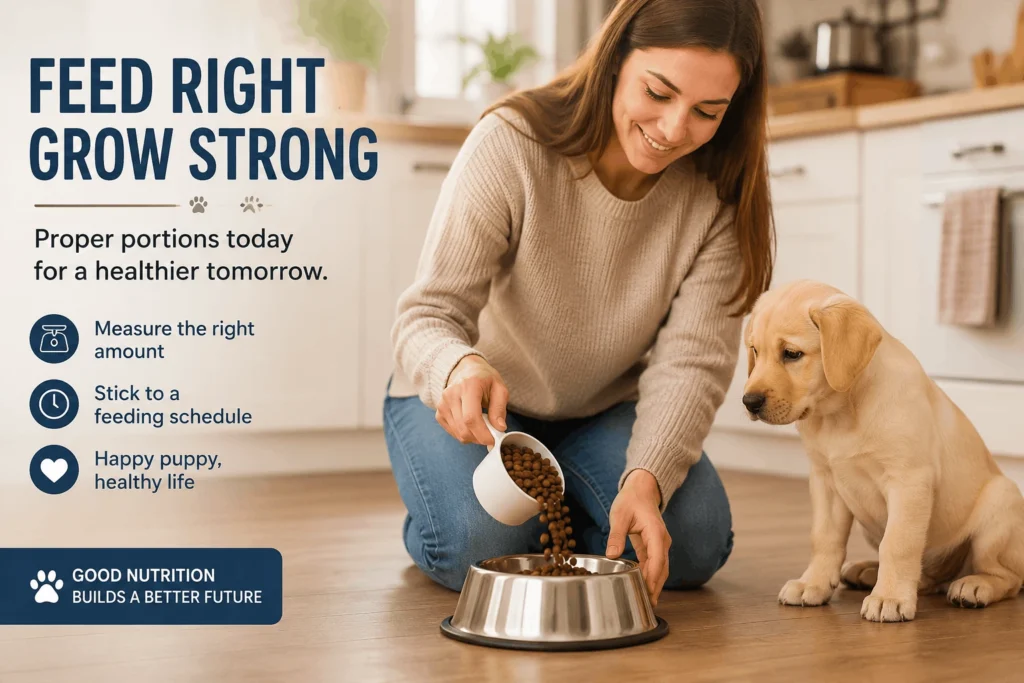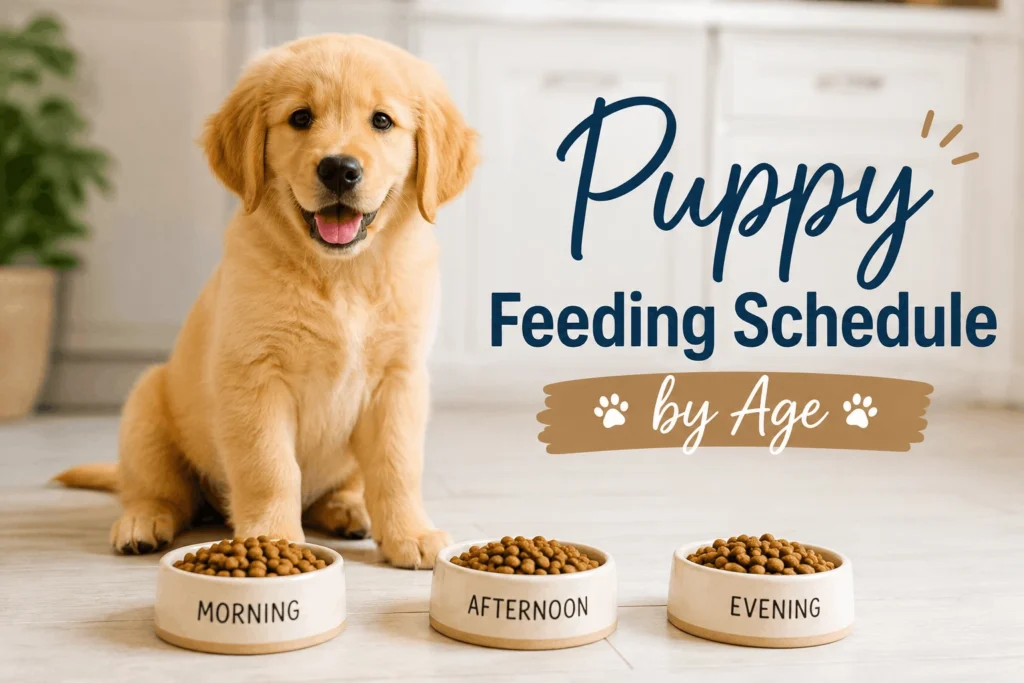
Your new puppy is home, you’ve filled the food bowl, and now you’re staring at the bag wondering how much? How often? At what time?
Most new owners either overfeed out of love or underfeed out of confusion. Both cause real problems. Getting your puppy’s feeding schedule right from day one protects their health, supports proper growth, and makes house training dramatically easier.
Your new puppy is home, you’ve filled the food bowl, and now you’re staring at the bag wondering how much? How often? At what time?
For help picking the right puppy food first, or for exact portion sizes by weight, those guides work alongside this schedule.
Here’s exactly what you need to know.
Quick Answer About Puppy Feeding Schedule by Age
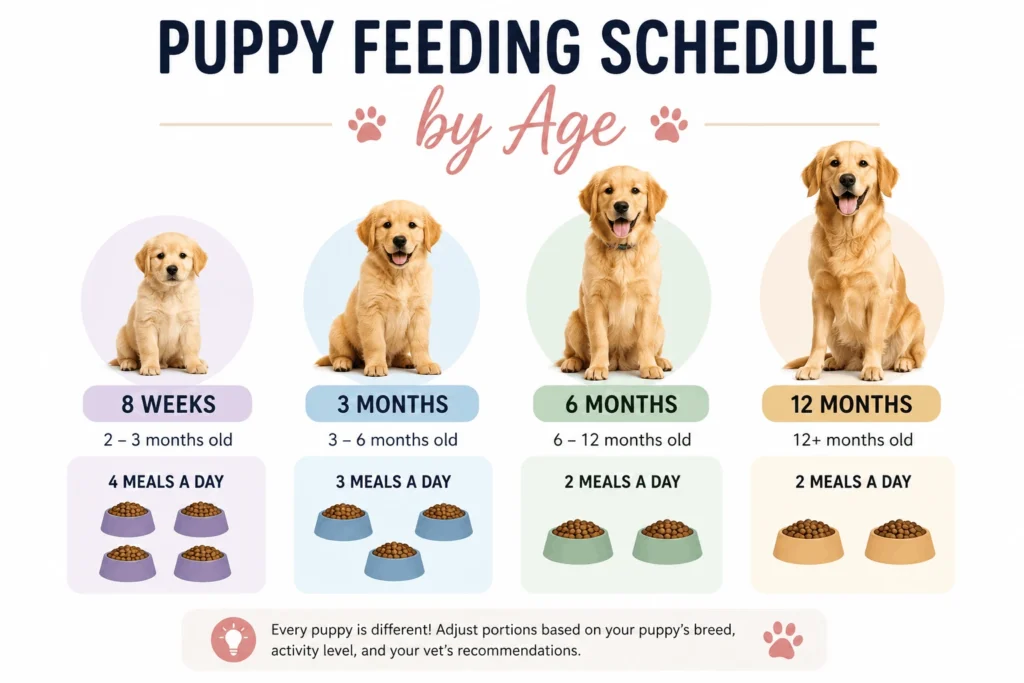
Puppies need 3 to 4 meals per day from 8 weeks to 6 months, then 2 meals per day from 6 months onward. Younger puppies have tiny stomachs and fast metabolisms frequent small meals keep their blood sugar stable and support healthy development. The exact portion depends on your puppy’s weight, breed size, and the food brand’s feeding guide.
| Age | Meals Per Day |
|---|---|
| 6–8 weeks | 4 meals |
| 8–12 weeks | 3–4 meals |
| 3–6 months | 3 meals |
| 6–12 months | 2 meals |
| 12+ months | 2 meals (adult food) |
Why This Matters
Puppies aren’t small adult dogs. Their digestive systems are still developing, their blood sugar drops faster, and they burn calories at a higher rate than adult dogs.
Feeding too infrequently can cause hypoglycemia especially dangerous in small breeds like Chihuahuas and Yorkshire Terriers. Feeding too much at once leads to bloating, loose stools, and excess weight gain that strains developing joints.
Following an age-appropriate schedule also helps with potty training. Puppies typically need to eliminate within 15–20 minutes of eating, so a predictable meal schedule creates a predictable bathroom routine.
Puppy Feeding Schedule by Age
6–8 Weeks Old
At this stage, puppies are just transitioning away from their mother’s milk. Their stomachs are tiny and they need frequent meals to stay energized.
Recommended: 4 meals per day, spaced roughly 4 hours apart.
If you’ve just brought home an 8-week-old puppy, ask the breeder or shelter what food they were eating. Start with the same food to avoid stomach upset, then transition gradually if you want to switch brands.
Tip: Moisten dry kibble with a little warm water if your puppy is struggling to chew.
8–12 Weeks Old
This is when most puppies come home. They’re adjusting to a new environment, which already stresses their digestive system. Consistent meal times matter more than ever.
Recommended: 3 to 4 meals per day.
Stick to a routine — same times, same amounts, same food. Morning, midday, late afternoon, and an early evening feeding works well for most families.
3–6 Months Old
Your puppy is growing fast and becoming more active. You can now drop to 3 meals a day.
Recommended: 3 meals per day (morning, midday, evening).
Watch their body condition during this phase. You should be able to feel their ribs without pressing hard, but not see them prominently. If your puppy looks thin or seems hungry constantly, slightly increase portions. If they’re leaving food in the bowl or gaining weight quickly, reduce slightly.
6–12 Months Old
By 6 months, most puppies can handle 2 meals a day. Their digestive system is more mature and they can handle larger portions at each sitting.
Recommended: 2 meals per day (morning and evening).
Large and giant breeds like German Shepherds and Golden Retrievers are still growing significantly at this stage. Don’t rush the transition to adult food large breed puppies need puppy food longer to support joint and bone development.
12+ Months — Transitioning to Adult Food
Most small and medium breeds can transition to adult dog food around 12 months. Large breeds often need puppy food until 18 months, and giant breeds like Great Danes may need it until 24 months. Always confirm with your vet.
How to transition: Replace 25% of the current food with new food every 3–4 days over 2 weeks. A slow switch prevents digestive upset.
How Much to Feed at Each Stage
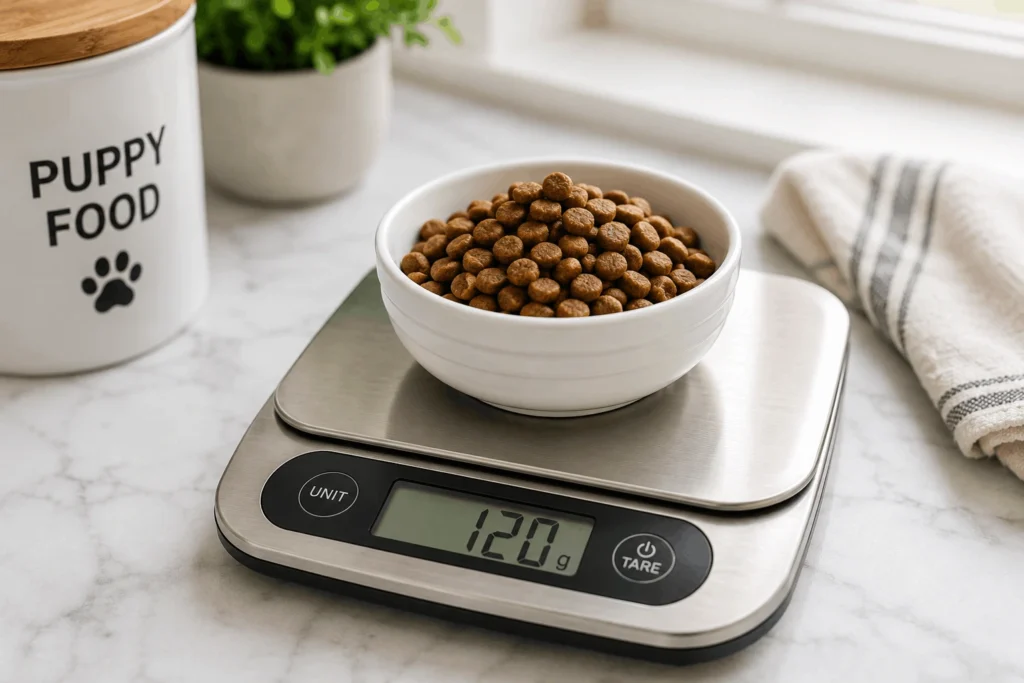
Portion sizes vary by breed size, weight, and food brand. Always check the feeding guide on your specific food bag these are calibrated for that food’s calorie density.
General starting points:
| Breed Size | 8–12 Weeks | 3–6 Months | 6–12 Months |
|---|---|---|---|
| Small (under 20 lbs adult) | ½ cup/day | ¾ cup/day | 1 cup/day |
| Medium (20–50 lbs adult) | ¾–1 cup/day | 1–1½ cups/day | 1½–2 cups/day |
| Large (50+ lbs adult) | 1–2 cups/day | 2–3 cups/day | 3–4 cups/day |
Divide total daily amount across all meals.
These are starting estimates. Adjust based on your puppy’s body condition, energy level, and your vet’s guidance.
Wet Food vs. Dry Food
Both are fine options the real decision is quality and consistency.
- Dry kibble is convenient, shelf-stable, and better for dental health. Look for an AAFCO statement confirming it’s “complete and balanced” for puppies or all life stages.
- Wet food has higher moisture content, which helps with hydration. It’s often more appealing for picky eaters or puppies with small mouths.
- Mixing both works well. Some owners use wet food as a topper on dry kibble to encourage eating. Just adjust portions to avoid overfeeding total calories.
Common Feeding Problems and Solutions
- Problem: Puppy won’t eat.
Causes include stress from a new home, food transition, or illness. Wait 15–20 minutes after placing food down, then remove the bowl. Do not leave food out all day. If skipping meals continues beyond 24–48 hours, call your vet. - Problem: Puppy eats too fast.
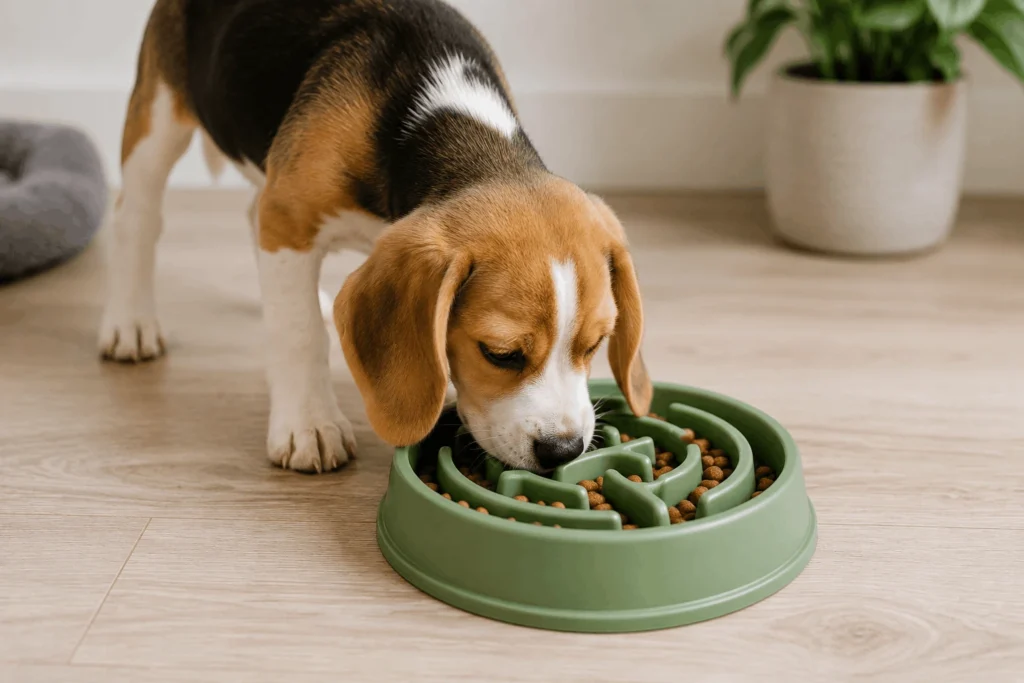
Fast eating causes gulping air, bloating, and vomiting. Use a slow feeder bowl or spread kibble on a lick mat to slow them down. - Problem: Loose stools after feeding.
Usually caused by overfeeding or a food transition that was too fast. Reduce portion size or slow down the food switch. - Problem: Always seems hungry.
Verify you’re feeding the right amount for their current weight not their expected adult weight. Also confirm they’re eating a high-quality food with adequate protein.
Expert Tips for Feeding Success
- Weigh food with a kitchen scale. Measuring cups are inconsistent a scale gives accurate portions every time.
- Feed at the same times every day. Predictable meal times regulate digestion and make potty training easier.
- Use meal time for training. Hand-feed some kibble as training rewards. This builds focus and uses their daily food productively.
- Fresh water always available. Especially if feeding dry food puppies on kibble need constant access to clean water.
- Monitor body condition monthly. Run your hands along your puppy’s sides every few weeks. Adjust food up or down based on what you feel.
Common Mistakes to Avoid
- Free feeding (leaving food out all day). This makes it impossible to monitor intake, derails potty training, and often leads to overeating. Scheduled meals are always better for puppies.
- Feeding adult dog food to a puppy. Adult food doesn’t have the calorie density or nutrient ratios puppies need. Always use food labeled for puppies or all life stages.
- Switching foods abruptly. Even switching to a better food too fast causes digestive upset. Always transition gradually over 10–14 days.
- Giving too many treats. Treats should make up no more than 10% of daily calories. Overloading treats while also feeding full meals causes weight gain fast.
- Ignoring breed size differences. Large breed puppy food has controlled calcium and phosphorus levels to prevent orthopedic problems. Don’t feed a Great Dane puppy regular small-breed puppy food.
Frequently Asked Question
Q: How many times a day should I feed my 8-week-old puppy?
A: Feed 3 to 4 times per day. Puppies this young have small stomachs and fast metabolisms, so frequent small meals keep their energy and blood sugar stable.
Q: Can I free-feed my puppy?
A: It’s not recommended. Free feeding makes it hard to track intake, complicates potty training, and can lead to obesity. Scheduled meals are more effective.
Q: When should I switch from 3 meals to 2 meals a day?
A: Most puppies are ready to move from 3 meals to 2 around 6 months of age. Large breeds sometimes stay on 3 meals slightly longer check with your vet.
Q: How do I know if I’m feeding my puppy enough?
A: You should feel your puppy’s ribs easily without pressing hard, but not see them clearly. If ribs are visible, increase food slightly. If you can’t feel them at all, reduce portions.
Q: Can puppies eat wet food only?
A: Yes, as long as it’s complete and balanced (AAFCO approved) for puppies. Wet-food-only diets provide less dental benefit than kibble. Talk to your vet about the best option for your puppy.
Q: When should I switch my puppy to adult dog food?
A: Small and medium breeds at 12 months, large breeds at 18 months, and giant breeds at 24 months. Transition gradually over 10–14 days.
Q: What if my puppy skips a meal?
A: Skipping one meal occasionally is usually not alarming, especially in a new environment. If skipping continues for more than 24–48 hours or is paired with lethargy or vomiting, contact your vet.
Q: Is it okay to mix wet and dry puppy food?
A: Yes. Many owners mix wet food as a topper on dry kibble. Just account for the combined calories to avoid overfeeding.
Conclusion
A consistent puppy feeding schedule is one of the simplest things you can do to set your puppy up for a healthy life. Start with 3 to 4 meals a day for young puppies, shift to 2 meals around 6 months, and always choose food that’s AAFCO-approved for puppies or all life stages
Measure portions, stay consistent with timing, and adjust based on your puppy’s body condition — not just what’s on the bag. When in doubt, your vet is always the best person to confirm your puppy’s specific needs.

Muzammil Khan is a certified canine behaviorist and the founder of Puppywhisper. With 8+ years of experience in positive reinforcement training, Muzammil has helped over 1,000 puppies transition smoothly into their new homes. All health advice is reviewed in collaboration with licensed veterinarians.