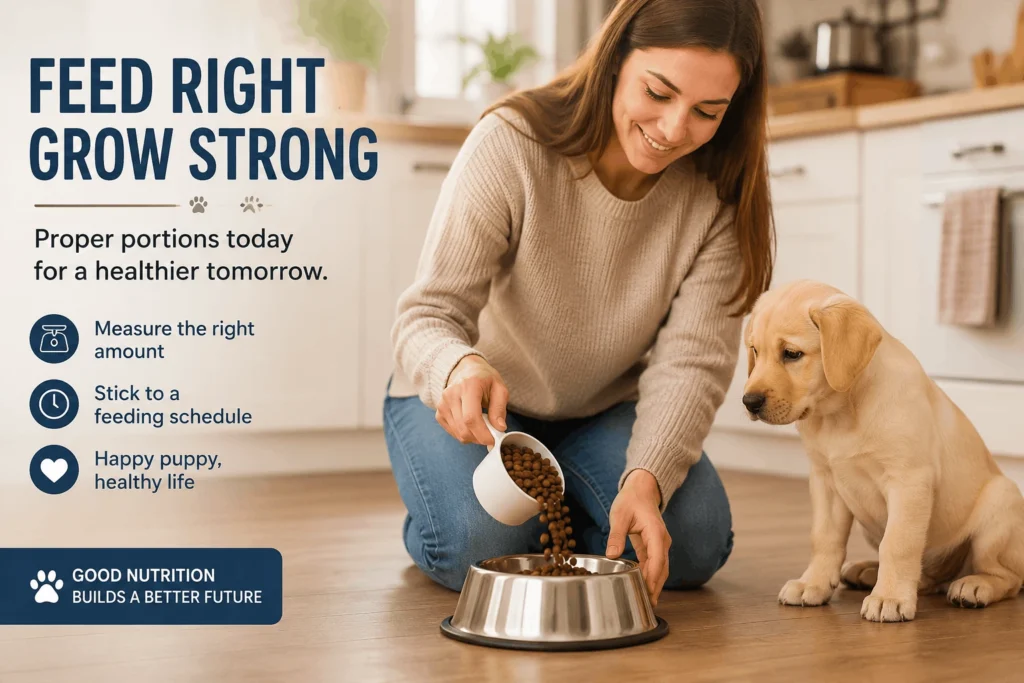
Wet vs dry puppy food is one of the first decisions every new puppy owner has to make. Choosing your puppy’s first food can feel overwhelming. Walk into any pet store, and you’ll find shelves packed with colorful bags of kibble and rows of canned food, all claiming to be the healthiest option. As a new puppy owner, it’s natural to wonder: Is wet food better than dry food, or does it really matter?
The good news is that both wet and dry puppy food can provide complete nutrition when they’re formulated for growing puppies. The better choice depends on your puppy’s age, breed, chewing ability, hydration needs, activity level, and even your daily routine.
For example, a teething 10-week-old puppy may find soft wet food easier to eat, while an energetic 6-month-old Labrador may thrive on high-quality kibble. Many veterinarians also recommend combining both formats to enjoy the advantages of each.
In this guide, you’ll learn the real differences between wet and dry puppy food, their nutritional value, health benefits, costs, and which option is best for different puppies. By the end, you’ll know exactly how to choose the right feeding approach for your growing companion.
Quick Answer
Neither wet nor dry puppy food is universally better. The healthiest choice is a food labeled “complete and balanced for growth” (or “all life stages”) that meets your puppy’s nutritional requirements.
In general:
- Choose wet food if your puppy is teething, struggles to chew hard kibble, needs extra hydration, or is a picky eater.
- Choose dry food if you want a more affordable, convenient option that’s easy to store and portion.
- Choose a combination of both if your budget allows and you want to provide the benefits of each.
For most healthy puppies, a high-quality mixed feeding approach offers the best balance of nutrition, convenience, hydration, and taste.
Why Choosing the Right Puppy Food Matters
The first year of your puppy’s life is the fastest period of growth they’ll ever experience. During this time, their bones, muscles, brain, immune system, and digestive tract are developing rapidly. Feeding an appropriate diet during puppyhood helps support healthy development and may reduce nutritional problems later in life.
Choosing the wrong feeding routine doesn’t usually mean choosing the “wrong” brand it often means feeding the wrong type, amount, or texture for your puppy’s current stage.
Common problems new puppy owners encounter include:
- A teething puppy refusing hard kibble because chewing hurts.
- Accidentally overfeeding by treating wet and dry food as equal by volume.
- A puppy becoming overly selective after eating only canned food.
- Digestive upset caused by switching foods too quickly.
- Feeding an adult formula instead of one designed for growing puppies.
The good news is that these issues are usually easy to prevent with the right feeding strategy.
Wet vs Dry Puppy Food: What Are the Main Differences?
At first glance, the difference seems obvious one comes in a can and the other in a bag. But the biggest distinction is actually water content, and that single difference affects nearly everything else.
Wet puppy food typically contains 70–80% moisture, while dry kibble contains only 8–12% moisture. Because wet food contains so much water, puppies need to eat a larger volume to consume the same number of calories found in a smaller serving of kibble.
The manufacturing process is also different.
Wet food is prepared by blending meat, animal proteins, grains or vegetables, vitamins, and minerals into a mixture that’s cooked and sealed in cans or pouches. This process preserves moisture and creates the soft texture puppies often love.
Dry puppy food is made by combining ingredients into a dough that’s cooked under pressure, pushed through an extruder to form kibble, dried, and then coated with fats and nutrients to improve flavor and nutritional balance.
Although these foods look very different, both can provide complete nutrition when they meet recognized nutritional standards for puppy growth.
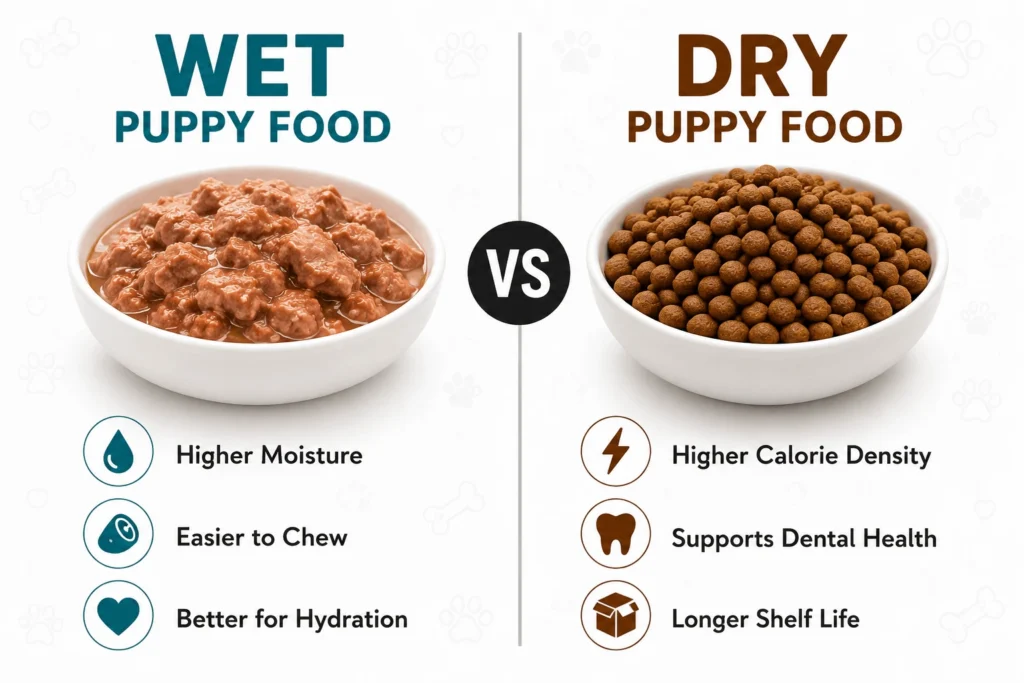
Wet vs Dry Puppy Food Comparison
| Feature | Wet Puppy Food | Dry Puppy Food |
|---|---|---|
| Moisture Content | 70–80% | 8–12% |
| Texture | Soft and moist | Crunchy |
| Calories per Cup | Lower | Higher |
| Protein (As Fed) | Usually appears higher | Usually appears lower |
| Storage | Refrigerate after opening | Easy room-temperature storage |
| Cost | Higher per meal | More economical |
| Shelf Life After Opening | 2–3 days refrigerated | Several weeks if stored properly |
| Best For | Teething puppies, picky eaters, hydration | Everyday feeding, food puzzles, budget-conscious owners |
Important: Don’t compare protein percentages directly from the labels. Because wet food contains much more water, its numbers appear different. Veterinarians compare foods using dry matter basis, which removes moisture from the calculation and gives a more accurate nutritional comparison.
Nutrition Comparison: Is One Healthier Than the Other?
One of the biggest myths is that wet food is automatically healthier than kibble or vice versa.
In reality, quality matters far more than texture.
A premium dry puppy food often provides better nutrition than a low-quality canned food, while a premium canned food may outperform inexpensive kibble.
When comparing foods, look beyond the front of the package and check for these features:
- A statement indicating the food is complete and balanced for growth.
- High-quality animal protein listed among the first ingredients.
- Appropriate levels of fat to support healthy development.
- Essential vitamins and minerals, including calcium and phosphorus for growing bones.
- DHA (an omega-3 fatty acid) to support brain and vision development.
For large-breed puppies, nutrition becomes even more important. Excess calories or improper calcium levels can contribute to overly rapid growth, which may increase the risk of orthopedic problems later in life. Choosing a formula specifically designed for large-breed puppy growth helps provide more controlled nutrient levels.
Instead of asking whether wet or dry food is healthier, ask:
Does this food provide complete nutrition for my puppy’s size, age, and expected adult weight?
That’s the question veterinarians care about most.

Wet vs Dry Puppy Food and Dental Health
Many people believe dry kibble works like a toothbrush. While there’s some truth to this idea, it’s often overstated.
Crunching kibble creates a mild scraping action that may reduce some plaque buildup compared with eating only soft food. However, ordinary kibble should not be considered a substitute for dental care.
Some specially formulated dental diets are designed to stay intact longer while chewing, allowing them to clean the tooth surface more effectively. These products typically carry certification from recognized veterinary dental organizations.
If maintaining oral health is a priority, brushing your puppy’s teeth several times a week remains one of the most effective ways to prevent plaque and tartar buildup.
What About Teething Puppies?
Between 3 and 6 months of age, most puppies lose their baby teeth and develop their permanent adult teeth. During this stage, sore gums can make chewing uncomfortable.
Many owners notice their puppy suddenly eating more slowly or refusing kibble altogether. In many cases, this behavior is temporary and linked to teething rather than food preference.
To make meals easier during this period, you can:
- Soak kibble in warm water for 10–15 minutes.
- Mix a small amount of wet food with dry kibble.
- Feed wet puppy food temporarily if chewing seems painful.
- Offer safe chew toys designed for teething puppies.
Once adult teeth finish erupting, most puppies return to eating dry food without difficulty.
Hydration and Digestion: Does Wet Food Help Puppies Stay Healthier?
One of the biggest nutritional advantages of wet puppy food is its high moisture content. Since canned food is made up of roughly 70–80% water, every meal contributes significantly to your puppy’s daily fluid intake.
For puppies that don’t naturally drink much water—especially during hot weather or after vigorous play this extra moisture can be beneficial. While healthy puppies eating dry food can stay perfectly hydrated as long as fresh water is always available, wet food provides an additional source of fluids that some puppies need.
Hydration supports many essential body functions, including:
- Healthy kidney function
- Proper digestion
- Nutrient absorption
- Temperature regulation
- Urinary tract health
Because wet food contains more water, puppies often feel full after eating a larger portion, even though they’re consuming roughly the same number of calories. This can help satisfy puppies with hearty appetites without requiring oversized calorie intake.
Is Wet Food Easier to Digest?
Many new owners assume canned food is easier for puppies to digest. In reality, healthy puppies can usually digest both wet and dry food equally well when the food is high quality and appropriate for their age.
Digestive problems are much more likely to result from:
- Switching foods too quickly
- Feeding too many treats
- Overfeeding
- Food sensitivities
- Intestinal parasites or illness
If your puppy develops diarrhea after changing foods, the problem is usually the sudden diet change, not the fact that the food is wet or dry.
Whenever possible, transition to a new food gradually over 5–7 days to allow your puppy’s digestive system to adapt.
Cost and Convenience: Which Option Fits Your Lifestyle?
Nutrition is important, but so is choosing a feeding routine you can realistically maintain every day.
For many families, dry puppy food is the most practical option.
Benefits of Dry Puppy Food
Dry kibble offers several everyday advantages:
- Usually costs less per serving.
- Easy to buy in larger bags.
- Stores well for weeks after opening when kept in a sealed container.
- Simple to measure accurately.
- Works well in puzzle feeders, slow feeders, and training toys.
- Creates less mess during feeding.
If you have multiple dogs or a large-breed puppy with a big appetite, these savings can become significant over time.
Benefits of Wet Puppy Food
Wet food requires a little more effort but has its own advantages:
- Highly appealing aroma and flavor.
- Soft texture that’s easier for young puppies to chew.
- Convenient single-serving trays and pouches.
- Excellent for hiding medications.
- Helpful for puppies recovering from illness or surgery, when appetite may be reduced.
Once opened, however, canned food should be refrigerated and generally used within 2–3 days. Food left sitting in the bowl for more than about 30 minutes should be discarded, especially in warm environments, to reduce the risk of bacterial growth.
Wet vs. Dry Puppy Food by Age
Your puppy’s nutritional needs stay fairly consistent throughout the first year, but their ability to chew and eating habits change considerably.
8–12 Weeks Old
At this age, puppies have recently been weaned and are still learning how to eat solid food.
Many puppies do well with:
- Wet puppy food
- Softened kibble
- A combination of both
Small, frequent meals are usually recommended because young puppies have limited stomach capacity.
Best choice:
✔ Wet food or softened kibble.
3–6 Months Old
This is the active teething stage.
Loose baby teeth and sore gums can make crunchy kibble uncomfortable for a few weeks. If your puppy suddenly seems less enthusiastic about meals, teething may be the reason rather than dislike of the food.
Many owners temporarily:
- Add warm water to kibble.
- Mix in wet food.
- Feed canned food until teething discomfort improves.
Best choice:
✔ Either format works, depending on your puppy’s comfort.
6–12 Months Old
Most puppies have their adult teeth by this stage.
They can usually eat dry kibble comfortably, making it a convenient everyday choice. Wet food can still be offered occasionally for variety, extra hydration, or as a topper.
Best choice:
✔ Dry food, wet food, or a balanced combination.
Does Breed Matter?
Yes although not because certain breeds require wet food while others require kibble.
Instead, breed affects portion sizes, calorie needs, growth rate, and kibble size.
Small Breeds
Examples include:
- Yorkshire Terriers
- Chihuahuas
- Maltese
- Toy Poodles
Small breeds have tiny mouths and fast metabolisms.
Many benefit from:
- Small-sized kibble.
- Softer food during teething.
- More frequent meals.
Medium Breeds
Examples include:
- Beagles
- Cocker Spaniels
- Border Collies
Most medium-sized puppies transition easily between wet and dry foods.
The focus should be choosing a complete puppy diet and feeding appropriate portions.
Large and Giant Breeds
Examples include:
- Labrador Retrievers
- Golden Retrievers
- German Shepherds
- Great Danes
- Bernese Mountain Dogs
Large-breed puppies require carefully controlled growth.
Rapid weight gain can place extra stress on developing joints and bones.
Whether you choose wet food, dry food, or both, look for a formula specifically labeled for large-breed puppy growth, as these diets are formulated with appropriate calcium, phosphorus, and calorie levels to support healthy skeletal development.
Pros and Cons of Wet Puppy Food
Advantages
✅ High moisture content supports hydration.
✅ Soft texture is ideal for teething puppies.
✅ Strong aroma encourages picky eaters.
✅ Larger meal volume can help puppies feel satisfied.
✅ Excellent for mixing with medications.
Disadvantages
❌ More expensive than dry food.
❌ Must be refrigerated after opening.
❌ Short shelf life once opened.
❌ Less convenient for travel.
❌ Can create more feeding mess.
Pros and Cons of Dry Puppy Food
Advantages
✅ More affordable for daily feeding.
✅ Easy to measure portions.
✅ Convenient to store.
✅ Works well in puzzle toys and training feeders.
✅ Longer shelf life.
Disadvantages
❌ Lower moisture content.
❌ Some puppies dislike the texture during teething.
❌ Can be harder for very young puppies to chew.
❌ Ordinary kibble alone isn’t enough to maintain dental health.
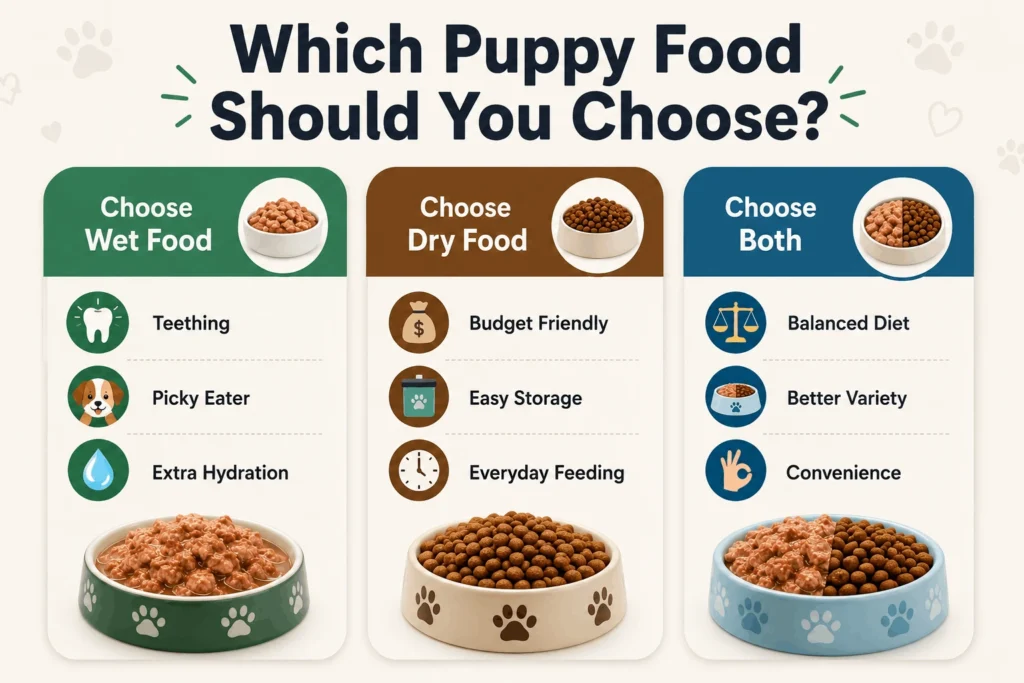
Which Should You Choose?
The answer depends on your puppy’s individual needs rather than trying to find one “perfect” type of food.
Choose Wet Food If…
- Your puppy is currently teething.
- They struggle to chew hard kibble.
- They’re recovering from illness.
- They’re an extremely picky eater.
- You want to increase daily water intake.
Choose Dry Food If…
- You want the most economical option.
- You use food puzzles or slow feeders.
- You need a food that’s easy to store.
- You have multiple dogs.
- Your puppy already chews comfortably.
Choose Both If…
Many veterinarians and experienced breeders use mixed feeding because it combines the strengths of each format.
A balanced combination may provide:
- Better meal variety.
- Improved palatability.
- Additional hydration.
- Easier portion flexibility.
- Convenience without giving up the benefits of wet food.
The key is remembering that wet and dry food should be balanced by calories not by scoop size or volume.
How to Mix Wet and Dry Puppy Food Safely
Many puppy owners assume they have to choose either wet food or dry food. In reality, mixed feeding is a common approach that combines the convenience of kibble with the flavor and moisture of canned food.
The key is to introduce the new food gradually and adjust portions based on calories, not the size of each serving.
Step 1: Check Your Puppy’s Daily Calorie Needs
Before mixing foods, determine how many calories your puppy should eat each day.
The easiest way to estimate this is by:
- Following the feeding guide on your puppy food’s packaging.
- Asking your veterinarian for a recommendation based on your puppy’s:
- Age
- Current weight
- Expected adult size
- Activity level
- Body condition
Remember that feeding charts are starting points. Some puppies naturally need slightly more or less food depending on how quickly they’re growing.
Step 2: Introduce the New Food Gradually
A sudden diet change can upset your puppy’s digestive system.
Instead, transition over about one week.
| Day | Current Food | New Food |
|---|---|---|
| 1–2 | 75% | 25% |
| 3–4 | 50% | 50% |
| 5–6 | 25% | 75% |
| 7+ | 100% New Food | — |
If you’re simply adding a little wet food as a topper rather than replacing the diet, reduce the amount of kibble so your puppy’s total daily calories stay about the same.
Step 3: Watch Your Puppy’s Response
During the transition, monitor your puppy for signs they’re adjusting well.
Good signs include:
- Firm, well-formed stools
- Normal appetite
- Steady energy levels
- No vomiting
- Healthy weight gain
If your puppy develops diarrhea, vomiting, or refuses meals for more than a day, slow the transition and contact your veterinarian if symptoms persist.
Step 4: Measure Food Carefully
One of the most common mistakes is keeping the same amount of kibble and simply adding canned food on top.
This often leads to overfeeding.
Instead:
- Read the calorie content on both products.
- Reduce kibble when adding wet food.
- Use a measuring cup or kitchen scale for consistency.
A few extra spoonfuls each day may not seem like much, but over weeks they can contribute to excessive weight gain.
Common Feeding Mistakes to Avoid
Even high-quality puppy food won’t deliver its full benefits if it’s fed incorrectly.
Here are some of the most common mistakes and how to avoid them.
1. Switching Foods Too Quickly
Puppies have sensitive digestive systems.
Changing from one food to another overnight can lead to:
- Diarrhea
- Vomiting
- Gas
- Reduced appetite
Whenever possible, transition gradually over 5–7 days.
2. Comparing Cups Instead of Calories
A cup of wet food is not nutritionally equivalent to a cup of kibble.
Because canned food contains much more water, puppies need a larger volume to receive the same number of calories.
Always compare foods using their calorie content rather than serving size alone.
3. Overfeeding Treats
Training treats are useful during puppyhood, but they still count toward your puppy’s daily calorie intake.
As a general guideline, treats should make up no more than about 10% of your puppy’s daily calories.
The rest should come from a complete and balanced puppy diet.
4. Leaving Wet Food Out Too Long
Unlike dry kibble, wet food spoils quickly once it’s exposed to room temperature.
Discard uneaten canned food after about 30 minutes (or sooner in hot weather) and refrigerate any unused portion promptly.
5. Assuming All Puppy Foods Are Equal
Marketing claims can be confusing.
Instead of choosing a food based only on words like “premium,” “natural,” or “holistic,” check whether it:
- Is labeled complete and balanced for growth (or all life stages).
- Matches your puppy’s breed size when appropriate.
- Comes from a reputable manufacturer with quality-control standards.
Expert Tips for Feeding Your Puppy
Small adjustments can make a big difference in your puppy’s long-term health.
Feed on a Consistent Schedule
Regular meal times help puppies:
- Develop healthy eating habits.
- Support digestion.
- Make house training more predictable.
Most young puppies benefit from three to four meals per day, while older puppies often transition to two meals daily.
Monitor Body Condition, Not Just Weight
Growing puppies naturally gain weight every week.
What’s more important is maintaining a healthy body condition.
You should be able to:
- Feel your puppy’s ribs without pressing hard.
- See a slight waist when viewed from above.
- Notice a gentle abdominal tuck from the side.
If your puppy is becoming noticeably round or, conversely, their ribs are very prominent, ask your veterinarian whether portion adjustments are needed.
Fresh Water Should Always Be Available
Even if your puppy eats wet food, they still need access to clean drinking water throughout the day.
Water is essential for digestion, temperature regulation, circulation, and overall health.
Introduce Different Textures Early
If your puppy tolerates both wet and dry food, occasional exposure to each texture may reduce the chances of them becoming overly selective later in life.
Offering variety doesn’t mean changing foods constantly it simply means your puppy learns that both textures are normal.
Ask Your Veterinarian Before Making Major Diet Changes
If your puppy has:
- Food allergies
- Frequent digestive problems
- Slow growth
- Rapid weight gain
- A medical condition
seek personalized feeding advice before making significant dietary changes.
Frequently Asked Questions
Is wet food or dry food better for puppies?
Neither is universally better. Both can support healthy growth when they’re complete and balanced for puppies. The right choice depends on your puppy’s age, chewing ability, hydration needs, and your lifestyle.
Can I mix wet and dry puppy food?
Yes. Mixed feeding is safe and commonly used. Just make sure you adjust portions based on calories and introduce any new food gradually.
Do puppies need wet food while teething?
Not necessarily, but many puppies find soft food or soaked kibble more comfortable while their adult teeth are coming in.
Can dry food provide enough water?
Yes. Healthy puppies eating dry food usually stay well hydrated as long as they always have access to fresh, clean drinking water.
Does wet food cause diarrhea?
Wet food itself doesn’t usually cause diarrhea. Digestive upset is more commonly caused by switching foods too quickly, overfeeding, parasites, infections, or food sensitivities.
Is wet puppy food more expensive?
Generally, yes. Wet food often costs more per calorie because of its higher moisture content and packaging. However, prices vary between brands and product lines.
When can puppies switch to adult dog food?
Most puppies transition to adult food between 10 and 24 months of age, depending on their breed and expected adult size. Small breeds mature sooner than large and giant breeds. Your veterinarian can help determine the right time for your puppy.
Final Verdict: Wet or Dry Puppy Food?
There isn’t a single “best” choice for every puppy.
A healthy, active puppy can thrive on either wet food, dry food, or a combination of both as long as the diet is complete and balanced for growth and fed in the correct portions.
If you’re still deciding, here’s a simple way to think about it:
- Choose wet food if your puppy needs softer meals, extra hydration, or encouragement to eat.
- Choose dry food if convenience, affordability, and easy storage are your priorities.
- Choose a combination if you want the benefits of both while carefully managing your puppy’s daily calorie intake.
The most important decision isn’t whether the food comes from a bag or a can it’s choosing a high-quality puppy formula that meets your dog’s nutritional needs and adjusting it as they grow.
As your puppy develops, monitor their body condition, appetite, energy level, and stool quality. Regular veterinary checkups and thoughtful feeding habits will do far more for your puppy’s lifelong health than choosing one texture over another.
Key Takeaways
- Both wet and dry puppy food can provide complete nutrition when formulated for growth.
- Wet food offers more moisture, a softer texture, and excellent palatability.
- Dry food is more economical, easier to store, and convenient for everyday feeding.
- Mixed feeding allows many puppies to enjoy the advantages of both options.
- Introduce new foods gradually over 5–7 days to help prevent digestive upset.
- Always compare foods by calories not by cup size.
- Choose a diet that matches your puppy’s age, breed size, activity level, and individual needs.

Muzammil Khan is a certified canine behaviorist and the founder of Puppywhisper. With 8+ years of experience in positive reinforcement training, Muzammil has helped over 1,000 puppies transition smoothly into their new homes. All health advice is reviewed in collaboration with licensed veterinarians.