You’ve made the decision. A puppy is coming home. The excitement is real but so is the overwhelming feeling of not knowing where to start. What do you actually need? What can wait? What will you wish you’d sorted out on day one?
This checklist cuts through the noise. Every item here serves a real purpose. Nothing unnecessary, nothing missed.
Quick Answer
A new puppy checklist covers five core areas: supplies (crate, bowls, collar, leash, bed, toys), health preparation (vet appointment, vaccinations, deworming), home prep (puppy-proofing, designated puppy zone), training tools (treats, training pads, crate), and nutrition (age-appropriate puppy food). Getting these sorted before your puppy arrives makes the first week calmer, safer, and far less stressful for both of you.
Why Getting Prepared Early Changes Everything
Most new puppy problems happen in the first 72 hours and almost all of them come down to lack of preparation. A puppy arriving in an un proofed home, without the right supplies, and with no vet appointment booked is a recipe for stress, accidents, and avoidable health risks. For a full day-by-day breakdown of what to expect, see our first week with a new puppy guide.
Puppies are also in a critical socialization window between 3 and 14 weeks. How you set up their environment and routine in those early weeks shapes their behavior for life. Preparation isn’t just about having the right gear it’s about giving your puppy the best possible start.

New puppy sleeping inside a properly set up wire crate with soft bedding and a comfort toy
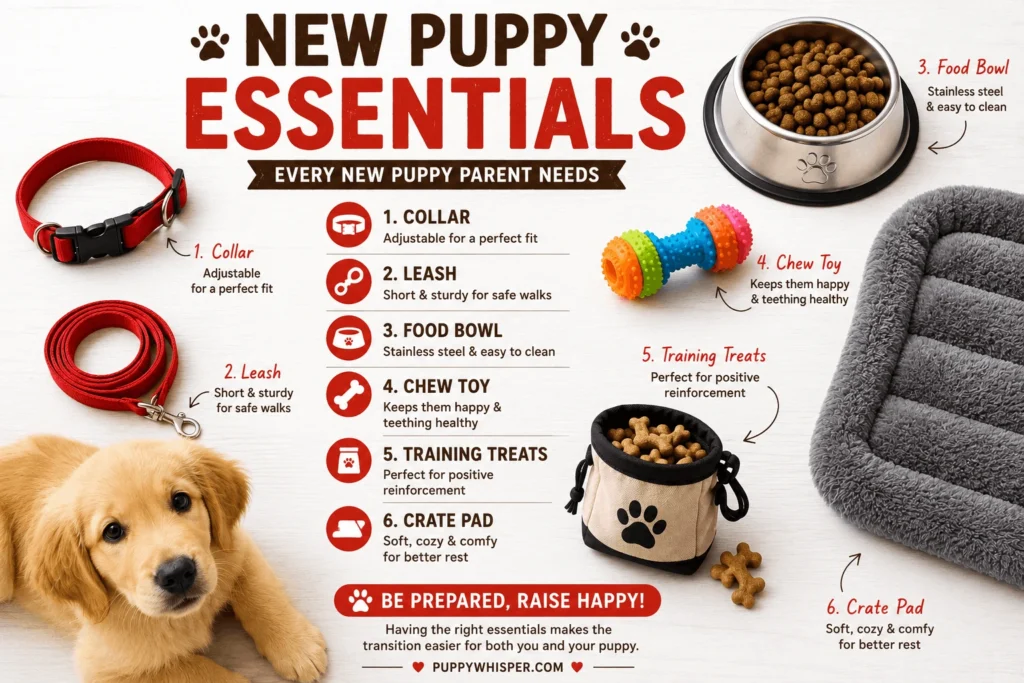
The Complete New Puppy Supplies Checklist
Sleeping and Comfort Supplies
A puppy that feels safe and comfortable sleeps better, stresses less, and settles into routine faster. Once these supplies are ready, our new puppy sleep schedule guide shows you how to put them to use from night one.
- Crate — properly sized for your puppy’s breed (enough to stand, turn around, and lie down not too large or they’ll use the corner as a toilet)
- Crate pad or washable crate liner — avoid anything fluffy until you know your puppy won’t chew and swallow it
- Puppy bed or bolster bed — for outside-crate rest time
- Blanket — ask the breeder or shelter for a blanket that smells like the litter; it helps enormously on the first few nights
- Puppy playpen — great for safely containing your pup when you can’t supervise directly
Feeding Supplies
- Stainless steel food and water bowls — easier to clean than plastic and won’t harbor bacteria
- Slow feeder bowl (optional) — useful for fast-eating breeds prone to bloat
- Puppy food — ask the breeder or shelter what food the puppy has been eating and continue with the same brand initially to avoid digestive upset
- Measuring cup — overfeeding is one of the most common new puppy mistakes
- Puppy feeding mat — keeps the feeding area clean
Collar, Leash, and ID
- Adjustable flat collar — puppies grow fast; buy adjustable
- 4–6 foot standard leash — avoid retractable leashes for puppies; they teach pulling
- ID tag — engrave your phone number before your puppy arrives; have it ready to attach on day one
- Harness (optional but recommended for small breeds) reduces neck strain
Training Supplies
- Training treats — small, soft, high-value treats your puppy can eat quickly without breaking focus
- Treat pouch — keeps treats accessible during training sessions
- Puppy training pads — for indoor potty training during the early weeks
- Baby gates — to block off rooms and stairs until your puppy understands house rules
- Enzymatic cleaner — the only cleaner that fully breaks down urine and feces odor; regular cleaners leave scent traces that attract puppies back to the same spot
Grooming Supplies
Even short-haired puppies benefit from early grooming to build tolerance and trust.
- Soft puppy brush — start gentle brushing early, regardless of coat type
- Puppy nail clippers or grinder — get your puppy used to nail handling from week one
- Dog-safe shampoo — human shampoo disrupts a puppy’s skin pH
- Ear cleaning solution — ask your vet which product they recommend for your breed
- Puppy toothbrush and enzymatic toothpaste — dental habits started early last a lifetime; never use human toothpaste
Toys and Enrichment
- Chew toys — puppies teethe from around 12 weeks; appropriate chews protect your furniture and their teeth
- Interactive puzzle toy — mental stimulation reduces destructive behavior
- Tug toy — great for bonding and structured play
- Soft plush toy — especially important for the first nights; gives comfort when they miss their littermates
- Snuffle mat — slows down eating and provides enrichment at the same time
Health and Vet Preparation Checklist
Before You Bring Puppy Home
- Book a vet appointment for within the first 3–5 days of arrival don’t wait for a problem to arise. The American Animal Hospital Association recommends confirming your puppy’s vaccination schedule at this very first visit.
- Research vets in your area and confirm they accept new patients before pickup day
- Obtain health records from the breeder or shelter vaccination history, deworming dates, any known health issues
- Consider pet insurance — sign up before your first vet visit when possible; pre-existing conditions may not be covered after the fact
- Ask about microchipping — if not already done, schedule it at the first vet visit
First Week Vet Tasks
| Task | Timing |
|---|---|
| First wellness exam | Within 3–5 days of arrival |
| Fecal test for parasites | First vet visit |
| Confirm vaccination schedule | First vet visit |
| Deworming if not done | As advised by vet |
| Microchip if not done | First or second vet visit |
| Discuss spay/neuter timing | First vet visit |
| Discuss flea and tick prevention | First vet visit |

Home Preparation Checklist
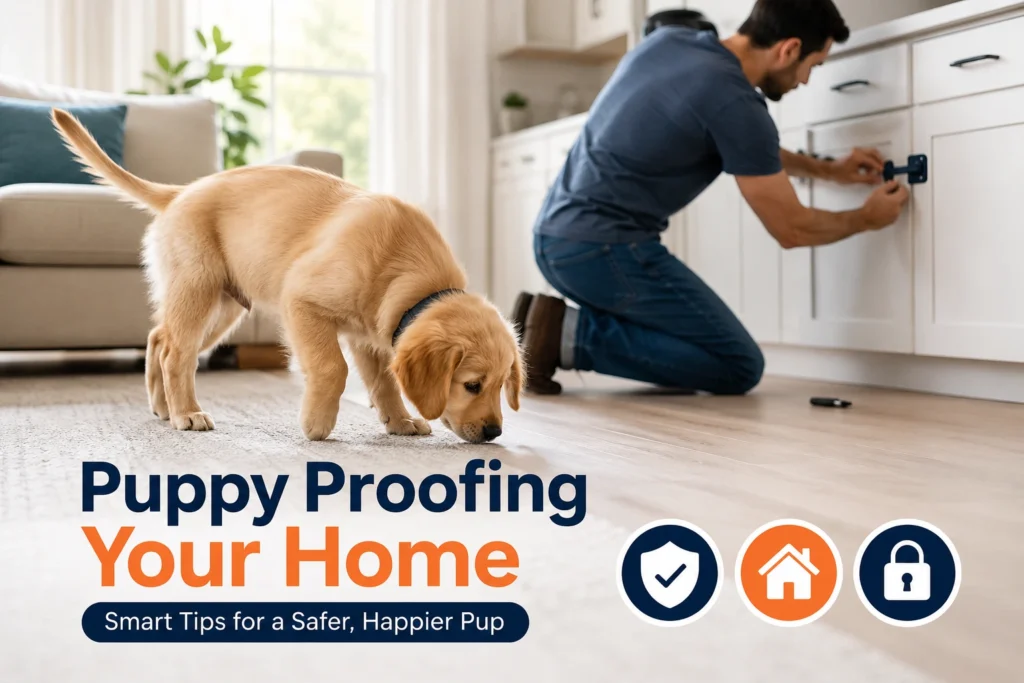
This section covers the basics for the complete room-by-room safety walkthrough, read our full puppy proofing guide.
Puppy-Proofing Room by Room
Puppies explore everything with their mouths. What seems harmless to you can be fatal to them.
Living Room / Common Areas:
- Secure electrical cords and charger cables out of reach
- Remove toxic houseplants (lilies, pothos, peace lily, aloe vera check ASPCA’s full toxic plant list)
- Store cleaning products, medications, and vitamins in locked or high cabinets
- Secure trash cans with lids or move them behind closed doors
- Block off fireplaces and any gaps behind large furniture
Kitchen:
- Keep food off counters puppies will jump and counter-surf earlier than you expect
- Store onions, garlic, grapes, raisins, chocolate, and xylitol completely out of reach all are toxic to dogs
- Secure under-sink cabinets with child locks
Bathroom:
- Keep toilet lids closed small puppies can fall in
- Store razors, medications, and cotton products out of reach
Outdoors / Yard:
- Check fencing for gaps, loose boards, and dig spots
- Remove toxic plants from the garden
- Store pesticides, fertilizers, and tools securely
- Fill any holes or uneven ground to prevent injury
Setting Up the Puppy Zone
Before your puppy arrives, designate one area of the home as their home base — ideally a low-traffic room or sectioned area of the living room.
This space should include:
- Crate with door open and comfortable bedding inside
- Water bowl
- Puppy pads nearby (but not inside the crate)
- A few toys
- Playpen boundary if needed
Keep this area consistent. Puppies thrive on knowing where their safe space is.

First Week With Your New Puppy What to Do
The first week sets the foundation for everything. Keep it calm and structured.
Day 1:
- Bring puppy home during the morning if possible gives them the full day to settle before nighttime
- Keep the home quiet; limit visitors
- Show the puppy their designated space, water bowl, and where to eliminate
- Let the puppy explore at their own pace don’t overwhelm them with attention. If you have a full household, our guide on introducing a puppy to family the right way shows how to stagger those first meetings.
Days 2–3:
- Start a consistent feeding schedule (3–4 small meals per day for most puppies under 6 months)
- Begin crate introduction feed meals near or inside the crate to build positive association
- Start basic potty training; take the puppy outside every 1–2 hours and after every meal, nap, and play session
- Keep interactions calm and positive
Days 4–7:
- Attend the first vet appointment
- Begin short, positive training sessions (5 minutes maximum at this age)
- Introduce gentle handling touch paws, ears, and mouth daily to build tolerance for grooming and vet exams
- Maintain the same daily routine every day; consistency is everything at this stage
Expert Tips for New Puppy Owners
- Buy the crate before the puppy arrives and set it up at least a day early so it becomes a familiar object before your puppy needs to sleep in it
- Same food, same schedule — don’t switch food in the first two weeks; the transition from breeder/shelter is already stressful enough on their digestive system
- Night one will be hard — expect crying; a warm water bottle wrapped in a towel placed under the crate blanket mimics littermate warmth and helps
- Start as you mean to go on — if you don’t want a 40-pound dog on the sofa, don’t allow it as a puppy; rules established now are far easier to maintain than rules introduced later
- Socialize early and safely — before full vaccination, socialization can still happen in controlled environments: carry your puppy to experience sights, sounds, and gentle human contact
Common Mistakes New Owners Make
- Buying too much before knowing your puppy’s personality. Many owners spend hundreds on beds and toys before realizing their puppy ignores half of them. Start with the essentials and add as you learn what your individual dog responds to.
- Skipping the vet visit because the puppy seems healthy. A wellness exam in the first week catches parasites, heart murmurs, and other issues that aren’t visible to the eye. It also establishes a baseline record for your puppy’s health.
- Letting the puppy roam the whole house immediately. Too much unsupervised space too soon leads to accidents, destructive behavior, and a puppy that never fully settles. Start small with the designated puppy zone and expand access as trust is earned.
- Inconsistent rules between family members. If one person allows the puppy on the furniture and another doesn’t, the puppy receives mixed signals and training stalls. Agree on the house rules before the puppy arrives and write them down if needed.
- Punishing accidents. Rubbing a puppy’s nose in an accident, raising your voice, or any form of punishment for potty mistakes creates fear and anxiety without teaching anything useful. Clean up calmly with enzymatic cleaner and improve your supervision.
Frequently Asked Questions
What do I absolutely need for a new puppy on day one?
At minimum: a properly sized crate, food and water bowls, age-appropriate puppy food (ideally the same brand the puppy has been eating), a collar with ID tag, a leash, puppy pads, and enzymatic cleaner. Everything else can follow within the first week.
How soon should a new puppy see a vet?
Within the first 3–5 days of arriving home. Don’t wait for illness the first visit is a wellness check that establishes health records, confirms vaccination status, and tests for parasites.
What food should I feed my new puppy?
Start with whatever food the breeder or shelter was feeding to avoid digestive upset. If you need to switch, transition gradually over 7–10 days by mixing old and new food in increasing ratios.
How do I prepare for the first night with a new puppy?
Place the crate near your bed so the puppy can hear and smell you. Add a warm water bottle under the blanket. Expect some crying it’s normal. Avoid taking the puppy to your bed if that’s not a long-term plan, as habits form quickly.
Do I need pet insurance for a new puppy?
It’s strongly recommended. Puppy vet bills especially for accidents, illness, or breed-specific conditions can run into thousands quickly. Signing up before your first vet visit avoids pre-existing condition exclusions.
When can a new puppy go outside?
Most vets recommend avoiding high-risk public areas (dog parks, pet stores, sidewalks where unknown dogs walk) until 1–2 weeks after the final puppy vaccination series, typically around 16 weeks. Controlled, clean environments are generally fine earlier.
How do I puppy-proof my home?
Work room by room. Secure electrical cords, move toxic plants and foods out of reach, lock away cleaning products and medications, secure trash cans, block stairs with baby gates, and check fencing outdoors.
Conclusion
Bringing a puppy home is one of the most rewarding things you can do and one of the most chaotic if you go in unprepared. The difference between a smooth first week and a stressful one almost always comes down to the preparation done beforehand.
Work through this checklist section by section. Get the supplies sorted, book the vet, puppy-proof the home, and set up the puppy zone before pickup day. Once your puppy arrives, focus on routine, consistency, and calm the training and bonding come naturally from there.
Your puppy is counting on you to have things ready. Now you do.

Muzammil Khan is a certified canine behaviorist and the founder of Puppywhisper. With 8+ years of experience in positive reinforcement training, Muzammil has helped over 1,000 puppies transition smoothly into their new homes. All health advice is reviewed in collaboration with licensed veterinarians.